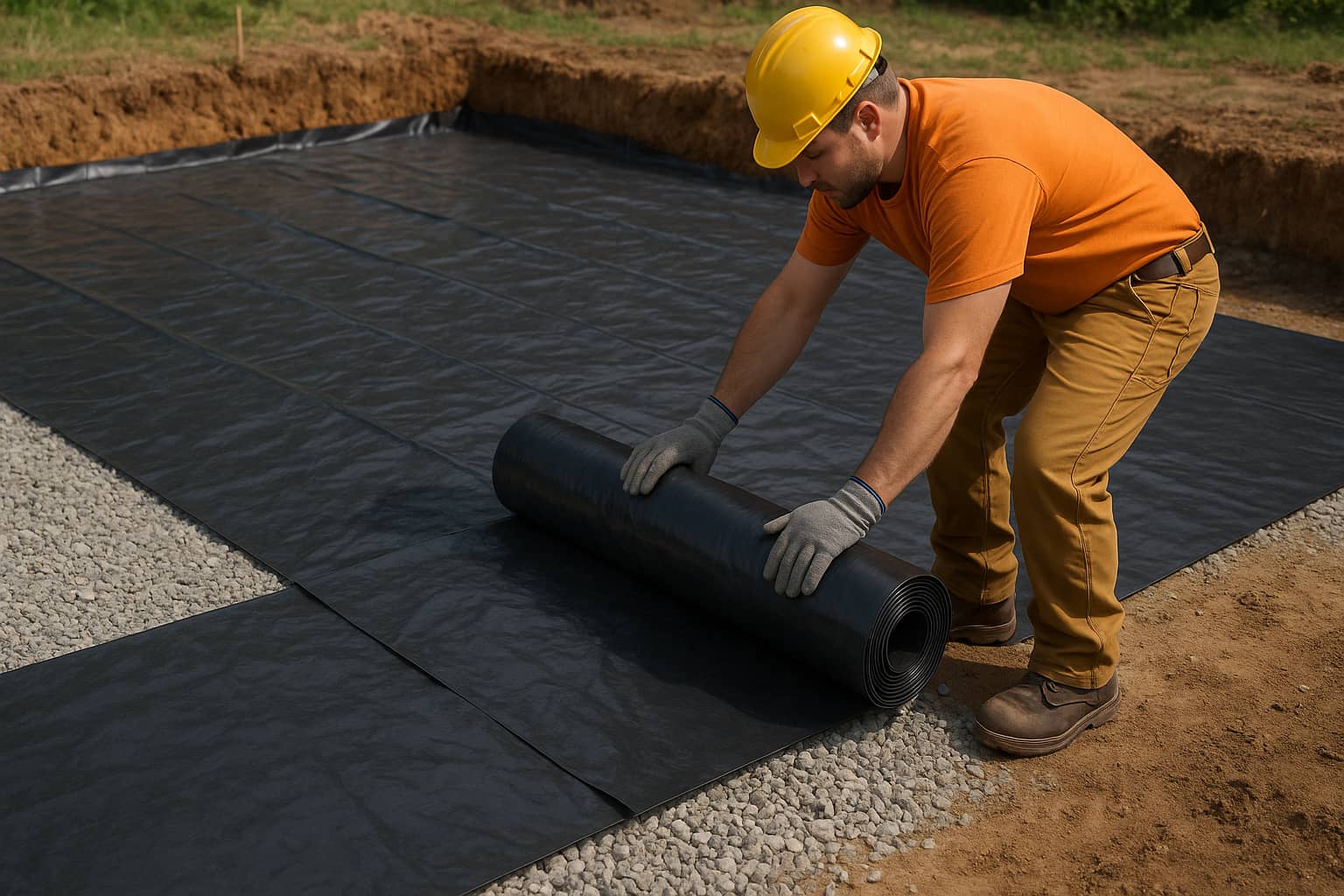
Key Takeaways
- Vapor barriers are essential for most interior concrete slabs in Fayetteville, Arkansas, protecting against moisture damage and flooring failures.
- Current building codes require 10-mil minimum thickness meeting ASTM E1745 Class A standards for residential applications.
- Arkansas’s expansive Porters Creek Clay soils and freeze-thaw cycles make moisture control particularly critical for long-term slab performance.
- Vapor barriers prevent costly flooring failures by stopping ground moisture from migrating upward through porous concrete.
- Proper installation directly under the slab (not beneath granular fill) represents current industry best practice for optimal moisture protection.
Yes, a vapor barrier should be installed under a concrete slab for most interior applications in Fayetteville, Arkansas. Industry standards from the American Concrete Institute and current building codes strongly recommend using a minimum 10-mil vapor retarder meeting ASTM E1745 Class A specifications beneath interior slabs, especially those receiving floor coverings.[1][2] This protection is particularly important in Arkansas due to expansive clay soils, seasonal moisture variations, and the risk of radon gas infiltration.[3][4]
Why Vapor Barriers Are Critical for Arkansas Concrete Slabs
Understanding why vapor barriers matter starts with recognizing that concrete is porous. Even though concrete feels solid, it has millions of tiny pores that allow water vapor to move through the material. In Fayetteville, where we deal with Porters Creek Clay soils and significant seasonal moisture changes, ground moisture naturally migrates upward through slabs.[5]
Without a vapor barrier, this moisture creates several serious problems. Water vapor carrying dissolved salts from the concrete can damage floor adhesives, causing expensive flooring failures. The moisture also raises the pH level at the concrete surface above 9-10, which breaks down modern flooring adhesives and causes floor coverings like wood, vinyl, and carpet to warp, discolor, or separate from the slab.[6]
Arkansas’s unique soil conditions amplify these moisture challenges. The Porters Creek Clay found along Arkansas’s Fall Line from Hope to Batesville is highly expansive, meaning it swells significantly when wet and shrinks when dry.[7] This constant movement puts additional stress on concrete slabs, making proper moisture control even more essential for maintaining structural integrity.
What Building Codes Require in Arkansas
The 2021 International Residential Code (IRC), which Arkansas jurisdictions increasingly adopt, upgraded vapor barrier requirements significantly. The code now mandates a minimum 10-mil vapor retarder conforming to ASTM E1745 Class A specifications beneath concrete floor slabs in residential buildings.[8][9] This represents an important change from the previous 6-mil standard that didn’t include durability requirements.
Arkansas building inspectors in cities like Fort Smith specifically check for vapor barrier installation during slab inspections, requiring that it be in place before concrete is poured.[10] These inspections verify that the vapor barrier provides adequate moisture protection and termite defense for your home’s foundation.
The code does include exceptions where vapor barriers aren’t required:[11]
- Garages, utility buildings, and other unheated accessory structures
- Unheated storage rooms smaller than 70 square feet
- Driveways, walks, patios, and other exterior flatwork
- Situations where the building official approves based on local site conditions
For heated, occupied spaces with floor coverings, vapor barriers are mandatory under current Arkansas building practices. This includes homes, finished basements, workshops, and attached garages that will be climate-controlled.
Vapor Barrier Decision Guide for Fayetteville Homeowners
| Project Type | Vapor Barrier Required? | Recommended Thickness | Key Considerations |
|---|---|---|---|
| Interior slab with flooring | YES – Required | 10-15 mil minimum | Essential for warranty compliance and preventing flooring failure |
| Finished basement | YES – Strongly advised | 15-20 mil preferred | Prevents mold, mildew, and humidity issues in occupied spaces |
| Attached heated garage | YES – Recommended | 10 mil minimum | Especially if finished or connected to living space |
| Unheated workshop/shed | Optional but beneficial | 10 mil if used | Protects stored items from moisture damage |
| Exterior patio/driveway | Generally not needed | N/A | Exposed concrete allows natural moisture movement |
How Arkansas Climate Affects Vapor Barrier Performance
Fayetteville’s climate creates specific challenges for concrete moisture management. The area experiences temperatures ranging from 28°F in winter to 90°F in summer, with approximately 43 inches of precipitation distributed fairly evenly throughout the year.[12] This combination of moisture and temperature fluctuations makes vapor barriers particularly valuable.
Freeze-Thaw Cycle Protection
When temperatures drop below freezing, any moisture that has entered concrete expands by approximately 9% as it turns to ice.[13] This expansion creates internal pressure that can crack and damage concrete from within. A vapor barrier prevents ground moisture from entering the slab, reducing the amount of water available to freeze and cause damage during Fayetteville’s winter months.
The combination of daytime thawing and nighttime freezing is particularly destructive. Water seeps into pores during warmer periods, then freezes and expands at night, gradually widening cracks and causing surface scaling called spalling. By keeping ground moisture out, vapor barriers significantly reduce freeze-thaw damage potential.
Summer Humidity and Condensation
Arkansas summers bring hot, humid conditions that can cause condensation issues when cool, moist air from beneath a slab meets warmer indoor air. This condensation accumulates on the underside of floor coverings, creating ideal conditions for mold growth and adhesive failure.[14] A properly installed vapor barrier blocks this moisture pathway, maintaining healthier indoor air quality and protecting your flooring investment.
Understanding Vapor Barrier Specifications
Not all vapor barriers provide equal protection. The American Concrete Institute recommends that vapor retarders have a permeance rating of less than 0.3 perms when tested according to ASTM E96.[15] True vapor barriers have even lower permeance ratings below 0.01 perms, providing superior moisture protection.
ASTM E1745 Class Requirements
The ASTM E1745 standard classifies vapor retarders into three categories based on their strength and puncture resistance:[16]
Class A (Highest Performance): Minimum tensile strength of 45 pounds per inch and puncture resistance of 2,200 grams. These barriers withstand construction traffic and the weight of wet concrete without tearing.
Class B (Medium Performance): Minimum tensile strength of 35 pounds per inch and puncture resistance of 1,600 grams. Suitable for lighter-duty applications with careful installation.
Class C (Basic Performance): Minimum tensile strength of 25 pounds per inch and puncture resistance of 1,100 grams. Meets minimum requirements but tears more easily during construction.
For Fayetteville projects, Class A barriers offer the best long-term protection and peace of mind. The additional cost is minimal compared to the potential expense of flooring failures or moisture remediation.
Recommended Thickness for Arkansas Conditions
While codes mandate 10-mil minimum thickness, many concrete professionals in Arkansas recommend 15-mil or 20-mil vapor barriers for enhanced durability.[17] Thicker barriers better resist punctures from sharp aggregate stones in the base material and from rebar, wire mesh, and foot traffic during construction.
Quality vapor barriers are manufactured from virgin polyethylene or polyolefin resins rather than recycled materials. Virgin resin products maintain their integrity longer and resist degradation from soil chemicals, providing protection for the lifetime of your slab.[18]
Protection Against Arkansas Soil Gases
Beyond moisture control, vapor barriers provide critical protection against harmful soil gases that naturally occur in Arkansas soils. This dual function makes them even more valuable for homeowner safety and health.
Radon Gas Mitigation
Radon is a colorless, odorless radioactive gas that forms naturally from uranium decay in soil. It’s the second leading cause of lung cancer in the United States after smoking.[19] Arkansas has areas with moderate to elevated radon potential, particularly in regions with certain geological formations.
A properly installed vapor barrier serves as the first line of defense against radon infiltration. The barrier should meet minimum 6-mil thickness for basic radon protection, though 10-mil or thicker provides better long-term performance.[20] For comprehensive radon protection, the barrier must be sealed at all seams with proper tape and at all penetrations like pipes and columns.
According to industry expert Howard Kanare: “This author firmly believes that a floor slab is part of the building envelope and that every slab on ground should have a vapor retarder meeting ASTM E1745 installed directly beneath the concrete.”[21] This philosophy reflects growing recognition that vapor barriers provide multiple protective functions beyond just moisture control.
Methane and Other Soil Gases
In areas with organic soils or near former agricultural sites, methane and other gases can migrate through soil and enter buildings through concrete slabs. Vapor barriers block these pathways, preventing potentially dangerous gas accumulation in occupied spaces.[22]
Proper Installation Methods for Maximum Protection
Even the highest-quality vapor barrier fails if improperly installed. Following best practices ensures your barrier performs as intended for decades.
Base Preparation
The foundation for proper vapor barrier installation begins with a well-prepared granular base. A 4-inch minimum layer of clean, coarse gravel or crushed stone provides a capillary break and allows for drainage beneath the slab.[23] This aggregate should pass through a 2-inch sieve but be retained on a 1/4-inch sieve for optimal performance.
In Arkansas, where we encounter expansive Porters Creek Clay soils, proper base preparation becomes even more critical. The granular layer helps distribute loads evenly and provides a stable platform that minimizes the effects of soil movement from moisture changes.[24] For more detailed information on soil preparation, see our guide on how local soil conditions affect concrete installations.
Vapor Barrier Placement
Current ACI Committee 302 recommendations specify placing the vapor barrier directly on top of the prepared granular base, immediately beneath the concrete slab.[25] This represents a change from older practices that placed barriers beneath the gravel layer or used a sand “blotter layer” above the barrier.
Direct placement beneath the slab provides several advantages:
- Prevents moisture trapped in blotter layers from eventually migrating back into the slab
- Eliminates the “reservoir” effect where moisture accumulates between the barrier and slab
- Allows for more even concrete curing with moisture loss only from the top surface
- Reduces long-term moisture-related flooring problems
Some contractors worry that direct placement increases plastic shrinkage cracking risk, but proper concrete mix design and finishing techniques effectively manage this concern.[26]
Sealing Seams and Penetrations
A vapor barrier is only as good as its weakest point. All seams must overlap by at least 6 inches and be sealed with manufacturer-approved tape specifically designed for vapor barrier applications.[27] Standard construction tape or duct tape doesn’t provide adequate long-term adhesion.
Pay special attention to penetrations where pipes, electrical conduits, or columns pass through the barrier. Cut the barrier carefully around these obstacles and seal thoroughly with approved tape or sealant. Some contractors use boot-style collars that wrap around penetrations for enhanced protection.
The barrier should extend up foundation walls approximately 6 inches and be sealed to the wall or footing to create a continuous moisture envelope beneath the entire slab.[28]
Cost Considerations for Fayetteville Homeowners
Many homeowners worry about vapor barrier costs, but the investment proves modest compared to potential flooring failure expenses.
Material Costs
Vapor barrier material costs vary based on thickness and quality:[29]
- 10-mil polyethylene: $0.10-$0.15 per square foot
- 15-mil high-performance barrier: $0.15-$0.25 per square foot
- 20-mil commercial-grade barrier: $0.20-$0.35 per square foot
- Seaming tape: $25-$45 per 180-foot roll
For a typical 1,500 square foot home foundation, quality vapor barrier materials cost approximately $225-$525 depending on thickness selected. This represents less than 2% of total foundation costs but provides substantial long-term value.
Installation Labor
Professional installation typically adds $0.50-$1.00 per square foot to material costs, bringing total installed prices to approximately $1,200-$2,000 for an average residential foundation.[30] Many concrete contractors include vapor barrier installation as a standard part of their slab preparation process.
Considering that flooring failures from moisture damage can cost $5,000-$15,000 or more to remediate, the vapor barrier investment offers exceptional return on investment. Most flooring manufacturers require vapor barriers for their product warranties to remain valid, making installation essentially mandatory for protecting your flooring investment.[31]
Vapor Barrier vs. No Vapor Barrier: Long-Term Comparison
| Factor | With Vapor Barrier | Without Vapor Barrier |
|---|---|---|
| Initial Cost | $1,200-$2,000 additional | No additional cost |
| Flooring Warranty | Full manufacturer warranty valid | Warranty may be voided or limited |
| Moisture Problems | Rare if properly installed | Common in 5-10 years |
| Indoor Air Quality | Better humidity control, reduced mold risk | Higher humidity, increased mold potential |
| Radon Protection | Significant gas infiltration reduction | No protection against soil gases |
| Concrete Durability | Protected from ASR “concrete cancer” | Vulnerable to moisture-driven degradation |
| Energy Efficiency | Reduced HVAC moisture load | HVAC works harder to remove humidity |
| 10-Year Cost | $1,200-$2,000 (initial only) | Potential $5,000-$20,000+ in repairs |
Special Considerations for Arkansas Concrete Projects
Expansive Soil Management
Arkansas’s Porters Creek Clay presents unique challenges that make vapor barriers even more valuable. These highly expansive soils can swell up to 10% in volume when saturated, creating tremendous pressure on concrete foundations.[32] While the vapor barrier doesn’t prevent soil movement, it works synergistically with proper base preparation to minimize moisture infiltration that drives this expansion-contraction cycle.
For properties in areas with known expansive soils, consider these additional measures alongside your vapor barrier:
- Maintain consistent soil moisture around your foundation through controlled irrigation during dry periods
- Install proper drainage systems to quickly remove water from around the foundation
- Extend roof gutters and downspouts well away from the slab perimeter
- Consider soil stabilization treatments for severely expansive clay conditions
Seasonal Timing for Installation
Fayetteville’s optimal concrete pouring seasons also affect vapor barrier installation. Spring and fall typically provide ideal conditions with moderate temperatures and lower humidity. Avoid installation during heavy rain periods when site conditions make it difficult to keep the barrier clean and properly positioned.
During hot Arkansas summers, protect the vapor barrier from direct sunlight for extended periods before concrete placement. UV exposure can degrade some barrier materials, reducing their long-term effectiveness.
Common Vapor Barrier Mistakes to Avoid
Even experienced contractors sometimes make errors that compromise vapor barrier effectiveness. Watch out for these common mistakes:
Using Inadequate Material
Standard 6-mil construction plastic from big-box stores doesn’t meet current code requirements and lacks the puncture resistance needed to survive construction. Always specify vapor retarders that meet ASTM E1745 Class A standards for residential applications.
Poor Seam Sealing
Simply overlapping sheets without sealing creates moisture pathways that negate the barrier’s purpose. Every seam needs proper tape application with adequate overlap and good adhesion to both surfaces.
Damage During Construction
Punctures from rebar, stakes, or foot traffic create openings for moisture infiltration. Inspect the barrier immediately before concrete placement and repair any damage with patches and proper tape.
Extending Over Footings Without Sealing
Some building codes restrict vapor barrier placement over footings to maintain the bond between walls and footings. Consult local Fayetteville building officials about proper termination methods. Where barriers must stop at the footing edge, ensure thorough sealing to prevent moisture infiltration at this critical junction.
When Can You Skip a Vapor Barrier?
While vapor barriers benefit most concrete applications, certain scenarios don’t require them:
Unheated exterior structures: Open-sided pavilions, carports without walls, and similar structures where moisture can evaporate naturally don’t need vapor barriers. The concrete remains exposed to air circulation that prevents moisture buildup.
Driveways and exterior flatwork: Exposed concrete surfaces like driveways, sidewalks, and patios typically don’t require vapor barriers since they’re not enclosed and won’t receive moisture-sensitive floor coverings. However, some homeowners choose to include them even for driveway installations to maximize long-term durability.
Arid climates with deep water tables: In very dry regions where groundwater sits well below the surface, the risk of moisture migration decreases. However, Arkansas doesn’t fit this category—our moderate to high precipitation levels mean vapor barriers remain valuable even when water tables are relatively deep.
Warehouse floors with no coverings: Some industrial applications with bare, exposed slabs may not require vapor barriers if moisture doesn’t impact operations. However, even these facilities often benefit from barriers to prevent product damage from condensation on the floor.
Vapor Barriers and Future Flooring Flexibility
One often-overlooked advantage of vapor barrier installation is the flexibility it provides for future home modifications. Your plans may change over time—that garage you’re building today might become finished living space in five years. Installing a vapor barrier now, even if not strictly required for the initial use, protects your options.
Without a vapor barrier, adding floor coverings later becomes problematic. You’d need to apply expensive surface-applied moisture mitigation systems costing $3-$8 per square foot, or accept the risk of flooring failure.[33] Installing the barrier during initial construction costs a fraction of these remediation expenses and future-proofs your investment.
This flexibility proves particularly valuable for concrete slab installations in attached garages, workshops, and basement spaces that might eventually transition to finished living areas.
Conclusion
For Fayetteville homeowners planning concrete slab projects, installing a high-quality vapor barrier represents essential protection rather than optional expense. Arkansas’s combination of expansive clay soils, seasonal moisture fluctuations, and moderate climate creates conditions where vapor barriers deliver exceptional value through moisture control, radon mitigation, and long-term concrete protection.
Modern building codes recognize these benefits by requiring 10-mil minimum barriers meeting ASTM E1745 Class A standards for most residential applications. The modest $1,200-$2,000 investment prevents costly flooring failures, protects indoor air quality, maintains manufacturer warranties, and provides flexibility for future home modifications. When combined with proper base preparation and professional installation, vapor barriers deliver decades of reliable moisture protection for your concrete investment.
Don’t compromise your home’s foundation with outdated practices or cost-cutting shortcuts. Contact AR Concrete Fayetteville today to discuss vapor barrier options for your upcoming project and ensure your concrete slab provides the lasting performance Northwest Arkansas homeowners expect.
Vapor Barrier Concrete Slab Fayetteville Arkansas FAQs
What happens if I don’t install a vapor barrier under my concrete slab?
Without a vapor barrier, ground moisture will continuously migrate upward through your porous concrete slab. This moisture can cause floor coverings to fail as water-based adhesives break down, create mold and mildew problems that compromise indoor air quality, void your flooring manufacturer warranties, and contribute to concrete degradation through alkali-silica reaction (ASR). In Arkansas’s climate with expansive clay soils and significant precipitation, these problems typically appear within 5-10 years of construction and can cost $5,000-$20,000 or more to remediate.[34][35]
Can I use regular plastic sheeting instead of a proper vapor barrier?
Standard plastic sheeting from hardware stores doesn’t meet current building code requirements or ASTM E1745 Class A specifications. These generic plastics lack the necessary puncture resistance, tensile strength, and long-term durability that proper vapor retarders provide. During concrete placement, regular plastic often tears from foot traffic, rebar, and construction equipment, creating openings that allow moisture infiltration. Always use vapor retarders specifically manufactured and tested for underslab applications—the small cost difference prevents major problems later.
Should a vapor barrier be installed under my Fayetteville garage floor?
For attached, heated garages that connect to your living space, installing a vapor barrier under the concrete slab is strongly recommended even though building codes may not mandate it. The barrier prevents moisture migration that can increase humidity in adjacent living areas and protects against soil gas infiltration. For detached, unheated garages, the benefit is less critical unless you plan future conversion to finished space. Many Fayetteville homeowners choose to include barriers even in unheated garages for approximately $300-$500 to maintain future flexibility and protect stored items from moisture damage.[36]
How thick should the vapor barrier be under a concrete slab in Arkansas?
Current Arkansas building codes following the 2021 International Residential Code require a minimum 10-mil thickness vapor retarder meeting ASTM E1745 Class A specifications for residential applications. However, many concrete professionals in Fayetteville recommend 15-mil or 20-mil barriers for enhanced durability and puncture resistance, particularly when dealing with angular crushed stone base materials or heavy construction traffic. The thicker barriers cost only slightly more but provide significantly better protection against damage during installation and improved long-term performance.[37][38]
Does a vapor barrier prevent radon gas in Fayetteville homes?
Yes, a properly installed vapor barrier provides important protection against radon gas infiltration from Arkansas soils. Radon is a naturally occurring radioactive gas that’s the second leading cause of lung cancer after smoking. A 10-mil or thicker vapor barrier with all seams and penetrations properly sealed significantly reduces radon entry through concrete slabs. For comprehensive radon protection, the barrier works as part of a passive or active radon mitigation system that includes a gravel layer beneath the slab and vent pipes to exhaust any accumulated gas. EPA guidelines specifically recommend vapor retarders as a key component of radon-resistant construction techniques for new homes.[39][40]
Vapor Barrier Concrete Slab Fayetteville Arkansas Citations
- American Concrete Institute. (2015). Guide for Concrete Floor and Slab Construction – ACI 302.1R-15. Concrete Floor and Slab Construction Committee.
- Americover. (2025). What is the Best Vapor Barrier to Use Under Concrete Slabs? Americover Blog.
- Arkansas Geological Survey. Expansive Soils in Arkansas. Arkansas Department of Energy & Environment.
- Foundation Pro. (2022). Foundation Repair in Arkansas: How Rain and Heat Can Damage Your Home’s Foundation.
- Nevada Ready Mix. Vapor Retarders Under Slabs on Grade — What, why, & how? Nevada Ready Mix Concrete Tips.
- Graniterock. Vapor Barriers under Concrete Floor Slabs: Friend or Foe? Technical Reports.
- Arkansas Geological Survey. Expansive Soils in Arkansas – Porters Creek Clay. Geohazards Division.
- International Code Council. (2021). 2021 International Residential Code Section R506.2.3 Vapor Retarder.
- Stego Industries. (2024). Your Guide to Navigating the IRC Building Code Changes to Vapor Retarders.
- City of Fort Smith, Arkansas. Residential Construction Requirements. Building Development.
- The Building Code Forum. (2023). 2021 IRC 506.2.3 Discussion.
- Weather Spark. Fayetteville Climate, Weather By Month, Average Temperature.
- Nitterhouse Masonry. (2024). The Effects of Freeze-Thaw on Concrete.
- Stego Industries. (2024). When and Where to Install a Below-Slab Vapor Barrier.
- ASTM International. ASTM E96 – Standard Test Methods for Water Vapor Transmission of Materials.
- ASTM International. ASTM E1745 – Standard Specification for Plastic Water Vapor Retarders Used in Contact with Soil or Granular Fill Under Concrete Slabs.
- W. R. Meadows. (2025). 20 Mil Underslab Vapor Barrier – ASTM E1745 Class A, B & C.
- GBD Magazine. (2022). Critical Code Change for Residential Concrete Slabs.
- EPA. (2025). Radon-Resistant Construction Basics and Techniques. United States Environmental Protection Agency.
- Ecohome. (2021). Installing a radon barrier below slab floor.
- CRC Coatings. (2025). Vapor Barriers For Concrete Floors: Key Factors.
- W. R. Meadows. (2017). Underslab Radon Barriers Technical Bulletin.
- Stego Industries. (2024). When and Where to Install a Below-Slab Vapor Barrier – Installation Methods.
- Airlift Concrete Experts. (2025). How Arkansas Soil Types Affect Your Home’s Foundation.
- American Concrete Institute. (2015). ACI Committee 302 Recommendations on Vapor Retarder Placement.
- The Building Code Forum. (2023). Discussion on Vapor Retarder Effects on Concrete Curing.
- ASTM International. ASTM E1643 – Standard Practice for Installation of Water Vapor Retarders.
- ShunTool. (2025). The Ultimate Guide To Installing Vapor Barriers On Concrete Slabs.
- Everything About Concrete. Concrete Vapor Barrier Cost.
- HomeGuide. (2024). How Much Does Crawl Space Encapsulation Cost? (2025).
- Forensis Group. Moisture Problems Plague Flooring from Concrete Slabs-on-Grade: Causes, Prevention, and Legal Considerations.
- Earth Contact Products. (2025). Expansive Clay and Your Foundation.
- CustomCrete. (2025). Pros and Cons of a Moisture Vapor Barrier (MVB).
- Polyguard. (2025). Preventing Water & Vapor Transmission in Concrete Slabs.
- Wagner Meters. (2025). Concrete Vapor Retarders.
- Building Code Trainer. Are Vapor Barriers Required Under Concrete Floors?
- Americover. (2025). IRC Guidelines for Vapor Barriers Used Under Concrete Slabs.
- Stego Industries. (2024). 2021 IRC Code Updates – Vapor Retarder Thickness Requirements.
- Stego Industries. (2024). How a Vapor Barrier Can Help Mitigate Radon in New Residential Construction.
- EPA. (2025). EPA Radon-Resistant Construction Guidelines.
Leave a Reply