Author: AR Concrete

  • How long does it take for concrete to fully cure?

    How long does it take for concrete to fully cure?

    Key Takeaways

    • Concrete takes 28 days to reach full strength, but you can walk on it after 24-48 hours and drive light vehicles after 7 days
    • Arkansas homeowners face unique challenges with freeze-thaw cycles, clay soil, and humidity that affect curing timelines
    • Proper curing makes concrete 50-100% stronger than poorly cured concrete and prevents cracking and surface damage
    • Temperature matters—cold weather below 40°F dramatically slows curing, while heat above 85°F can cause too-fast drying and weaken your concrete
    • Simple protection methods like wet blankets, plastic sheeting, and avoiding extreme temperatures ensure your concrete reaches maximum strength

    Concrete fully cures in 28 days under normal conditions, reaching approximately 90-100% of its designed strength. However, you can safely walk on concrete after 24-48 hours and allow light vehicle traffic after 7 days when it has achieved about 60-75% of its final strength.[1][2]

    The curing process involves a chemical reaction called hydration where cement particles bond with water molecules to create the hard, durable surface that makes concrete so valuable for driveways, patios, walkways, and foundations. Understanding how long concrete takes to cure helps you plan your project timeline, avoid damage to your new surface, and ensure your investment delivers the strength and longevity you expect.

    For Fayetteville homeowners, Arkansas’s unique climate—including freeze-thaw cycles in winter, clay soil conditions, and seasonal humidity changes—creates specific challenges that affect how your concrete cures. This guide explains what happens during the curing process, how environmental factors impact the timeline, and what you can do to protect your concrete investment.

    Understanding the Concrete Curing Process

    Many people confuse concrete “drying” with “curing,” but they are completely different processes. Drying refers to moisture evaporation from the surface, while curing is the chemical process that creates concrete’s strength and durability.[3] When cement and water mix, they undergo hydration—a chemical reaction that forms new compounds binding the concrete together.

    This hydration process requires moisture to continue. Without adequate moisture during curing, the chemical reaction stops prematurely, resulting in weaker concrete that is more prone to cracking, surface scaling, and deterioration. Properly cured concrete can be 50-100% stronger than uncured concrete exposed to dry conditions.[4][5]

    The Science Behind Concrete Strength Development

    Concrete gains strength progressively as hydration continues. Within the first few hours after pouring, concrete remains workable and can still be finished and shaped. Between 1-6 hours, it reaches initial set—meaning it is no longer workable but still fragile and requires protection from the elements.[3]

    After 24-48 hours, concrete develops approximately 20-30% of its final strength, making it safe for light foot traffic and allowing forms to be removed.[2][6] By the 7-day mark, properly cured concrete reaches 60-75% of its designed strength, sufficient for light vehicle traffic and allowing construction activities to resume.[2][6] At 28 days, the standard industry benchmark, concrete achieves 90-100% of its specified compressive strength and is considered fully cured for most practical purposes.[1][2]

    Why the 28-Day Standard Exists

    The 28-day curing period is the industry standard established by the American Concrete Institute (ACI) and ASTM International for testing and specifying concrete strength.[1][7] This timeframe provides a consistent benchmark for testing procedures throughout the industry. However, it is important to understand that 28 days is somewhat arbitrary—chosen for practical consistency rather than because hydration stops at exactly that point.[1]

    In reality, hydration continues for months or even years after pouring, with concrete slowly gaining additional strength over time. The 28-day mark simply represents the point at which concrete has achieved enough of its potential strength to meet design specifications and handle intended loads.[1]

    Concrete Curing Timeline: What to Expect

    Time FrameStrength AttainedSafe ActivitiesWhat’s Happening
    0-6 Hours
    (Initial Set)
    MinimalStill being finished; requires protection from rain, direct sun, windConcrete is setting but not yet hard; hydration is beginning
    24-48 Hours20-30%Light foot traffic; forms can be removedSurface is hard to touch; concrete still needs moisture for continued hydration
    7 Days60-75%Light vehicle traffic; construction can resumeConcrete has sufficient strength for most activities; proper curing is critical during this period
    28 Days90-100%Full use including heavy vehicles and equipment; ready for sealingConsidered fully cured; has reached designed strength for its mix

    These timelines assume ideal curing conditions—temperatures between 50-85°F and adequate moisture retention through proper curing methods.[2][3] Environmental factors can significantly alter these timelines, as discussed in the following sections.

    Factors That Affect How Long Concrete Takes to Cure

    The 28-day benchmark applies to concrete cured under ideal conditions with moderate temperatures and sufficient moisture. In reality, multiple factors influence how quickly or slowly your concrete cures and how strong it ultimately becomes.

    Temperature: The Most Critical Factor for Arkansas Homeowners

    Temperature has the most dramatic impact on concrete curing rates. The ideal temperature range for curing is between 50-85°F, with the sweet spot around 70°F where hydration proceeds at an optimal pace.[3][8] Within the first seven days, concrete should ideally stay at 68-77°F, then maintain 59-68°F until the 14-day mark, and 50-59°F until full cure at 28 days.[6]

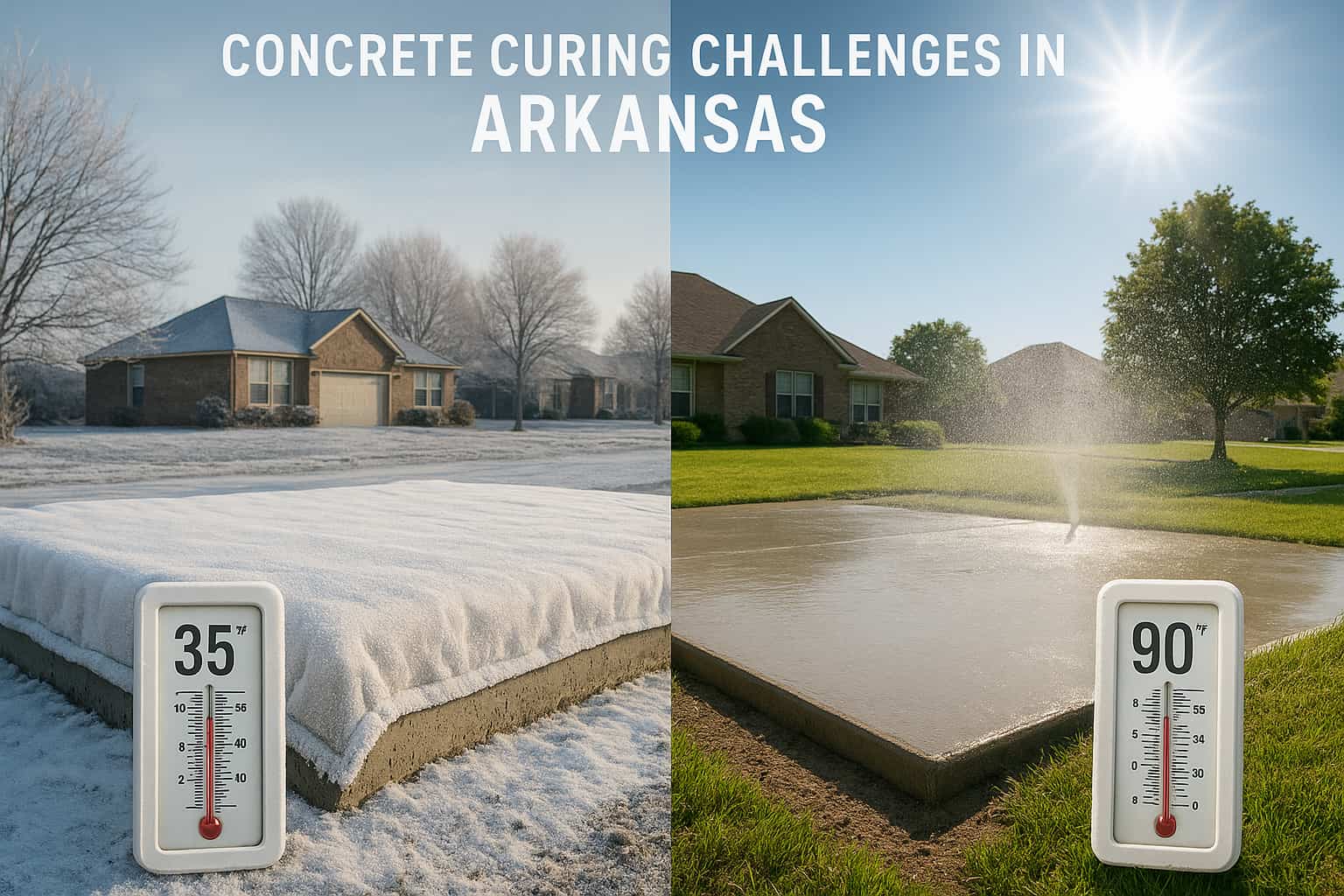
    Cold weather dramatically slows the curing process. According to the American Concrete Institute, cold weather conditions exist when air temperature falls to or is expected to fall below 40°F.[9][10] At 50°F, concrete requires roughly 14 days to reach 70% strength compared to just 7 days at 70°F.[8] When temperatures drop below 27-32°F, the freezing of water in the concrete can halt hydration entirely and cause permanent damage through internal cracking.[9][11]

    For Fayetteville homeowners, this means winter concrete projects require special protection. Northwest Arkansas experiences freeze-thaw cycles throughout winter where temperatures fluctuate above and below freezing. New concrete must be protected from freezing for at least 48-72 hours until it reaches a minimum strength of 500 psi.[9][11][12] After that, it can tolerate a single freeze-thaw cycle if properly air-entrained, but repeated cycles require the concrete to reach at least 3,500-4,000 psi before exposure.[11]

    Hot weather presents different challenges. High temperatures accelerate hydration initially, causing concrete to gain early strength quickly, but this rapid curing can result in 10-15% lower final strength at 28 days compared to concrete cured at moderate temperatures.[13][14] When concrete is about 18°F hotter than normal (88°F instead of 70°F), the 28-day compressive strength can be reduced by as much as 15%, especially without proper curing.[13]

    Arkansas summers with temperatures regularly exceeding 85-90°F create conditions for rapid moisture evaporation. Combined with low humidity and wind, this can cause plastic shrinkage cracking, surface scaling, and incomplete hydration.[13][14] The key is preventing moisture loss through proper curing methods like wet blankets, plastic sheeting, or curing compounds applied immediately after finishing.

    Moisture and Humidity: Essential for Complete Hydration

    Concrete needs moisture throughout the curing process for hydration to occur. The internal relative humidity within concrete must remain above 80-85% for hydration to continue.[15][16] When moisture evaporates from the surface faster than the concrete can cure internally, the result is weaker surface concrete prone to dusting, scaling, and cracking.

    High humidity slows evaporation, which helps concrete cure properly by retaining moisture longer. This is why Fayetteville’s humid spring and summer months can actually benefit concrete curing—the moisture in the air prevents the surface from drying out too quickly.[15][16]

    Low humidity, especially when combined with heat and wind, acts like a sponge drawing moisture from concrete. This creates a high evaporation rate that can rob the concrete of the water it needs for complete hydration. Arkansas homeowners facing low-humidity conditions during fall should take extra precautions like more frequent misting, covering concrete with plastic sheeting, or applying curing compounds to lock in moisture.[16]

    Concrete Mix Design and Thickness

    Different cement types cure at different rates. Type III high-early-strength cement can achieve 3,000 psi concrete in just 24 hours and requires only 3-5 days of curing, while Type II moderate-heat cement may take 9-14 days to reach equivalent strength.[6] Standard Type I Portland cement, the most common for residential work, follows the typical 7-day (70% strength) and 28-day (100% strength) timeline.[6]

    The water-to-cement ratio significantly affects both curing needs and final strength. Mixes with lower water content are stronger and denser but require more careful moisture management during curing to prevent premature drying. Additives and admixtures—such as accelerators for cold weather or retarders for hot weather—can modify curing times to match environmental conditions.[2]

    Concrete thickness affects curing primarily through moisture retention. Thicker slabs retain moisture longer than thin sections, which can dry out faster from both the top and edges. However, regardless of thickness, full curing still takes approximately 28 days for concrete to reach its designed strength.[2] A 4-inch residential driveway cures at the same rate internally as a 6-inch commercial slab, though the thinner slab may require more aggressive moisture retention methods to prevent surface drying.

    Proper Concrete Curing Methods for Arkansas Homeowners

    The best curing method is the simplest: keep your concrete wet. For the first 7 days after pouring, maintaining moisture on the surface allows hydration to proceed optimally and ensures maximum strength development.[3] Studies show that properly cured concrete can have 50-100% higher strength at 28 days compared to uncured concrete in dry conditions.[4][5]

    Wet Curing: The Gold Standard

    Water curing involves keeping the concrete continuously wet by spraying, misting, ponding water on the surface, or covering it with wet burlap or blankets. This method is the most effective because it ensures adequate moisture for complete hydration while helping to regulate temperature.[3][5] Water curing for 7 days produces concrete approximately 50% stronger than uncured concrete, and even 3 days of water curing achieves about 80% of the benefit of a full 7-day cure.[3]

    For Arkansas homeowners, wet curing is particularly valuable during hot, dry periods when evaporation rates are high. Simply running a sprinkler on your new driveway or patio several times per day for the first week dramatically improves final strength and durability.

    Covering and Sealing Methods

    Plastic sheeting creates a moisture barrier that prevents evaporation while allowing hydration to continue using the water already in the concrete mix. This method works well for Arkansas’s variable weather since it also protects concrete from unexpected rain while curing. The plastic should be placed as soon as the surface can support it without damage (typically 12-24 hours after finishing) and should be weighted down to prevent wind from lifting it.[3]

    Wet burlap, blankets, or straw covered with plastic combine moisture retention with temperature protection. This method is especially valuable during cooler months in Fayetteville when you want to trap the heat of hydration while maintaining surface moisture. The coverings should be kept wet and should not be allowed to dry out and draw moisture from the concrete.[17]

    Curing compounds are liquid membranes sprayed onto the concrete surface that form a barrier to slow evaporation. These work best when applied immediately after finishing when the surface sheen disappears but before the concrete fully dries.[3] Clear curing compounds allow you to see the concrete surface, while white-pigmented versions reflect sunlight, which can help keep the concrete cooler during hot weather.[3]

    Cold Weather Protection for Fayetteville Winters

    When temperatures drop below 40°F, concrete requires protection from freezing and measures to maintain adequate curing temperatures. Insulating blankets are the most practical solution for residential work, capturing the heat generated by the hydration reaction and maintaining concrete temperature without external heat sources.[9][11][18]

    Blankets should be placed as soon as possible after finishing to capture early heat of hydration. They need to stay in place for at least 48-72 hours, or longer if subfreezing temperatures persist. The concrete must maintain a minimum temperature of 50-55°F for slabs less than 12 inches thick during the protection period.[9][11]

    Critical cold weather guidelines for Arkansas homeowners:

    • Never pour concrete on frozen ground—it will crack when the subgrade thaws and settles unevenly[18][19]
    • Do not use deicing salts on concrete for the first year, as they can damage the surface and promote freeze-thaw deterioration[12][19]
    • Do not seal concrete during cold weather curing, as this traps moisture that can freeze and damage the surface[12][19]
    • Protect concrete from freezing until it reaches at least 500 psi (typically 24-48 hours) to prevent permanent damage from ice formation[9][11][18]

    Hot Weather Curing for Arkansas Summers

    High temperatures, low humidity, and wind create a perfect storm for rapid moisture loss. The primary goal during hot weather curing is preventing surface moisture from evaporating faster than the concrete can hydrate internally.[13][14]

    Start protecting concrete immediately after finishing. In hot conditions, the surface can begin to dry and crack within minutes if left exposed to sun and wind. Evaporation retarders can be sprayed on during finishing to slow initial moisture loss until you can apply more permanent curing methods.[13]

    For the first 7 days, use a combination of shade (if possible), frequent misting or sprinkling, and coverings like wet burlap under plastic sheeting to maintain moisture. Check the concrete several times per day and re-wet any areas that have dried out. Avoid adding water to the surface during initial set while bleed water is still present, as this weakens the surface.[3][13]

    Special Considerations for Fayetteville Concrete Projects

    Northwest Arkansas’s climate and soil conditions create specific challenges that affect both the curing process and long-term concrete performance.

    Clay Soil and Ground Movement

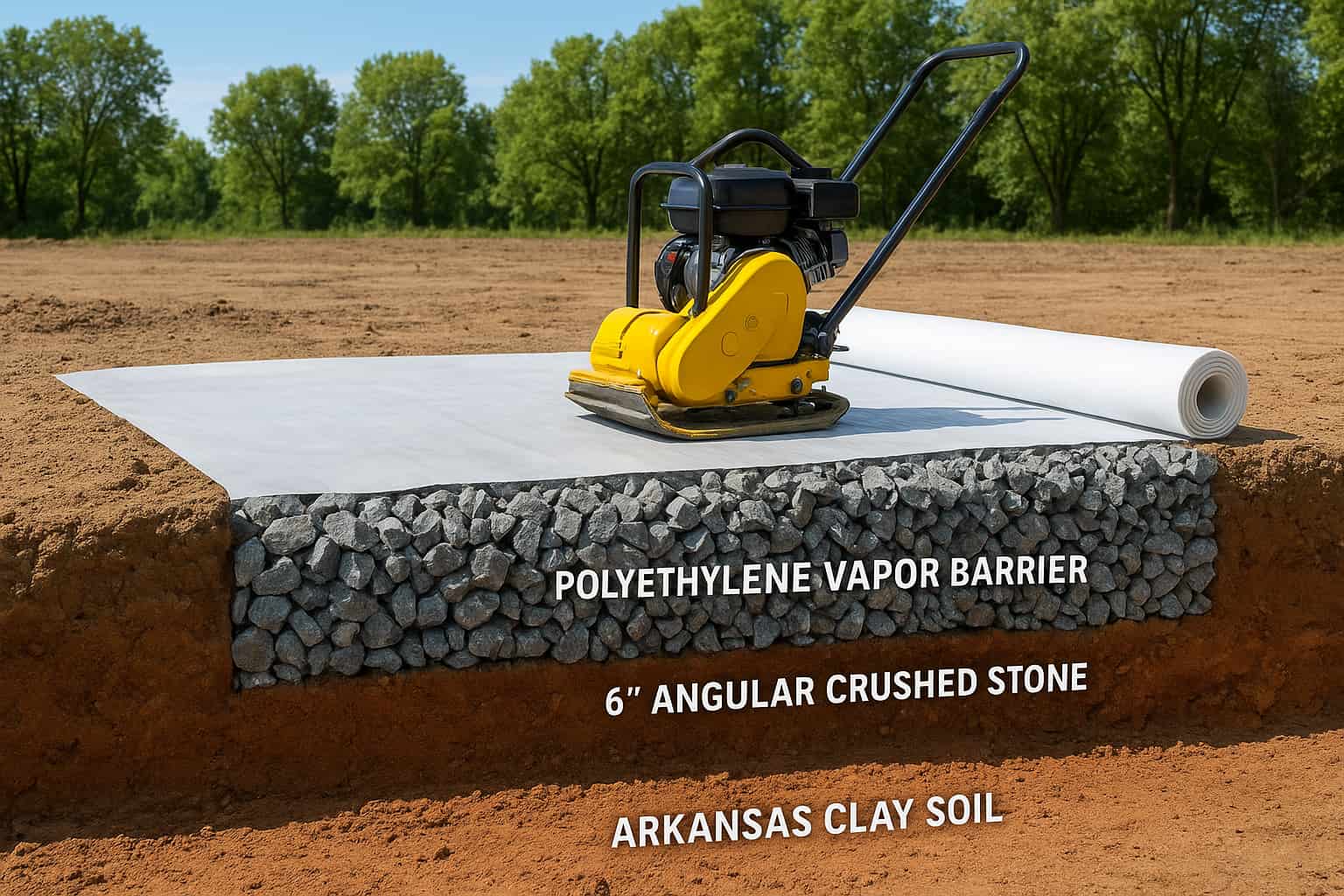
    Fayetteville sits on clay-rich soils that expand when wet and shrink when dry. This seasonal movement places stress on concrete slabs and requires proper site preparation before pouring. A well-compacted gravel base provides drainage and creates a stable foundation that minimizes the effects of clay soil movement on your concrete.[20]

    During curing, ensure water used for wet curing drains away from the slab edges rather than saturating the clay subgrade, which could cause unwanted swelling and movement.

    Freeze-Thaw Cycles in Northwest Arkansas

    Unlike northern climates with sustained freezing or southern regions that rarely freeze, Arkansas experiences repeated freeze-thaw cycles throughout winter. Temperatures may drop below freezing at night and rise above freezing during the day, creating the worst-case scenario for concrete durability.

    Each freeze-thaw cycle causes water in concrete pores to freeze and expand, then thaw and contract. Concrete that has not cured to at least 3,500-4,000 psi before exposure to these cycles is vulnerable to progressive damage called spalling—where the surface layer flakes off over time.[11][18]

    For exterior flatwork in Fayetteville, specify air-entrained concrete with a minimum 28-day strength of 4,000 psi. The microscopic air bubbles created by air entrainment provide space for freezing water to expand without damaging the concrete matrix, dramatically improving freeze-thaw resistance.[12][19]

    Seasonal Timing for Arkansas Concrete Projects

    The best time to pour concrete in Fayetteville is during spring (April-May) or fall (September-October) when temperatures are moderate, humidity is reasonable, and you are less likely to face temperature extremes during the critical first week of curing. Summer pours require aggressive moisture retention methods and protection from heat, while winter pours need insulation and freeze protection.

    Common Curing Mistakes Arkansas Homeowners Should Avoid

    Understanding what not to do is just as important as knowing proper curing methods. These common mistakes can compromise your concrete’s strength and durability:

    Sealing Too Soon

    The decorative concrete industry’s 28-day waiting period before sealing is primarily about ensuring the concrete is dry enough to accept sealers without trapping moisture, not about achieving strength.[7] Many sealers can trap moisture beneath the surface, causing hazing, blushing, or bond failure. However, this does not apply to curing compounds, which are specifically designed to be applied within hours of finishing.

    Wait at least 28 days before applying decorative sealers or topical coatings to allow the concrete to dry adequately. In high-humidity conditions, you may need to wait longer and verify moisture levels before sealing.

    Walking or Driving on Concrete Too Early

    While concrete may feel hard after 24 hours, it has only developed 20-30% of its final strength. Heavy foot traffic or vehicle loads during this period can cause surface damage, cracking, or permanent impressions. Wait the full 48 hours before allowing foot traffic and 7 days before driving vehicles on new concrete.[2][6]

    Failing to Protect from Temperature Extremes

    Both hot and cold temperature extremes damage curing concrete. Exposure to freezing before reaching 500 psi (usually 24-48 hours) can cause permanent strength loss of up to 50%.[11][18] Conversely, allowing concrete to dry out rapidly in hot weather results in incomplete hydration and reduced final strength.[13][14]

    Adding Water to “Fix” the Surface

    Adding water to concrete after it has begun to set increases the water-cement ratio at the surface, weakening that layer and making it prone to dusting and scaling. This is particularly tempting during hot weather when the surface dries quickly, but resist the urge. Instead, use proper misting or wet curing methods that do not saturate the surface.[13]

    Comparison: Curing vs. Drying

    AspectCuringDrying
    DefinitionChemical process (hydration) where cement reacts with water to form strong bondsPhysical process where excess moisture evaporates from concrete surface
    TimelinePrimary curing occurs over 28 days; hydration continues for months/yearsVaries by thickness, temperature, and humidity; can take weeks to months for complete drying
    Moisture GoalKeep concrete moist to allow hydration to continueAllow excess water to evaporate until concrete reaches equilibrium with environment
    Effect on StrengthProper curing develops maximum compressive strength and durabilityDrying does not affect strength; it only relates to moisture content for sealing/coating compatibility
    Best PracticesUse wet curing, plastic sheeting, curing compounds; maintain moisture for first 7 daysAllow natural evaporation; protect from premature drying during curing phase
    When It MattersCritical for first 7-28 days after pouring to achieve designed strengthMatters when applying sealers, coatings, or floor coverings that require dry substrate

    When to Call a Professional Concrete Contractor

    While understanding concrete curing helps you make informed decisions, many factors require professional expertise. A qualified concrete contractor ensures proper mix design for Arkansas conditions, knows when weather requires special measures, and has the equipment and experience to protect your investment during curing.

    Professional contractors understand local challenges like clay soil preparation, air-entrainment requirements for freeze-thaw resistance, and how Fayetteville’s climate affects curing timelines. They will adjust mix designs for seasonal conditions, schedule pours during optimal weather windows, and implement appropriate curing methods without you having to worry about the technical details.

    For critical projects like foundations, structural slabs, or decorative concrete with expensive finishes, the expertise of an experienced contractor is invaluable in ensuring your concrete cures properly and performs as expected for decades to come.

    Conclusion

    Concrete takes 28 days to fully cure and reach its designed strength, but you can use your new driveway, patio, or walkway much sooner with proper precautions—walking after 24-48 hours and light vehicles after 7 days. The key to long-lasting, durable concrete is protecting it during those critical first 7 days when most strength development occurs.

    Arkansas homeowners face unique challenges with temperature extremes, clay soils, and freeze-thaw cycles that require thoughtful planning and proper curing methods. Whether you are keeping concrete wet during a hot Fayetteville summer or protecting it with insulating blankets during a cold winter, taking curing seriously ensures your concrete investment delivers the strength, durability, and longevity you expect.

    Understanding how concrete cures empowers you to make better decisions about project timing, helps you recognize when contractors are taking proper precautions, and gives you the knowledge to care for your new concrete correctly. If you have questions about your specific project or need professional concrete services in the Fayetteville area, contact experienced local contractors who understand Arkansas’s unique conditions and can ensure your concrete cures properly for maximum performance.

    How Long Does Concrete Take to Cure FAQs

    Can I walk on concrete after 24 hours?

    Yes, concrete is generally safe for light foot traffic after 24-48 hours when it has hardened enough to support your weight without surface damage. At this point, concrete has developed about 20-30% of its final strength. However, you should still avoid heavy or concentrated loads, sharp impacts, or dragging heavy objects across the surface during this early stage.[2][6]

    How long before I can drive on new concrete?

    You should wait at least 7 days before driving on new concrete, when it has reached approximately 60-75% of its designed strength. For heavy vehicles, trailers, or loaded trucks, waiting closer to 14 days provides an extra margin of safety. Following these timelines prevents surface damage, cracking, and permanent impressions that can occur when loads are applied too early.[2][6]

    Does concrete cure faster in hot weather?

    Hot weather initially speeds up the hydration reaction, causing concrete to gain early strength more rapidly. However, this accelerated curing can actually result in lower final strength—potentially 10-15% weaker at 28 days compared to concrete cured at moderate temperatures. The rapid moisture loss in hot conditions also increases the risk of cracking and surface defects if proper curing methods are not used.[13][14]

    What happens if concrete freezes while curing?

    If concrete freezes before reaching a minimum strength of 500 psi (typically 24-48 hours after pouring), it can suffer permanent damage including up to 50% reduction in final strength. When water in concrete freezes, it expands by about 9%, creating internal cracks and disrupting the bond between cement paste and aggregates. Properly protecting concrete from freezing during the first 2-3 days is critical for Arkansas homeowners during winter months.[9][11][18]

    How do I know when concrete is fully cured?

    Concrete reaches its designed strength at 28 days, at which point it is considered fully cured for practical purposes. You cannot determine cure level by appearance alone—properly cured concrete and poorly cured concrete may look identical on the surface. The only way to verify strength is through professional testing, but following the 28-day timeline established by the American Concrete Institute ensures your concrete has achieved its specified performance.[1][2]

    How Long Does Concrete Take to Cure Citations

    1. National Precast Concrete Association. “The 28-Day Myth.” https://precast.org/blog/28-day-myth/
    2. Concept Concrete. “How Long Should Concrete Cure Before Putting Weight on It?” https://conceptconcrete.com.au/blog/how-long-should-concrete-cure-before-putting-weight-on-it/
    3. Concrete Network. “Concrete Curing Time: How Long Does Concrete Take To Dry?” https://www.concretenetwork.com/curing-concrete/
    4. ToolsRail. “Concrete Curing Time Calculator – Estimate Ideal Curing Duration Online.” https://www.toolsrail.com/civil/concrete-curing-time-calculator.php
    5. The Constructor. “Curing of Cement Concrete – Time and Duration.” https://theconstructor.org/concrete/concrete-curing-time-duration/11119/
    6. Renovated. “Concrete Curing Time Charts for Homeowners and DIYers (Updated for 2025).” https://renovated.com/concrete-curing-time-chart/
    7. Concrete Decor. “Why Does the Decorative Concrete Industry Focus on a 28-day Cure Time?” https://www.concretedecor.net/departments/concrete-sealers/why-does-the-decorative-concrete-industry-focus-on-a-28-day-cure-time/
    8. Express Concrete Ltd. “How Does the Weather Affect the Setting Time of Ready Mix Concrete.” https://expressconcreteltd.com/how-does-the-weather-affect-the-setting-time-of-ready-mix-concrete/
    9. Ayres Associates. “How to Cure Concrete in Cold Conditions.” https://www.ayresassociates.com/how-to-cure-concrete-in-cold-conditions/
    10. Concrete Network. “Curing Concrete in Cold Weather – Concrete Blankets, Additives & Heaters.” https://www.concretenetwork.com/cold-weather-concrete/curing.html
    11. For Construction Pros. “How to Protect Concrete During Cold Weather Pours.” https://www.forconstructionpros.com/concrete/equipment-products/article/11232331/kb-engineering-llc-how-to-protect-concrete-during-cold-weather-pours
    12. Michigan Concrete. “Cold Weather Concreting.” https://www.miconcrete.org/cold-weather-concreting
    13. Concrete Network. “Hot Weather Concrete: Summer Pouring & Curing Tips.” https://www.concretenetwork.com/hot-weather-concreting/tips.html
    14. Maturix. “Hot Weather Concreting.” https://maturix.com/by-challenges/hot-weather-concreting/
    15. Converge. “Can Humidity Affect Concrete Curing Time?” https://www.converge.io/blog/concrete-humidity
    16. Concrete Countertop Institute. “Temperature and Relative Humidity: What They Mean for You and Your Concrete Countertops.” https://concretecountertopinstitute.com/free-training/temperature-and-relative-humidity-what-they-mean-for-you-and-your-concrete-countertops/
    17. Triangle Ready Mix. “Concrete Curing in Hot Weather.” https://trianglereadymix.com/concrete-curing-in-hot-weather/
    18. Converge. “What Happens if Concrete Freezes During Curing Time?” https://www.converge.io/blog/blog-what-happens-if-concrete-freezes
    19. MICONCRETE. “Cold Weather Concrete.” https://www.miconcrete.org/cold-weather
    20. AR Concrete Fayetteville. “How Thick Should a Concrete Driveway Be in Arkansas?” https://arconcretefayetteville.com/how-thick-should-a-concrete-driveway-be-in-arkansas/
  • What are the different types of concrete used in residential projects?

    What are the different types of concrete used in residential projects?

    Key Takeaways

    • Standard residential concrete ranges from 2,500 to 4,000 PSI, with driveways requiring 3,000-4,000 PSI and sidewalks needing 2,500-3,000 PSI for optimal durability.
    • Ready-mix concrete costs $122-$145 per cubic yard in Fayetteville, offering consistent quality and eliminating on-site mixing challenges.[1]
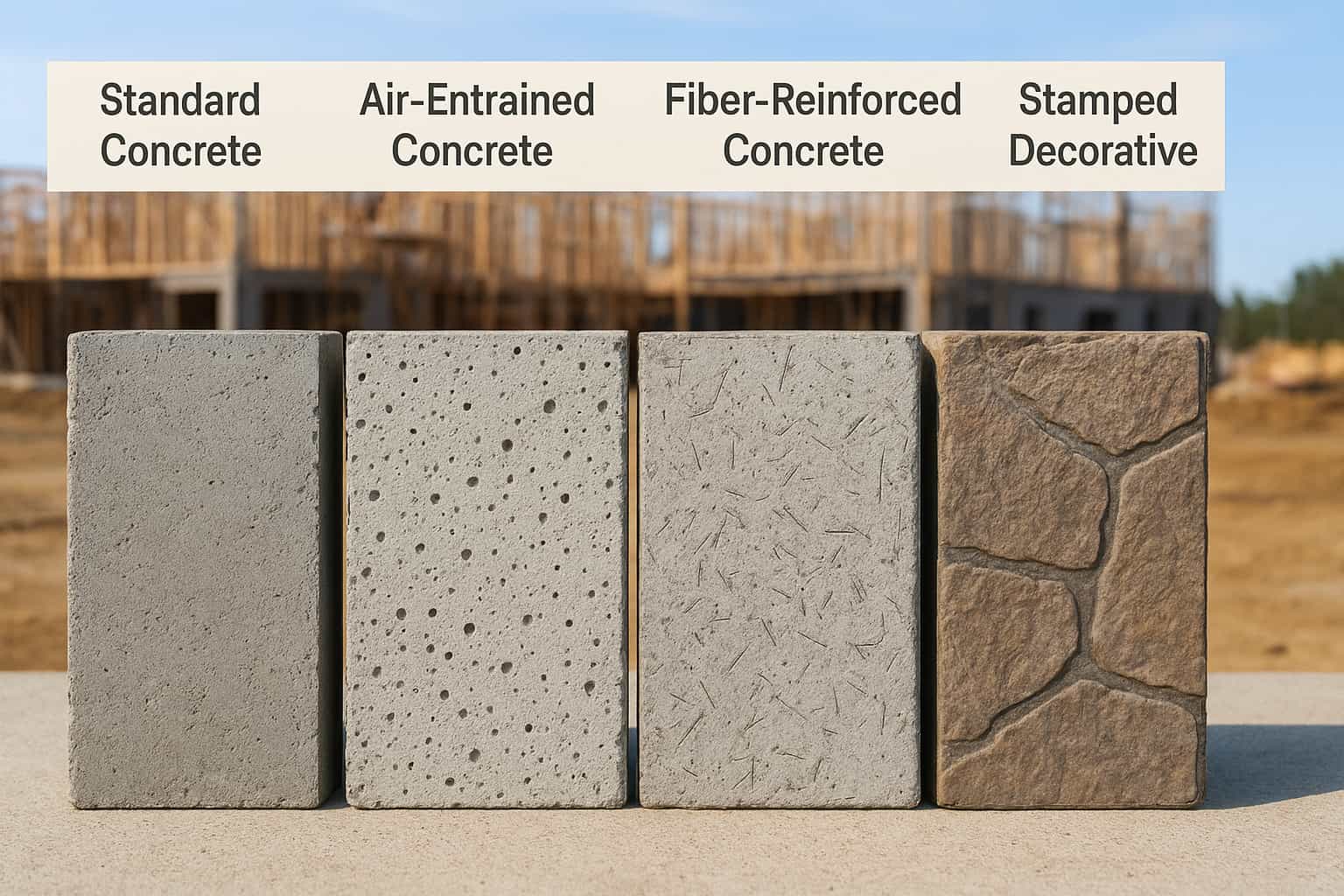
    • Air-entrained concrete is essential for Arkansas freeze-thaw protection, with microscopic air bubbles (4-8% of volume) providing critical protection for outdoor applications during the 5-6 month freeze-thaw season.[2]
    • Fiber-reinforced concrete reduces cracking by up to 90% compared to standard mixes, making it ideal for garage floors and driveways subject to temperature fluctuations.[3,63]
    • Stamped decorative concrete replicates expensive materials at 40-60% lower cost, offering ashlar slate, cobblestone, and wood plank patterns that withstand Northwest Arkansas weather.[4]

    Understanding Residential Concrete Types: A Quick Guide

    Residential concrete projects use specific mix designs based on strength requirements (PSI ratings), application type, and climate exposure, with standard options including ready-mix concrete at 3,000-4,000 PSI for driveways, air-entrained mixes for freeze-thaw protection, fiber-reinforced concrete for crack resistance, and decorative stamped concrete for aesthetic appeal.

    Standard Residential Concrete by Strength (PSI)

    Concrete strength is measured in pounds per square inch (PSI), indicating how much compressive force the material can withstand before failure. For Fayetteville homeowners, understanding PSI ratings helps ensure your concrete performs reliably through Northwest Arkansas’s temperature swings and moisture cycles.[5]

    Standard residential concrete typically achieves full strength after 28 days of curing, though it reaches approximately 70% strength within 7 days.[6] The American Concrete Institute recommends selecting PSI ratings based on anticipated loads and environmental exposure rather than simply choosing the strongest available mix.

    2,500 PSI Concrete: Light-Duty Applications

    This lower-strength concrete works well for sidewalks, pathways, and patios that won’t support vehicle traffic. In Fayetteville, 2,500 PSI concrete provides adequate performance for non-load-bearing applications where foot traffic is the primary concern.[7] The mix typically contains fewer cement bags per cubic yard, making it more economical for projects like garden walkways or decorative borders.

    3,000-3,500 PSI Concrete: General Residential Use

    Most residential driveways, garage floors, and standard patios require 3,000 to 3,500 PSI concrete to handle regular vehicle traffic without premature cracking. This mid-range strength provides the optimal balance between cost and performance for typical Arkansas homeowner needs.[8] A standard 3,000 PSI mix uses approximately 5 sacks of cement per cubic yard, while 3,500 PSI increases to 5.5 sacks for enhanced durability in high-use areas.

    4,000+ PSI Concrete: Heavy-Duty Applications

    Driveways supporting RVs, boat trailers, or commercial vehicles benefit from 4,000 PSI concrete, which uses 6 sacks of cement per cubic yard.[9] In areas experiencing severe weather conditions, the American Concrete Institute recommends 4,500 PSI for outdoor concrete exposed to frequent freeze-thaw cycles.[10] Higher PSI concrete offers superior impermeability, reducing water absorption that can cause frost damage during Arkansas winters.

    Concrete Strength (PSI)Best ApplicationsTypical Cost per Yard (Fayetteville)Cure Time to Full Traffic
    2,500 PSISidewalks, pathways, light patios$122-$13048-72 hours (light use), 7 days (full)
    3,000 PSIStandard driveways, patios, garage floors$130-$1385-7 days
    3,500 PSIHeavy-use driveways, foundation slabs$138-$1427 days
    4,000+ PSIRV pads, commercial driveways, structural$142-$1457-10 days

    Ready-Mix Concrete: The Standard for Residential Projects

    Ready-mix concrete arrives at your property pre-batched in mixer trucks, eliminating inconsistencies from on-site mixing and ensuring quality control. For Fayetteville homeowners tackling projects larger than small repairs, ready-mix represents the most reliable option for achieving professional results.[11]

    The concrete industry batches ready-mix in controlled plant environments, precisely measuring cement, aggregates, water, and admixtures according to engineered specifications. This consistency proves especially valuable for residential projects where concrete strength and durability directly impact long-term property value.

    How Ready-Mix Concrete Works

    Concrete plants combine Portland cement, sand, gravel or crushed stone, and water in specific ratios to achieve desired PSI ratings. The mixer truck’s rotating drum keeps ingredients blended during transport, preventing separation that would compromise strength.[12] Most ready-mix trucks hold 8-10 cubic yards of concrete, sufficient for a standard two-car driveway (approximately 640 square feet at 4 inches thick).

    Benefits for Fayetteville Homeowners

    Ready-mix concrete offers several advantages over bag mixes for residential projects. The quality control from batch plants ensures consistent strength throughout your driveway or patio, while professional delivery eliminates the physical labor of mixing dozens of 80-pound bags.[13] Time savings prove substantial—a mixer truck can pour a standard driveway in 1-2 hours compared to multiple days of mixing bags by hand.

    In Fayetteville’s climate, ready-mix suppliers can adjust mix designs to include air-entraining admixtures for freeze-thaw protection without homeowners needing to measure and add these critical components themselves. The water-cement ratio remains precisely controlled, preventing the common DIY mistake of adding excessive water that weakens the finished concrete.[14]

    Cost Considerations

    Ready-mix concrete in Fayetteville ranges from $122 to $145 per cubic yard depending on PSI rating, with most residential projects using 3,000-4,000 PSI mixes.[1] Delivery fees typically apply for distances exceeding 20 miles from the batch plant, and many suppliers charge “short load” fees (an additional $50-$100) for orders under 4-5 cubic yards.[15]

    Air-Entrained Concrete: Protection Against Freeze-Thaw Damage

    Northwest Arkansas experiences a 5-6 month freeze-thaw season from late October through mid-April, making air-entrained concrete essential for outdoor residential applications.[16] This specialized concrete contains billions of microscopic air bubbles—typically comprising 4-8% of the concrete volume—that act as expansion chambers when water freezes within the concrete matrix.

    The Science Behind Air Entrainment

    During winter months, water that penetrates concrete through natural pores expands approximately 9% upon freezing. Without air entrainment, this expansion creates internal pressure that causes surface scaling, spalling, and progressive deterioration.[17] The microscopic air bubbles in air-entrained concrete provide relief spaces for freezing water, preventing destructive pressure buildup that would otherwise crack and damage the surface.

    Air-entraining admixtures work similarly to soap, creating stable microscopic air voids uniformly distributed throughout the concrete. These bubbles measure 0.004 to 0.04 inches in diameter—far smaller than accidentally trapped air pockets from poor consolidation.[2]

    Applications in Fayetteville

    Any exterior concrete in Northwest Arkansas should specify air-entrained mixes, including driveways, patios, walkways, steps, and pool decks. The American Concrete Institute classifies Fayetteville’s climate as “moderate exposure” for freeze-thaw, recommending 5-7% air content for 3/4-inch maximum aggregate sizes.[18]

    Interior concrete like basement floors and garage slabs generally don’t require air entrainment unless they’re exposed to moisture and freezing temperatures. However, garage floors near overhead doors may benefit from air entrainment in the first few feet closest to the entrance where snow and ice accumulation occurs.[19]

    Impact on Workability and Finishing

    Air-entrained concrete exhibits improved workability compared to non-air-entrained mixes, flowing more easily and requiring less water for proper placement. This characteristic proves particularly valuable for Fayetteville contractors working in summer heat when concrete can set quickly.[20] The air bubbles act as tiny ball bearings, improving the concrete’s plasticity without compromising strength when properly proportioned.

    Finishers must allow air-entrained concrete to bleed (surface water evaporation) completely before troweling, as premature finishing traps bleed water beneath the surface, creating weak planes that spall in freeze-thaw conditions.[21] This typically requires 15-30 minutes longer than non-air-entrained concrete, depending on weather conditions.

    Fiber-Reinforced Concrete: Enhanced Crack Resistance

    Fiber-reinforced concrete incorporates synthetic, steel, or glass fibers throughout the mix, providing three-dimensional reinforcement that controls shrinkage cracking and improves impact resistance. For Arkansas homeowners concerned about concrete durability, fiber reinforcement offers substantial benefits without the placement complexity of traditional rebar or wire mesh.[22]

    Types of Concrete Fibers

    Polypropylene micro-fibers are the most common residential option, consisting of millions of tiny plastic fibers (typically 0.5-2 inches long) uniformly distributed throughout the concrete. These fibers primarily control plastic shrinkage cracking—the hairline cracks that appear within the first 24 hours as concrete loses moisture while curing.[23] Standard dosage rates of 1-1.5 pounds of micro-fibers per cubic yard reduce plastic shrinkage cracking by up to 90% compared to unreinforced concrete.[63]

    Macro-synthetic fibers provide structural reinforcement, replacing or supplementing wire mesh in some applications. These larger fibers (1.5-2.5 inches long) improve the concrete’s post-crack load-carrying capacity, helping slabs hold together even after cracks develop.[24] Macro-fibers work particularly well for garage floors and basement slabs where traditional reinforcement placement proves challenging.

    Steel fibers offer the highest strength enhancement but cost more and require careful handling to prevent worker injuries from sharp fiber ends. Commercial and industrial applications favor steel fibers, but residential projects rarely justify the additional expense.[25]

    Benefits for Residential Applications

    Fiber-reinforced concrete reduces shrinkage cracking that commonly plagues residential driveways and patios during the critical first 28 days of curing. In Fayetteville’s summer heat, where temperatures regularly exceed 90°F, concrete can lose moisture rapidly, increasing shrinkage stress that causes cracking.[26] Fibers act as thousands of tiny reinforcements holding the concrete together during this vulnerable period.

    Impact resistance improves substantially with fiber reinforcement, making it ideal for garage floors subjected to dropped tools and equipment. The fibers also increase concrete abrasion resistance, extending service life for high-traffic areas like driveways serving multiple vehicles daily.[3]

    Compatibility with Other Concrete Types

    Fiber reinforcement combines effectively with air-entrained concrete, creating a highly durable mix suitable for Arkansas climate conditions. The fibers don’t interfere with air-entraining admixtures, and many ready-mix suppliers offer pre-packaged fiber options that can be added to any standard mix design.[27]

    When paired with higher PSI concrete (4,000+), fiber-reinforced mixes create exceptionally durable driveways capable of withstanding heavy vehicle loads while resisting both shrinkage cracking and freeze-thaw damage. This combination proves especially valuable for RV pads and shop driveways where durability justifies the modest cost increase.[28]

    Stamped and Decorative Concrete: Aesthetic Options

    Stamped concrete transforms standard concrete into visually striking surfaces that replicate natural stone, brick, tile, or wood at 40-60% lower cost than authentic materials. For Fayetteville homeowners seeking curb appeal without premium material pricing, decorative concrete offers compelling value.[29]

    Popular Stamped Patterns for 2025

    Ashlar slate patterns continue dominating Arkansas installations, featuring rectangular stones in staggered layouts that create sophisticated, timeless appearances. The texture provides excellent slip resistance for pool decks and patios while complementing both traditional and contemporary home styles.[30]

    Wood plank textures have surged in popularity, offering the warmth of hardwood decking without susceptibility to rot, termites, or Arkansas’s high humidity. These patterns work exceptionally well for covered patios and outdoor living spaces where homeowners desire natural wood aesthetics with concrete durability.[31]

    Cobblestone designs bring Old World European charm to Fayetteville driveways and walkways. The mixed sizes and colors create visual depth while the textured surface improves traction during wet weather.[4]

    Color Options and Durability

    Contemporary stamped concrete uses integral color (pigment mixed throughout the concrete) combined with color hardener applied to the surface, creating rich, fade-resistant hues. Popular Arkansas choices include ash gray and charcoal for modern aesthetics, rustic brown and terra cotta for traditional homes, and sandy beige for brightening pool deck areas.[32]

    UV-stable sealers protect stamped concrete from fading, with modern polyurethane and acrylic sealers maintaining color vibrancy for 2-3 years between resealing. Properly sealed stamped concrete withstands Northwest Arkansas’s freeze-thaw season better than individual pavers, which can shift and create tripping hazards.[33]

    Maintenance Requirements

    Stamped concrete requires routine cleaning with mild soap and water, plus resealing every 2-3 years to maintain protection and appearance. Arkansas winters necessitate avoiding deicing salts, which accelerate surface deterioration of the decorative finish.[34] Snow removal should use plastic shovels rather than metal blades that can scratch or chip the stamped texture.

    The monolithic nature of stamped concrete—poured as a continuous slab—reduces weed growth and eliminates the joint maintenance required with pavers. For busy Fayetteville homeowners, this translates to less long-term upkeep despite the initial investment in professional installation.[35]

    Concrete Type ComparisonStandard Plain ConcreteStamped Decorative Concrete
    Cost (per sq ft)$6-$9$10-$18
    Aesthetic OptionsBroom or trowel finish only100+ patterns, unlimited colors
    Durability20-30 years20-30 years with proper sealing
    MaintenanceMinimal—occasional cleaningResealing every 2-3 years
    Installation Time1-2 days2-3 days
    Arkansas Climate PerformanceExcellent with air entrainmentExcellent with proper sealing

    Self-Consolidating Concrete (SCC): Specialized Applications

    Self-consolidating concrete flows easily into formwork without mechanical vibration, making it valuable for complex residential applications like foundations with dense reinforcement or intricate architectural elements. While less common for typical driveways and patios, SCC offers advantages for specific Fayetteville projects.[36]

    How SCC Differs from Standard Concrete

    SCC achieves exceptional flowability through high-range water-reducing admixtures (superplasticizers) combined with increased fine aggregate content. The result is concrete with slump flow measurements of 18-30 inches—far exceeding standard concrete’s 3-6 inch slump.[37] Despite this extreme flowability, properly designed SCC doesn’t segregate, maintaining uniform distribution of aggregate throughout the mix.

    The viscosity modifiers in SCC prevent bleeding and segregation that would occur if standard concrete were simply made wetter. This creates concrete that flows like honey—filling every corner of formwork while suspending aggregate uniformly without vibration.[38]

    Residential Applications

    Foundation walls with congested rebar benefit from SCC’s ability to flow through tight spaces without creating voids. For Fayetteville homes built on sloped lots requiring retaining walls with dense reinforcement, SCC eliminates consolidation challenges that can compromise structural integrity.[39]

    Architectural features like decorative columns, intricate steps, or custom concrete elements use SCC to capture fine formwork details without honeycombing or surface defects. The superior surface finish of SCC reduces patching and finishing labor, offsetting its higher material cost for appearance-critical applications.[40]

    Cost and Availability

    SCC typically costs 10-30% more than standard concrete due to higher cement content and specialized admixtures. Not all ready-mix suppliers in Northwest Arkansas stock SCC or have the quality control procedures to produce it consistently, so homeowners should discuss availability during project planning.[41]

    Rapid-Set Concrete: Fast-Track Projects

    Rapid-set concrete uses calcium aluminate cement or specialized admixtures to achieve structural strength in hours rather than days, making it ideal for repairs and projects requiring fast return to service. For Fayetteville homeowners needing to restore driveway access quickly, rapid-set mixes offer compelling advantages.[42]

    Setting Times and Strength Development

    Standard rapid-set concrete mixes achieve initial set in 20-40 minutes and reach 4,000 PSI compressive strength within 24 hours—compared to 28 days for traditional concrete.[43] Some high-performance rapid-set products allow light foot traffic in 3-4 hours and vehicle traffic in 6-12 hours, dramatically reducing project downtime.[44]

    The accelerated strength gain comes from hydraulic cement chemistry that hydrates more quickly than standard Portland cement. This rapid hydration also generates more heat, requiring careful mixing and placement procedures to prevent thermal cracking.[45]

    Ideal Applications

    Driveway repairs, sidewalk sections, and concrete step replacements benefit most from rapid-set technology. Instead of barricading areas for days, homeowners can restore normal use within hours of pouring.[46] Fence post setting represents another popular application, allowing fence installation to proceed without waiting days for concrete to cure before hanging gates and panels.

    In Arkansas’s winter months when temperatures drop below 50°F, rapid-set concrete cures more reliably than standard mixes that slow dramatically in cold weather. This extends the viable construction season for concrete projects requiring quick turnaround.[47]

    Limitations and Considerations

    Rapid-set concrete costs approximately 20-40% more than standard concrete per bag, making it less economical for large-scale projects like complete driveways or patios. The short working time (typically 15-30 minutes) demands quick, organized placement—inexperienced DIYers may struggle with the compressed timeline.[48]

    For major residential projects, the labor and material cost savings from faster completion rarely offset rapid-set concrete’s premium pricing. It remains best suited for repairs, small installations, and situations where downtime costs exceed material premiums.

    Pervious (Permeable) Concrete: Sustainable Drainage

    Pervious concrete contains carefully controlled void spaces (15-20% of total volume) that allow water to drain through the pavement into underlying soil. While less common for Fayetteville driveways, this specialized concrete addresses drainage challenges and stormwater management for specific residential applications.[49]

    How Pervious Concrete Works

    By eliminating or drastically reducing fine aggregates (sand), pervious concrete creates connected voids that channel water vertically through the slab. Drainage rates of 2-8 gallons per square foot per minute far exceed natural soil infiltration, preventing puddles and runoff even during Arkansas’s heavy spring thunderstorms.[50]

    The compressive strength of pervious concrete typically ranges from 400-4,000 PSI depending on void ratio—sufficient for residential driveways and parking areas but not appropriate for heavy commercial vehicles.[51] For Fayetteville properties with poor drainage or limited retention options, pervious concrete offers environmental and practical benefits.

    Residential Applications

    Long driveways on sloped properties use pervious concrete to eliminate runoff erosion and reduce water channeling onto sidewalks or neighboring lots. Patio areas around pools benefit from immediate drainage, improving safety by eliminating standing water that creates slip hazards.[52]

    Some Fayetteville neighborhoods with strict stormwater management requirements favor pervious concrete for its ability to meet retention regulations without installing separate drainage infrastructure. The concrete’s natural filtering action also removes pollutants from runoff before water reaches groundwater.[53]

    Maintenance Requirements

    Pervious concrete requires periodic vacuuming or pressure washing to prevent void spaces from clogging with sediment, leaves, and debris. In Arkansas, this maintenance typically occurs annually to maintain optimal drainage performance.[54] Winter applications require caution—pervious concrete should never be sealed, which would eliminate its drainage capability, making deicing salt applications the only freeze protection option.

    Arkansas-Specific Concrete Considerations

    Northwest Arkansas’s climate creates unique challenges and requirements for residential concrete that homeowners should understand before selecting concrete types and mix designs.

    Freeze-Thaw Cycle Protection

    Fayetteville typically experiences first freezes in late October and last freezes in mid-April, creating a 5-6 month freeze-thaw season.[16,55] The American Concrete Institute classifies Northwest Arkansas as “moderate exposure” for freeze-thaw conditions, requiring air-entrained concrete for all exterior applications to prevent progressive surface damage over time.[18]

    The American Concrete Institute recommends a maximum water-cement ratio of 0.45 for severe weather regions, though Fayetteville’s classification as moderate exposure allows up to 0.50 water-cement ratio when combined with proper air entrainment.[10] Local contractors familiar with Arkansas conditions will adjust mix designs appropriately without homeowner intervention.

    Clay Soil Challenges

    Much of Fayetteville sits on expansive clay soils that swell with moisture and shrink during dry periods. This soil movement can create uneven support beneath concrete slabs, leading to cracking even in well-designed mixes.[56] Proper subbase preparation with 4-6 inches of compacted gravel provides a stable, non-expansive foundation that isolates concrete from clay soil movement.

    Reinforcement becomes particularly important for Arkansas clay soils. While some regions can skip rebar or wire mesh for residential driveways, Fayetteville contractors typically recommend at least #4 rebar at 18-24 inch spacing or 6×6 W2.9xW2.9 welded wire mesh to control cracking from subgrade movement.[57]

    High Humidity Effects

    Arkansas’s average relative humidity of 60-70% affects concrete curing, sometimes extending the time required for moisture content to drop sufficiently for sealers or coatings. Summer pours in high humidity may require 7-10 days of curing before applying decorative stains or sealers, compared to 5-7 days in drier climates.[58]

    The humid conditions do benefit concrete strength development—moisture in the air reduces rapid surface drying that can cause shrinkage cracking. However, contractors must still apply curing compounds or keep concrete damp through periodic watering to achieve optimal strength gains.

    Choosing the Right Concrete for Your Project

    Selecting appropriate concrete for residential projects requires matching concrete type and strength to specific application requirements while considering Fayetteville’s climate conditions and your budget constraints.

    Evaluation Framework

    Start by identifying your project’s primary load requirements. Sidewalks and light-use patios need only 2,500-3,000 PSI, while driveways supporting daily vehicle traffic require 3,000-3,500 PSI minimum. Projects involving RVs, boats, or commercial vehicles justify 4,000+ PSI for long-term durability.

    Consider exposure conditions next. Any exterior concrete in Northwest Arkansas should specify air-entrained mixes—discuss this requirement with your contractor or ready-mix supplier to ensure proper specification. Interior garage floors don’t require air entrainment unless the first several feet near door openings see regular snow and ice exposure.[59]

    Crack control needs dictate fiber reinforcement decisions. If your property has experienced concrete cracking problems previously, or if the project involves long, narrow pours susceptible to shrinkage cracks, adding fiber reinforcement provides inexpensive insurance against premature failure.[60]

    Budget Considerations

    Ready-mix concrete in Fayetteville ranges from $122-$145 per cubic yard depending on strength rating and additives. A typical two-car driveway (18′ x 40′ x 4″ thick) requires approximately 8.9 cubic yards, costing $1,090-$1,290 for concrete alone.[1] Adding fiber reinforcement increases costs by $5-$8 per cubic yard, while air entrainment adds $2-$4 per cubic yard—modest premiums for substantial durability improvements.

    Stamped decorative concrete costs $10-$18 per square foot installed compared to $6-$9 for plain concrete, representing a 65-100% premium. For many Fayetteville homeowners, the aesthetic value and property value enhancement justify this investment for highly visible areas like front walkways and patio spaces.[61]

    Working with Contractors

    Reputable concrete contractors will discuss mix design options during estimating, explaining PSI recommendations and additive benefits for your specific project. They should specify appropriate joint spacing based on project dimensions—residential concrete typically requires control joints every 8-10 feet to control cracking from shrinkage and thermal movement.[62]

    For Northwest Arkansas conditions, contractors experienced with local climate challenges will automatically specify air-entrained concrete for exterior work and recommend appropriate curing procedures for the season. Verify that estimates include proper subbase preparation—inadequate gravel base and compaction cause more concrete failures than poor concrete quality.

    Conclusion

    Understanding the different types of concrete used in residential projects empowers Fayetteville homeowners to make informed decisions that balance performance, aesthetics, and budget. From standard ready-mix concrete providing reliable strength for driveways and patios, to specialized options like air-entrained mixes protecting against Arkansas’s freeze-thaw season and fiber-reinforced concrete controlling shrinkage cracks, each concrete type serves specific purposes.

    The key to successful residential concrete projects lies in matching concrete specifications to application requirements while accounting for Northwest Arkansas’s unique climate conditions. Whether you’re installing a basic sidewalk requiring 2,500 PSI concrete or creating an elaborate stamped patio with 4,000 PSI decorative concrete, selecting appropriate materials ensures decades of reliable performance and enjoyment.

    For professional concrete installation in Fayetteville that combines technical expertise with attention to local climate challenges, AR Concrete Fayetteville specializes in all residential concrete applications, from standard driveways to decorative stamped surfaces designed to enhance your property value and withstand Northwest Arkansas weather conditions.

    Types of Concrete for Residential Projects FAQs

    What types of concrete are best for driveways in Fayetteville?

    For residential driveways in Fayetteville, 3,000-4,000 PSI air-entrained ready-mix concrete provides optimal performance, with fiber reinforcement recommended for enhanced crack resistance against Arkansas temperature fluctuations and clay soil movement. This combination typically costs $130-$145 per cubic yard and withstands daily vehicle traffic while protecting against freeze-thaw damage.

    How do different types of concrete compare in cost for residential projects?

    Standard ready-mix concrete costs $122-$145 per cubic yard in Fayetteville depending on PSI rating, with basic 3,000 PSI at the lower end and 4,000+ PSI at the higher end. Stamped decorative concrete ranges from $10-$18 per square foot installed compared to $6-$9 for plain concrete, while rapid-set concrete costs 20-40% more than standard mixes but reduces project downtime.

    What is air-entrained concrete and why is it important in Arkansas?

    Air-entrained concrete contains billions of microscopic air bubbles (4-8% of volume) that protect against freeze-thaw damage by providing expansion space for freezing water, preventing the surface scaling and cracking common during Northwest Arkansas’s 5-6 month freeze-thaw season from late October through mid-April. This concrete type is essential for all exterior residential applications including driveways, patios, and walkways.

    Should I use fiber-reinforced concrete for my residential project?

    Fiber-reinforced concrete benefits garage floors, driveways, and long narrow pours susceptible to shrinkage cracking, reducing crack formation by up to 90% compared to standard concrete at a modest cost increase of $5-$8 per cubic yard. For Fayetteville homeowners concerned about concrete durability or properties with previous cracking problems, fiber reinforcement provides valuable insurance against premature failure.

    What’s the difference between stamped concrete and regular concrete?

    Stamped concrete uses the same strength specifications as regular concrete (typically 3,000-4,000 PSI) but includes textured patterns and colors applied during finishing to replicate natural stone, brick, or wood at 40-60% lower cost than authentic materials. While regular concrete provides a plain broom or trowel finish, stamped concrete offers 100+ pattern options with unlimited color combinations for enhanced curb appeal.

    Types of Concrete for Residential Projects Citations

    1. Concrete Slab Cost in Fayetteville, Arkansas (2025) – HomeBlue
    2. Fiber-Reinforced Deck Mix – Quikrete
    3. Fiber Reinforced Concrete for Durable Mixes – Cemex US
    4. Popular Stamped Concrete Patterns and Colors for 2025 – Sam The Concrete Man
    5. Concrete PSI Chart 2025 | Strength, Mix Ratio & Use Cases – Certified Material Testing
    6. What is Concrete PSI? Compressive Strength Explained – Concrete Network
    7. Concrete PSI Ratings: What is PSI for Concrete – Ergeon
    8. Understanding PSI in Concrete: Choosing the Right Strength for Your Project – Reel Concrete
    9. Choosing Concrete PSI – Ready Mix Concrete Delivery – Rocket Concrete
    10. What’s the Ideal Concrete PSI for Driveways and Other Residential Structures? – Richfield Concrete
    11. Understanding Concrete Strength: From PSI To Tips For Pouring Concrete – GRA-ROCK
    12. Concrete PSI: Expert Guide to Compressive Strength – Viking Concrete LLC
    13. 3000 PSI vs. 3500 PSI Concrete: Which Is Better for Your Project – Magnolia Concrete Pros
    14. Understanding Concrete Strength: PSI Ratings Explained – R.J. Potteiger Inc.
    15. Concrete Prices 2025 – How Much is a Yard of Concrete? – Concrete Network
    16. Weather Blog: Last Frost/Freeze Climatology For NW Arkansas & the River Valley – KNWA FOX24
    17. AR Concrete Fayetteville
    18. Adding Fiber to Cement – Fine Homebuilding
    19. FAQ’s of Fiber Reinforced Concrete – Jarco Supply
    20. Fibre Reinforced Concrete – Heidelberg Materials UK
    21. Admixtures for Fiber-Reinforced Concrete – Fritz-Pak Corporation
    22. The Advantages of Using Fiber-Reinforced Ready Mix Concrete – Orgain Ready Mix
    23. Concrete SikaFiber Reinforced Concrete Handbook – Sika
    24. Q•Max Pro – Quikrete
    25. Types of Concrete Mixes and their Strengths – EasyMix Concrete UK Ltd
    26. Concrete Contractor – Apron – Driveways – Patios – Fayetteville AR
    27. What are the Latest Stamped Concrete Patterns for 2025? – The Art of Concrete
    28. What Is Stamped Concrete? Everything You Need to Know – Fortis Paving
    29. Stamped concrete: what it is, advantages, moulds, colours and price – Topciment
    30. Stamped Concrete Floors – Interior Flooring – Concrete Craft
    31. What Does Stamped Concrete Look Like? A Complete Guide – Fortis Paving
    32. Concrete Stamps for Sale – 190+ Patterns – GlobMarble
    33. Is Stamped Concrete Outdated in 2025? – Northeast Decorative Concrete
    34. Decorative Stamped Concrete Patterns: The Perfect Blend of Beauty and Functionality – The Concrete Guy
    35. Concrete Stamps (130+ Concrete Stamp Patterns) – Brickform
    36. Self Consolidating High Performance Concrete – SCC
    37. Self Consolidating Concrete – Overview of SCC – Concrete Network
    38. Self-consolidating concrete – Wikipedia
    39. An Introduction to Self-Consolidating Concrete (SCC) – Chryso North America
    40. Self-Consolidating Concrete (SCC) – Specify Concrete
    41. Self Consolidating Concrete – Sika
    42. RAPID SET CEMENT Datasheet – CTS Cement
    43. Fast-Setting or Standard Concrete: How to Decide (2025) – Today’s Homeowner
    44. Product Concrete Mix – CTS Cement
    45. Understanding Rapid-Set Concrete: A Quick Guide – ProallInc
    46. Rapid Set Concrete Mix – Niagara Machine
    47. Fast Setting Concrete – Rapid Strength for Projects – Cemex US
    48. Product Rapid Set Cement – CTS Cement
    49. Freeze-Thaw Resistance of Pervious Concrete
    50. Self-Consolidating Concrete (SCC) – Cemex
    51. SCC CONCRETE – Self-Consolidating Concrete Mixes – Everything About Concrete
    52. Extraordinary Self-Consolidating Concrete – Euclid Chemical
    53. Guide To Implementing And Producing Self-Consolidating Concrete – Precast
    54. NWS Little Rock, AR – Frost and Freeze Information for Arkansas
    55. Frost Heave – Is it all or nothing? – My Large Scale
    56. 2025 Concrete Prices — Concrete Truck Delivery Costs (Per Yard) – HomeGuide
    57. How Much Does Concrete Cost in 2025? – Lawn Love
    58. How Much Does it Cost to Build a House in Arkansas? (2025) – Today’s Homeowner
    59. Concrete Cost Calculator — How Much Will It Cost? – How Much Concrete
    60. Concrete in Little Rock, AR – Costs 10 / 2025 – Homeyou
    61. 2025 Concrete Cost Calculator | Little Rock, Arkansas – Manta
    62. Polypropylene Fibre Concrete: The Ultimate Guide – TenaBrix (February 2025)
  • What’s the Difference Between Concrete and Cement? A Complete Guide for Homeowners

    What’s the Difference Between Concrete and Cement? A Complete Guide for Homeowners

    Key Takeaways:

    • Cement is a fine powder that acts as the binding ingredient in concrete, not a standalone building material
    • Concrete is a composite material made from cement (10-15%), water, sand, and gravel that creates durable surfaces
    • Understanding this difference helps you make informed decisions about driveway, patio, and walkway projects
    • The trucks you see are concrete mixers, not cement mixers, because they carry the complete ready-to-pour material
    • Cement costs approximately $84-140 per metric ton while ready-mix concrete averages $150-180 per cubic yard in 2024-2025[1][2]

    The difference between concrete and cement is that cement is a binding powder ingredient that makes up only 10-15% of concrete, while concrete is the complete structural material combining cement with water, sand, and gravel.[3] Think of it like baking: cement is the flour, while concrete is the finished cake with all ingredients mixed together.

    Understanding What Cement Actually Is

    Cement is a fine gray powder made primarily from ground limestone, clay, sand, and other minerals heated to extreme temperatures.[4] The most common type used in Fayetteville construction projects is Portland cement, named not for a place but because it resembles the color of limestone from England’s Isle of Portland when hardened.[5]

    How Cement Is Manufactured

    Portland cement manufacturing involves heating limestone, shale, iron ore, and clay in a kiln to temperatures between 2,600 and 3,000 degrees Fahrenheit.[3] This intense heat creates rock-hard pellets called clinker, which are then ground with a small amount of gypsum into the fine powder we know as cement. The gypsum prevents the cement from setting too quickly when water is added.[6]

    What Cement Is Used For

    Cement is rarely used alone because it lacks the strength and durability needed for construction projects. When mixed only with water, it creates a paste that’s brittle and prone to cracking.[7] Instead, cement serves as the crucial binding agent in three main products:

    Concrete: Cement mixed with water, sand, and gravel creates the structural material used for driveways, foundations, and sidewalks. Mortar: Cement combined with water and fine sand (no gravel) bonds bricks and blocks together in masonry work. Grout: A fluid mixture of cement, water, and sometimes fine aggregate fills joints in tilework and hollow masonry cells.[8][9]

    What Makes Concrete Different From Cement

    Concrete is a composite material engineered to create strong, durable surfaces that last decades. While cement is just one ingredient, concrete combines four essential components in precise proportions to achieve the right strength and workability for your project.

    The Four Components of Concrete

    Cement acts as the glue that binds everything together through a chemical reaction called hydration. In a typical concrete mix, Portland cement makes up only 10-15% of the total volume.[3] Water activates the cement’s binding properties and controls the concrete’s workability. The water-to-cement ratio directly affects the final strength—less water creates stronger concrete, though too little makes it impossible to place properly.[10]

    Fine aggregates (sand) fill small spaces between larger particles and help create a smooth, workable mixture. Coarse aggregates—gravel or crushed stone—provide the bulk and structural strength of the finished concrete. Together, aggregates occupy 60-75% of concrete’s volume and 70-85% of its weight.[11] For Fayetteville homeowners dealing with expansive clay soils, this aggregate selection becomes particularly important for preventing settlement issues.

    FeatureCementConcrete
    Physical FormFine gray powderSolid, rock-like mass when cured
    CompositionGround limestone, clay, gypsumCement (10-15%), water, sand, gravel
    FunctionBinding agent/ingredientFinished structural material
    StrengthWeak and brittle aloneHigh compressive strength (3,000-8,000+ PSI)
    Typical UsesIngredient in concrete, mortar, groutDriveways, patios, foundations, sidewalks
    Cost (2024-2025)$84-140 per metric ton[1][2]$150-180 per cubic yard[12]
    LifespanLimited shelf life (months)50-100+ years when properly installed

    How Concrete Gains Its Strength

    The transformation from wet mixture to solid surface happens through hydration—a chemical reaction between cement and water that continues for weeks after pouring. This process is why proper curing matters so much for Fayetteville projects, especially during our hot, humid summers.

    The Hydration Process Explained

    When water mixes with cement, it triggers chemical reactions that form calcium silicate hydrate crystals. These microscopic crystals grow and interlock, creating the strong bonds that hold aggregates together.[13] Most strength develops in the first 28 days, though concrete continues gaining strength for months afterward. Standard testing measures compressive strength at 28 days, with typical residential concrete reaching 3,000-4,000 PSI (pounds per square inch).[14]

    Why Arkansas Climate Affects Concrete Curing

    Northwest Arkansas’s weather creates unique challenges for concrete curing. Our hot summers can cause surface moisture to evaporate too quickly, preventing proper hydration and leading to weak, dusty surfaces. Professional contractors like AR Concrete Fayetteville use curing compounds and keep surfaces moist during those critical first seven days. During occasional winter freezes, protection becomes equally important—concrete must cure for at least three days before exposure to freezing temperatures to avoid permanent damage.

    Common Misconceptions About Cement and Concrete

    Myth: Those Big Trucks Are “Cement Mixers”

    The rotating trucks you see on Fayetteville roads are actually concrete mixers, not cement mixers. They carry ready-mix concrete—the complete mixture of cement, water, sand, and gravel that’s ready to pour.[15] The rotation keeps the concrete from hardening during the drive from the batching plant to your home. Once mixed with water, the concrete has about 90 minutes before it starts to set, which is why timing matters so much for delivery and placement.

    Myth: You Can Use Cement Alone for Small Repairs

    While cement mixed only with water creates a paste, it’s unsuitable for most repairs. Pure cement paste is brittle, shrinks excessively during curing, and cracks easily.[16] For patching driveways or fixing cracks, you need either pre-mixed concrete (cement with aggregates already blended) or a proper mortar mix with sand added. For small repairs around your Fayetteville home, hardware stores sell pre-mixed bags that already contain the right proportions of cement and aggregates—just add water.

    The Difference Between Concrete and Cement for Arkansas Projects

    Understanding this distinction matters when planning your Fayetteville concrete project because it affects everything from material selection to cost expectations. You never order “cement” for a driveway, patio, or walkway—you order concrete with specific characteristics suited to Arkansas conditions.

    Concrete Mix Design for Fayetteville Conditions

    Professional concrete contractors in Northwest Arkansas adjust mix designs to handle our challenging clay soils and seasonal temperature swings. A typical residential driveway mix uses 4,000-4,500 PSI concrete with proper air entrainment to resist freeze-thaw damage.[17] The cement content stays around 520-600 pounds per cubic yard, with the water-to-cement ratio carefully controlled between 0.40-0.50 for optimal strength and durability.[18]

    For projects on Fayetteville’s expansive clay soils, contractors may increase the concrete thickness by an inch or improve the gravel base to compensate for soil movement. The aggregates themselves are selected for local conditions—crushed limestone from Arkansas quarries provides excellent bonding with the cement paste and stands up to our weather extremes.

    How Material Costs Break Down

    When you receive a quote for a concrete driveway in Fayetteville, the cement itself represents only a fraction of the total cost. Ready-mix concrete typically costs $150-180 per cubic yard delivered in 2024-2025, which includes the cement (approximately $25-35 worth per cubic yard at bulk prices), aggregates, water, batching, and delivery.[1][12] Labor for site preparation, forming, pouring, and finishing adds another $5.50-9.00 per square foot to professional installations.[19]

    For a standard 20×24-foot (480 square foot) driveway at 4 inches thick, you need about 6 cubic yards of concrete. Material costs run $900-1,080, while total project costs including labor range from $3,000-5,000 depending on site conditions and finishing options.

    Project TypeBest Material ChoiceWhy It Matters
    Driveways & Patios4,000-4,500 PSI concreteHandles vehicle weight and resists Arkansas weather
    Sidewalks3,000-3,500 PSI concreteAdequate strength for foot traffic at lower cost
    BricklayingType N or S mortarBonds masonry units with proper flexibility
    Small RepairsPre-mixed concrete or mortarRight proportions already measured for you
    Tile InstallationGrout (sanded or unsanded)Flows into joints and provides finished appearance

    Expert Perspective on Cement vs Concrete

    According to Stewart Brothers Concrete, a company with over 35 years in the industry: “To understand the nature and role of cement, try to think of it as construction’s flour. You wouldn’t often use it on its own as it has very few uses – even when mixed with water – but add other ingredients with the right qualities and you can use it to make bread, cakes, pastry and biscuits.”[20] This analogy perfectly captures why contractors never work with cement alone—it’s an ingredient that achieves its purpose only when properly combined with aggregates and water.

    Making the Right Choice for Your Fayetteville Project

    When planning outdoor improvements for your Fayetteville home, you’ll be working with concrete for structural elements like driveways, patios, and walkways. The cement itself isn’t something you’ll purchase separately—it comes pre-measured in the concrete mix designed for your specific application.

    Questions to Ask Your Contractor

    Understanding the difference between concrete and cement helps you ask the right questions when getting quotes. Ask about the concrete mix design—specifically the PSI rating and whether it includes air entrainment for freeze-thaw protection. Inquire about aggregate sources and whether the mix is adjusted for Northwest Arkansas clay soils. Request information about the water-to-cement ratio and curing procedures to ensure quality results.

    When to Use Professional Installation

    While small repairs might work as DIY projects using pre-mixed bags, professional installation makes sense for driveways, patios, and other structural concrete work. Proper mix design, adequate base preparation, correct placement techniques, and controlled curing all affect whether your concrete lasts 10 years or 50 years. For Fayetteville homeowners dealing with challenging soil conditions and variable weather, that professional expertise becomes especially valuable.

    Conclusion

    Now you understand that cement is simply the binding ingredient—the “flour”—while concrete is the complete “cake” that creates strong, durable surfaces around your home. This knowledge helps you communicate clearly with contractors, understand project costs, and make informed decisions about your Fayetteville outdoor improvements. Whether you’re planning a new driveway, repairing a walkway, or installing a patio, you’ll be working with concrete that’s properly designed for Arkansas conditions. For professional concrete installation that accounts for Fayetteville’s clay soils and climate challenges, contact AR Concrete Fayetteville at (479) 408-4968 or visit our concrete resources blog to learn more about creating lasting outdoor spaces.

    The Difference Between Concrete and Cement FAQs

    Can you use cement without concrete?

    You can mix cement with water alone, but it creates a weak, brittle paste unsuitable for structural use. Cement needs aggregates (sand and gravel) to create strong, durable concrete. For any construction project, you need the complete concrete mixture, not cement alone.

    What’s the difference between concrete and cement in simple terms?

    The difference between concrete and cement is that cement is a powder ingredient (like flour), while concrete is the finished building material (like bread) made by mixing cement with water, sand, and gravel. Cement is never used alone—it’s always an ingredient in concrete.

    Why do people call it a cement driveway?

    People commonly but incorrectly call it a “cement driveway” when they mean “concrete driveway.” This happens because cement is the most recognizable ingredient, but the driveway is actually made from concrete—the complete mixture including cement, water, sand, and gravel.

    Is cement stronger than concrete?

    No, cement is much weaker than concrete. Cement alone is brittle and cracks easily, while concrete can achieve compressive strengths of 3,000-8,000+ PSI depending on the mix design. The aggregates in concrete provide the strength that cement powder cannot deliver by itself.

    How much does the difference between concrete and cement affect cost?

    Cement costs $84-140 per metric ton, but you buy ready-mix concrete at $150-180 per cubic yard which includes cement, aggregates, water, and delivery. The cement represents only about 15-20% of your total concrete material cost, with aggregates and labor making up the majority.

    The Difference Between Concrete and Cement Citations

    1. Accio – Concrete Price Trends 2022-2025: 17% Increase & Future Projections
    2. Statista – U.S. Cement Prices 2010-2024
    3. American Cement Association – Cement & Concrete FAQ
    4. Texas Lehigh – Cement and Concrete Differences
    5. Wikipedia – Portland Cement
    6. Pavement Interactive – Portland Cement Reference
    7. McConnell & Associates – Difference Between Concrete and Cement
    8. Leidal and Hart – Masonry vs Portland Cement: Key Differences Explained
    9. Duke Concrete Products – Learn About the Differences Between Mortar and Grout
    10. Pavement Interactive – ACI Mix Design
    11. Concrete Network – Aggregate in Concrete
    12. Concrete Network – Concrete Prices 2025
    13. ScienceDirect – Portland Cement Concrete Overview
    14. Giatec Scientific – From Standards to Solutions: A Step-by-Step Guide to Concrete Mix Design
    15. PACA Web – Understanding the Difference Between Cement and Concrete
    16. Eng-Tips – Mortar and Grout Discussion
    17. AR Concrete Fayetteville – How Thick Should a Concrete Driveway Be in Arkansas?
    18. FHWA – Highway Materials Engineering Course: Aggregates in PCC
    19. Thumbtack – 2025 Concrete Installation Cost
    20. Stewart Brothers Concrete – Concrete vs Cement: What is the Difference?
  • How Do You Prevent Cracking in a Newly Poured Concrete Slab?

    How Do You Prevent Cracking in a Newly Poured Concrete Slab?

    Key Takeaways

    • Proper reinforcement and control joints are your first line of defense – Steel rebar or wire mesh combined with strategically placed control joints (every 8-13 feet for 4-inch slabs) direct cracks to planned locations rather than letting them appear randomly across your slab.[9]
    • Arkansas homeowners face unique challenges with expansive clay soil – Fayetteville’s clay-rich soil can expand up to 10% when wet and shrink during dry periods, making proper site preparation with 3-6 inches of compacted gravel base absolutely critical for long-term slab stability.[16][18]
    • The first 7 days determine your slab’s future strength – Keeping concrete moist during curing produces slabs that are 50% stronger than uncured concrete, making proper curing the single most important step for preventing cracks.
    • Water-cement ratio directly impacts crack resistance – Using a low water-to-cement ratio (not exceeding 0.5) and avoiding the temptation to add extra water during placement reduces shrinkage that causes most residential slab cracking.[6][8]
    • Local climate requires specific protection strategies – With Fayetteville temperatures ranging from 28°F to 90°F throughout the year and the potential for freeze-thaw cycles, air-entrainment and proper drainage are essential for preventing seasonal damage.

    Quick Answer

    You can prevent cracking in a newly poured concrete slab by using proper reinforcement like rebar or wire mesh, installing control joints every 8-13 feet, maintaining a low water-cement ratio below 0.5, ensuring adequate site preparation with compacted gravel base, and keeping the concrete continuously moist for at least 7 days after pouring. For Fayetteville homeowners, addressing the local expansive clay soil with proper drainage and foundation preparation is equally critical for long-term crack prevention.[8]

    Understanding Why Concrete Slabs Crack

    Before you can prevent cracks, you need to understand what causes them. Concrete naturally shrinks as it cures because water evaporates from the mixture during the hardening process. This drying shrinkage is completely normal – concrete slabs can shrink as much as half an inch per 100 feet.[8] When this shrinkage is restrained by the ground beneath or adjacent structures, tensile stresses build up inside the concrete. Once these stresses exceed the concrete’s tensile strength, cracks form.

    The American Concrete Institute acknowledges that even with the best construction practices, some cracking is inevitable and doesn’t necessarily indicate poor workmanship or structural failure.[6][12] The goal isn’t to achieve a completely crack-free slab – that’s unrealistic. Instead, the goal is to control where cracks occur and keep them small enough that they don’t compromise the slab’s function or appearance.

    Types of Cracks That Affect Residential Slabs

    Different types of cracks require different prevention strategies. Plastic shrinkage cracks appear within hours of placement when water evaporates too quickly from the surface before the concrete sets. These shallow surface cracks are often caused by hot temperatures, low humidity, or wind conditions.[11] Drying shrinkage cracks develop over weeks and months as the concrete loses moisture and contracts. Settlement cracks occur when the ground beneath the slab wasn’t properly compacted and portions of the concrete sink.[8]

    For Fayetteville homeowners, understanding your local soil conditions is particularly important. Northwest Arkansas sits on expansive clay soils that can dramatically impact your concrete’s long-term performance.

    Fayetteville’s Unique Soil Challenge: Dealing with Expansive Clay

    If you’re pouring a concrete slab in Fayetteville, you’re likely dealing with expansive clay soil. The Arkansas Geological Survey identifies the Porters Creek Clay formation as highly expansive, meaning it contains clay minerals that absorb water like a sponge and can increase in volume by 10% or more when saturated.[16] When Arkansas experiences its rainy season in April and May followed by hot, dry summer months with temperatures exceeding 100°F, this clay undergoes dramatic expansion and contraction cycles.[18]

    This soil movement puts enormous pressure on concrete slabs. When the clay swells with moisture, it lifts the foundation, creating stress on the concrete. When it dries and shrinks, it creates voids beneath the slab where sections can settle unevenly. This cycle of heaving and settling is a primary cause of cracking in Northwest Arkansas concrete installations.

    Preparing Your Site for Arkansas Soil Conditions

    Proper site preparation is your best defense against soil-related cracking. Start by grading your site so water drains away from where the slab will be poured. Check that gutters and downspouts direct water away from the foundation area. Standing water around your slab will accelerate the expansion of clay soil beneath it.[21]

    A well-compacted base layer of 3-6 inches of gravel is essential for distributing weight evenly and preventing soil movement from directly affecting your slab.[21] This gravel base also provides drainage, keeping moisture away from the underside of your concrete. In areas with highly expansive soil, some contractors recommend installing a vapor barrier beneath the slab to reduce moisture migration from the ground, though this should be evaluated based on your specific site conditions.[13]

    Soil ConditionRequired Base ThicknessAdditional MeasuresBest For
    Stable sandy/loamy soil3-4 inches compacted gravelBasic drainage gradingWalkways, small patios
    Moderate clay content4-6 inches compacted gravelImproved drainage, moisture managementPatios, garage floors
    Highly expansive clay (Porters Creek formation)6+ inches compacted gravelVapor barrier, engineered drainage, ongoing moisture monitoringDriveways, foundations, heavy-use areas
    Previously settled or fill soil6-8 inches compacted gravelSoil testing, possible excavation and replacementAny critical application

    Using the Right Concrete Mix for Crack Prevention

    The concrete mixture itself plays a crucial role in crack resistance. The most important factor is the water-cement ratio – the proportion of water to cement in your mix. A low water-cement ratio (not exceeding 0.5) produces stronger, more durable concrete that’s less prone to shrinkage cracking.[6] While adding extra water makes concrete easier to work with, it dramatically increases shrinkage as that excess water evaporates, literally pulling the slab apart.

    For Fayetteville’s climate, which experiences both hot summers and cold winters with temperatures dropping to 28°F, air-entrained concrete is highly recommended. Air-entraining admixtures create microscopic air bubbles throughout the concrete that give freezing water room to expand without damaging the surrounding material. These tiny air pockets act as pressure relief valves during freeze-thaw cycles, significantly improving the slab’s durability.

    Chemical Admixtures That Improve Crack Resistance

    Modern concrete technology offers several admixtures that can enhance your slab’s crack resistance. Water-reducing admixtures allow you to use less water while maintaining workability, directly addressing the shrinkage problem. Shrinkage-reducing admixtures minimize the volume change that occurs as concrete cures.[10]

    For hot Arkansas summers, set-retarding admixtures slow down the hydration process, giving you more time to properly finish the concrete and reducing the risk of plastic shrinkage cracks when temperatures soar above 100°F.[10] These admixtures are particularly valuable for larger slabs that take longer to place and finish.

    Strategic Reinforcement: Controlling Where Cracks Occur

    Since some cracking is inevitable, smart contractors use reinforcement to control crack width and location rather than trying to prevent cracks entirely. Steel reinforcement – whether rebar or welded wire mesh – doesn’t prevent cracks from forming, but it holds the concrete together at crack locations, keeping cracks tight and preventing them from widening over time.[9]

    For a typical 4-inch residential slab, wire mesh or rebar should be positioned in the upper third of the slab depth, not at the bottom where many DIYers mistakenly place it. Proper positioning is critical – reinforcement left sitting on the ground before the pour does nothing to control cracks.[11] The steel needs to be elevated on chairs or supports to end up in the correct position within the concrete.

    Understanding Control Joints: Your Crack Management System

    Control joints are intentionally weakened lines in the concrete where you want cracks to form. These joints are created by sawcutting a groove into the surface of the fresh concrete, typically to a depth of one-quarter the slab thickness. When the concrete shrinks, it cracks along these pre-planned lines instead of randomly across the slab surface.

    According to ACI 332 guidelines for residential slabs-on-ground, control joint spacing for an unreinforced 4-inch slab should be between 8 and 13 feet. The spacing can be calculated as approximately 24 to 30 times the slab thickness in inches. For a 4-inch slab, this means joints every 8-10 feet in both directions. For a 5-inch slab, you can extend spacing to 10-12.5 feet.

    Joint pattern matters as much as spacing. Square or nearly square panels perform best – avoid long rectangular panels where the length exceeds the width by more than 1.5 times. Long rectangles tend to crack diagonally from corner to corner, defeating the purpose of your control joints.

    The Critical First Week: Proper Curing Techniques

    Curing is the most important step that homeowners and contractors often rush or skip entirely. Proper curing can make your slab 50% stronger than uncured concrete – that’s not a small difference. The American Concrete Institute requires that regular concrete be maintained above 50°F and kept in a moist condition for at least 7 days after placement.

    When concrete is freshly poured, it contains more than enough water for the chemical reaction (hydration) between cement and water. Your job during curing is to prevent that water from escaping before the concrete has developed sufficient strength. If water evaporates too quickly, the hydration process slows or stops, resulting in a weaker slab that’s more prone to cracking.

    Moist Curing Methods for Maximum Strength

    The gold standard for curing is keeping the concrete surface continuously wet for 7 days. This can be accomplished by spraying water frequently, covering the slab with wet burlap or cotton mats that are kept damp, or flooding the area if you can build temporary berms around the perimeter. Some builders on tight schedules water cure for just 3 days, achieving about 80% of the benefit, but 7 days remains the recommended practice.

    If continuous water curing isn’t practical, apply a liquid membrane-forming curing compound immediately after finishing. These compounds create a film on the surface that seals in moisture, preventing evaporation. The key is applying them right away – delayed application allows the critical initial moisture loss that you’re trying to prevent.

    You can also cover the slab with plastic sheeting to trap moisture. The plastic must lay flat against the concrete to prevent uneven curing that can cause discoloration. For colored or stamped concrete, discuss curing methods with your contractor as some techniques can affect the final appearance.

    Protecting Against Hot Weather and Rapid Drying

    Fayetteville’s summer heat creates challenging conditions for concrete placement. When air temperatures exceed 90°F, water evaporates rapidly from the concrete surface, increasing the risk of plastic shrinkage cracks forming before the concrete even sets.[10] Wind makes this problem worse – even moderate winds can dramatically increase evaporation rates.

    For hot weather pours, start curing efforts immediately after finishing. Don’t wait. Apply curing compound or begin misting the surface as soon as the concrete can tolerate it without marring the finish. Windbreaks and sunshades can help reduce evaporation rates during placement and finishing. Some contractors prefer to schedule pours for early morning or late evening during summer months to avoid the hottest part of the day.

    Timing and Technique: Getting the Details Right

    Even with the right materials and design, poor execution can undermine your crack prevention efforts. Timing is everything when working with concrete. Don’t finish the surface while bleed water is still present – this water needs to evaporate before you begin finishing operations. Working water back into the concrete during finishing weakens the surface and increases the likelihood of cracking.[6]

    Control joints should be sawed at the right time – early enough that shrinkage cracks don’t beat you to it, but late enough that the sawing doesn’t damage the surface. Early-entry saws can cut joints within the first few hours after finishing, creating the weakened plane before significant shrinkage begins. Conventional saws are used after the concrete has hardened more, typically 6-18 hours after placement depending on conditions.

    Avoiding Common Installation Mistakes

    Some of the most common mistakes that lead to cracking are entirely preventable. Never add water to stiffen concrete that’s already been mixed. This destroys the carefully calculated water-cement ratio and guarantees increased shrinkage. If concrete is too stiff to work properly, it was batched incorrectly – adding water on site makes the problem worse, not better.

    Don’t overwork the concrete during finishing. Excessive troweling brings too much fine material and water to the surface, creating a weak layer that’s prone to cracking and dusting. Proper vibration during placement ensures good consolidation without creating problems at the surface.[10]

    Temperature extremes require special attention. Never place concrete on frozen ground or when temperatures will drop below 35°F within 24 hours without proper protection. Similarly, placing concrete directly on surfaces that are much hotter or colder than the concrete itself can cause thermal shock and cracking.[10]

    FactorDIY ApproachProfessional InstallationWhy It Matters
    Site preparationBasic leveling, minimal compactionEngineered base, proper compaction testingPoor compaction is the #1 cause of settlement cracks
    Mix designStandard bagged or ordered mixEngineered for climate and applicationWrong mix leads to excessive shrinkage
    Reinforcement placementOften at bottom or missing supportsProperly positioned in upper thirdMisplaced rebar provides zero crack control
    Control joint timingOften delayed or skippedCut at optimal time (4-12 hours)Late cuts result in random cracking
    Curing duration1-2 days or noneMinimum 7 days continuous moistureInadequate curing reduces strength by 50%

    Long-Term Maintenance: Protecting Your Investment

    Crack prevention doesn’t stop once the concrete hardens. Long-term maintenance plays a crucial role in keeping your slab intact for decades. The most important ongoing task is managing water and drainage around your slab. Gutters should direct water away from the concrete, not toward it. Grade your landscaping so water flows away from slabs rather than pooling against them.[21]

    For Fayetteville homeowners dealing with expansive clay soil, maintaining consistent moisture levels around the foundation can prevent the dramatic expansion-contraction cycles that cause cracking. During extended dry periods, some foundation experts recommend using soaker hoses to keep soil around the slab moderately moist, preventing excessive shrinkage. This seems counterintuitive – watering around your foundation – but it can actually reduce stress on the concrete by minimizing soil volume changes.

    When to Seal and Protect Concrete Surfaces

    Sealing your concrete slab provides an extra layer of protection against moisture-related damage, including freeze-thaw cycles. In Fayetteville’s climate where winter temperatures can drop to 28°F, water can enter small cracks, freeze, expand, and make those cracks larger. A quality concrete sealer creates a barrier that repels water, preventing this damage mechanism.

    Wait until concrete has fully cured (typically 28 days) before applying sealer. Apply sealers during mild weather when temperatures are between 50-80°F and rain isn’t forecast for at least 24 hours. Most sealers need reapplication every 2-5 years depending on traffic and weather exposure. For driveways and other high-traffic areas, consider sealers every 2-3 years to maintain protection.

    Regular inspection lets you catch small problems before they become big ones. Walk your slab periodically looking for new cracks, settling, or areas where water pools. Small cracks can be filled with appropriate crack filler to prevent water infiltration and further deterioration. If you notice significant settling or large cracks (wider than a credit card), consult a professional to assess whether structural issues are developing.

    Expert Insights on Crack Prevention

    According to the Portland Cement Association, “The American Concrete Institute as per ACI 302.1-04 addresses this issue – even the best construction and concreting cannot prevent cracking in concrete, and 0% cracks is an unrealistic thing.”[6] This expert perspective emphasizes that the goal isn’t perfection, but rather intelligent management of an inevitable process.

    The key is understanding that cracks within acceptable limits (generally 1/16 to 1/4 inch wide) don’t represent structural failure. They’re a natural result of concrete’s properties. The difference between a successful slab and a problematic one often comes down to whether cracks were controlled through proper jointing and reinforcement, or whether they appeared randomly due to poor planning.

    Conclusion

    Preventing cracking in your newly poured concrete slab requires attention to multiple factors – from understanding Fayetteville’s challenging expansive clay soils to implementing proper curing techniques for the critical first week. While you can’t eliminate cracks entirely, you can absolutely control them through smart design choices: using adequate reinforcement, installing properly spaced control joints, maintaining low water-cement ratios, and most importantly, committing to thorough moisture curing for at least 7 days.

    For Fayetteville homeowners, success starts with addressing your unique soil conditions through proper site preparation and drainage management. By following these proven strategies and avoiding common mistakes like adding excess water or skipping curing steps, you can ensure your concrete slab performs well for decades. If you’re planning a concrete project and want expert guidance on crack prevention strategies specific to Northwest Arkansas conditions, professional concrete slab installation services can help you navigate the complexities and avoid costly mistakes.

    Prevent Cracking Concrete Slab Fayetteville FAQs

    How do you prevent cracking in a newly poured concrete slab?

    To prevent cracking in a newly poured concrete slab, use proper steel reinforcement positioned in the upper third of the slab, install control joints every 8-13 feet for 4-inch slabs, maintain a water-cement ratio below 0.5, and keep the concrete continuously moist for at least 7 days. Adequate site preparation with compacted gravel base is also essential for preventing settlement cracks.[8]

    What causes concrete slabs to crack and how can I stop it?

    Concrete slabs crack primarily due to drying shrinkage as water evaporates, settlement from poorly compacted subgrade, and temperature changes causing expansion and contraction. You can minimize cracking by using control joints to direct cracks to planned locations, proper reinforcement to hold cracks tight, adequate curing to prevent rapid moisture loss, and in Fayetteville specifically, addressing expansive clay soil through proper drainage and base preparation.[8][16]

    How long should you keep concrete wet after pouring to prevent cracks?

    You should keep concrete wet for at least 7 days after pouring to prevent cracks and achieve maximum strength. Concrete that is moist-cured for 7 days is approximately 50% stronger than uncured concrete, and this extended curing period allows the cement to properly hydrate and develop crack resistance.

    Do I need control joints in a 4-inch concrete slab?

    Yes, you need control joints in a 4-inch concrete slab spaced every 8-13 feet in both directions according to ACI 332 guidelines for residential slabs. These joints create intentional weak points where the concrete will crack as it shrinks, controlling crack location rather than allowing random cracking across the slab surface.

    What’s the best base for preventing concrete slab cracking in Fayetteville?

    The best base for preventing concrete slab cracking in Fayetteville is 4-6 inches of compacted gravel (or more for highly expansive clay soil), which provides drainage and stability to counteract the region’s expansive clay soil that can expand up to 10% when wet. Proper grading to direct water away from the slab and ongoing moisture management are also critical for long-term crack prevention in Northwest Arkansas.[16][21]

    Prevent Cracking Concrete Slab Fayetteville Citations

    1. American Concrete Institute. (2001). “224R-01 Control of Cracking in Concrete Structures.” https://www.concrete.org/Portals/0/Files/PDF/224R_01Ch3.pdf
    2. The Constructor. (2016). “How to Prevent Cracks in Concrete? Causes & Repairs of Cracks in Concrete.” https://theconstructor.org/concrete/prevent-cracks-in-concrete-structures/13457/
    3. Concrete Network. (2024). “Why Does Concrete Crack? How to Stop Cracking.” https://www.concretenetwork.com/concrete/concrete_cracks/preventing_concrete_cracks.htm
    4. Haynes Associates. “Avoid Cracks in Concrete Slabs-On-Grade Part 2.” https://www.haynesassociates.net/blog/notes-2
    5. GCP Applied Technologies. “Reducing Concrete Cracking.” https://gcpat.com/en/about/news/blog/reducing-concrete-cracking
    6. Chryso North America. (2024). “Understanding Cracks in Residential Concrete: Control and Prevention.” https://www.chrysoinc.com/blog/understanding-cracks-in-residential-concrete-control-and-prevention/
    7. American Society of Concrete Contractors. “Cracks in Slabs on Ground ASCC Position Statement #29.” https://trademarkconcrete.com/wp-content/uploads/2020/02/Cracks-in-Slabs-on-Ground.pdf
    8. American Concrete Institute. (2015). “ACI 302.1R-15: Guide to Concrete Floor and Slab Construction.” https://www.concrete.org/Portals/0/Files/PDF/302.1R-15_Chapter5.pdf
    9. Arkansas Geological Survey. “Expansive Soils in Arkansas.” https://www.geology.arkansas.gov/geohazards/expansive-soils.html
    10. Foundation Pro. (2020). “Can Extreme Heat Cause Foundation Damage?” https://foundationpro.com/2020/07/10/can-extreme-heat-cause-foundation-damage/
    11. Structured Foundation Repairs. (2024). “Preventing Foundation Problems in Expansive Clay Soil Environments.” https://www.structuredfoundation.com/preventing-foundation-problems-in-expansive-clay-soil-environments/
    12. Concrete Network. (2023). “Does Expansive Clay Soil Cause Foundation Problems?” https://www.concretenetwork.com/concrete/foundation_repair/soils.html
    13. 4specs Discussion Forum. “Spacing of Control Joints in Slabs.” http://discus.4specs.com/discus/messages/23/9724.html
    14. Brainly. “Per ACI 360R, Recommended Maximum Control Joint Spacing for Concrete Slab-on-Grade.” https://brainly.com/question/31719042
    15. VERTEX Engineering. (2019). “Are Sawcuts Required in My Slab? Part 2 – Residential Slabs-on-Ground.” https://vertexeng.com/insights/are-sawcuts-required-2-residential-concrete-slabs-on-ground/
    16. Concrete Network. (2010). “Guide to Concrete Curing Time & Methods.” https://www.concretenetwork.com/curing-concrete/
    17. Eng-Tips Forums. (2006). “ACI 318 Curing Requirement.” https://www.eng-tips.com/threads/aci-318-curing-requirement.147680/
    18. American Concrete Institute. (2016). “ACI 308R-16: Guide to External Curing of Concrete.” https://www.concrete.org/portals/0/files/pdf/previews/308r_16_preview.pdf
    19. Euclid Chemical. “Demystifying Curing & Sealing Part 2: How Do We Cure Concrete?” https://www.euclidchemical.com/company/blog/archive/demystifying-curing-sealing-part-2-how-do-we-cure-concrete/
    20. National Institutes of Health. (2019). “The Freeze-Thaw Cycle in Concrete and Brick Assemblies.” https://orf.od.nih.gov/TechnicalResources/Documents/Technical%20Bulletins/19TB/The%20Freeze-Thaw%20Cycle%20in%20Concrete%20and%20Brick%20Assemblies%20January%202019-Technical%20Bulletin_508.pdf
    21. Weather Spark. “Fayetteville Climate, Weather By Month, Average Temperature.” https://weatherspark.com/y/9748/Average-Weather-in-Fayetteville-Arkansas-United-States-Year-Round
  • What Kind of Base Is Needed for a Strong Concrete Slab in Fayetteville Arkansas?

    What Kind of Base Is Needed for a Strong Concrete Slab in Fayetteville Arkansas?

    Key Takeaways:

    • A properly compacted 4-6 inch gravel base using ¾-inch crushed stone (#57) is essential for concrete slabs in Fayetteville
    • Arkansas’s expansive clay soil requires specialized base preparation to prevent cracking and settling
    • Vapor barriers (minimum 10-mil polyethylene) must be installed directly under the slab to control moisture
    • Professional base compaction achieves 95% density and prevents future slab movement
    • Base preparation costs represent 30-40% of total slab installation but prevent expensive repairs

    Article Summary: The foundation for a strong concrete slab in Fayetteville Arkansas requires a compacted gravel base of 4-6 inches using angular crushed stone, proper soil preparation to address local clay conditions, and a vapor barrier to manage moisture—all designed to prevent the cracking and settling common in Northwest Arkansas’s challenging soil environment.

    Understanding Fayetteville’s Unique Soil Challenges for Concrete Slab Bases

    If you’re planning a concrete slab in Fayetteville, you’re building on some of Arkansas’s most challenging soil. The good news? Understanding what lies beneath helps you build a slab that lasts decades instead of showing cracks within years.

    Fayetteville sits in an area dominated by expansive clay soil that acts like a sponge. [15] When rain soaks the ground, clay soil can expand by up to 10% in volume. [21] Then, when Arkansas’s hot summers dry everything out, that same soil shrinks back down. This constant swelling and shrinking puts tremendous pressure on any concrete sitting on top, causing cracks, shifting, and structural damage over time. [17]

    The clay-rich soil in the Fayetteville area is often described in building manuals as “problematic” because of this high clay content and its tendency to expand and contract with moisture changes. [18] Even modest seasonal changes affect the soil that supports your foundation. Years of this cyclical expansion and contraction subject concrete to repeated stress, eventually causing parts to break down and lose load-bearing capacity.

    The right base acts as a buffer between your concrete and Arkansas’s moody soil, providing stability, drainage, and protection that makes the difference between a slab that lasts and one that fails.

    Why Porters Creek Clay Soil Requires Special Attention

    The Arkansas Geological Survey identifies several soil types across the state, but Porters Creek clay-rich formations are particularly common in Northwest Arkansas. [17] These soils contain high concentrations of clay minerals that make them especially reactive to moisture. When you’re excavating for a slab, you’ll often see this characteristic red clay mixed with the dirt—but that doesn’t automatically mean disaster.

    What matters most is how you prepare the site and what you put between that expansive soil and your concrete. A properly designed base system creates a stable platform that accommodates soil movement without transferring stress to the slab above.

    Essential Components of a Proper Concrete Slab Base System

    Building a concrete slab base in Fayetteville isn’t about following a one-size-fits-all approach. The best bases combine several key layers, each serving a specific purpose in creating a stable, long-lasting foundation.

    Subgrade Preparation: Your Foundation’s Foundation

    The subgrade is the native soil that’s been properly graded and compacted before anything else goes down. [7] Think of it as your foundation’s foundation. In Fayetteville, this step requires removing all organic material—topsoil, vegetation, roots, and debris—until you reach stable soil. [8]

    Any organic matter left in place will continue to compress and decompose under your slab’s weight, creating voids and settlement issues. [6] Professional contractors excavate to the proper depth, typically 8-12 inches below your final slab height, to accommodate all the necessary layers.

    The excavated subgrade should be graded to within plus or minus 1.5 inches of the specified elevation and compacted using a plate compactor or tamping equipment. [7] Proper compaction at this stage creates a stable base that won’t settle unevenly over time.

    The Gravel Base Layer: Your Slab’s Critical Support System

    Here’s where most homeowners get confused about specifications. The gravel base isn’t just any gravel thrown down and called good. For concrete slabs in Fayetteville, you need angular, crushed stone that compacts well and provides excellent drainage.

    The ideal gravel size for concrete slabs is ¾-inch crushed stone, designated as ASTM #57. [5] This size offers the perfect balance of drainage capabilities and compaction characteristics. The angular shape of crushed stone allows pieces to interlock under pressure, creating a solid, stable base that resists shifting. [9]

    Avoid rounded materials like pea gravel or river rock—they don’t compact well and will shift under your slab, leading to cracking and settlement. [5]

    The thickness of your gravel base matters significantly. For residential slabs in Fayetteville, 4-6 inches of compacted gravel is standard. [6] However, specific applications require different depths:

    • Light-duty residential slabs (patios, walkways): 4 inches compacted
    • Standard garage slabs: 6 inches compacted
    • Heavy vehicle traffic areas: 8-12 inches compacted [6]
    • Areas with poor drainage or heavy clay: 6-8+ inches compacted [10]

    Quick Decision Guide: Choosing Your Base Materials

    Slab ApplicationGravel DepthMaterial TypeCompaction RequiredBest for Fayetteville
    Residential Patio4-5 inches¾” Crushed Stone (#57)95% Standard Proctor✓ Standard approach
    Home Garage6 inches¾” Crushed Stone or Crusher Run95% Standard Proctor✓ Recommended
    Workshop/Heavy Equipment8-12 inchesDense-Graded Base (DGB)98% Standard Proctor✓ For clay soil areas
    Poor Drainage Areas6-8 inches¾” Clean Crushed Stone95% Standard Proctor + French Drain✓✓ Highly recommended
    Freeze-Thaw Exposure8-24 inchesGraded Aggregate95-98% Standard Proctor✓ For extreme conditions [9]

    Alternative Base Materials for Specific Situations

    While ¾-inch crushed stone works for most residential applications, some situations benefit from alternative materials:

    Recycled Concrete Aggregate (RCA): Made from crushed reclaimed concrete, RCA provides a cost-effective and environmentally friendly alternative. [5] It compacts well and drains similarly to traditional crushed stone, though it should be sourced from reputable suppliers to ensure it’s clean and free from contaminants. In Fayetteville’s residential market, RCA can reduce material costs by 15-25% while providing excellent performance. [7]

    Dense-Graded Base (DGB) or Crusher Run: This material combines crushed stone with stone dust, creating an extremely dense, stable layer. [5] It’s often used for heavily loaded slabs or areas with particularly challenging soil conditions. The fine particles help it compact tightly, but proper drainage becomes even more critical since those fines can retain moisture.

    The Critical Importance of Proper Compaction

    You can have the right materials and the perfect thickness, but without proper compaction, your base will fail. Compaction removes air voids and creates a solid, uniform surface that won’t settle under your concrete’s weight.

    Professional contractors install gravel in layers—called “lifts”—of 3-4 inches thick, compacting each lift thoroughly before adding the next. [8] This process ensures consistent density throughout the entire base depth. Trying to compact 6 inches of gravel all at once simply doesn’t work; the equipment can’t reach the bottom layers effectively.

    According to Matt Risinger, a building science expert who works extensively with concrete foundations, “Under proper compaction techniques using a plate compactor and the correct amount of water, a well-compacted gravel base should feel like concrete itself.” [6]

    The compaction process involves:

    1. Spreading: Distribute gravel evenly in a 3-4 inch layer [8]
    2. Moistening: Slightly dampen the gravel to improve compaction (not soaking wet) [8]
    3. Compacting: Run a plate compactor or reversible tamper over the entire surface multiple times
    4. Checking: Verify compaction by walking on the surface—it should feel solid with no give
    5. Repeating: Add the next lift and repeat until reaching desired depth

    Equipment Needed for Professional-Grade Compaction

    Homeowners tackling DIY projects can rent compaction equipment, but understanding what works best helps ensure proper results. Plate compactors work well for most residential applications, providing 3,000-5,000 pounds of force. [8] For larger projects or particularly challenging soil, jumping jack tampers or even small vibratory rollers may be necessary.

    The investment in proper compaction equipment rental (typically $75-150 per day) pays for itself by preventing settlement cracks that could cost thousands to repair later.

    Vapor Barriers: Protecting Your Slab from Moisture

    In Fayetteville’s humid climate, moisture control is critical for long-term slab performance. Water vapor naturally moves upward from the ground through concrete, potentially causing serious problems for flooring, coatings, and the concrete itself.

    The International Residential Code requires a minimum 10-mil polyethylene vapor barrier under all heated concrete slabs. [29] However, most experts recommend 15-mil or thicker barriers for better puncture resistance during installation. [26]

    Why Vapor Barriers Matter in Arkansas

    Concrete is porous—water vapor can move through it over time. Without a proper vapor barrier, moisture from Arkansas’s soil continually enters your slab from below. [26] This moisture causes multiple problems:

    • Flooring failures (buckling hardwood, delaminating vinyl, mold under carpet)
    • Coating blistering and failure
    • Efflorescence (white mineral deposits on the surface)
    • Increased humidity in living spaces
    • Radon gas infiltration [27]

    The American Concrete Institute now recommends placing vapor barriers directly beneath the concrete slab, not under the gravel base. [28] This position prevents moisture from entering the slab while allowing any rain or curing water in the gravel layer to drain away before the pour.

    Proper Vapor Barrier Installation Steps

    Installing a vapor barrier correctly requires attention to detail:

    1. Level the base: The compacted gravel surface should be smooth with no sharp edges that could puncture the barrier [29]
    2. Add a sand layer (optional): Some contractors place 1-2 inches of sand over the gravel to create a smoother surface [33]
    3. Roll out the barrier: Position sheets with the longest dimension parallel to the pour direction [29]
    4. Overlap seams: All seams should overlap by minimum 6 inches and be sealed with compatible vapor barrier tape [30]
    5. Seal penetrations: Tape around all utility penetrations, column openings, and foundation walls [30]
    6. Protect during construction: Use caution to avoid puncturing the barrier with rebar or tools

    Drainage Considerations for Arkansas’s Wet Season

    Fayetteville receives an average of 45 inches of rainfall annually, with spring being particularly wet. Proper drainage planning prevents water from pooling under your slab, which could cause erosion, settlement, or frost heave.

    The gravel base serves as your primary drainage layer. Its open structure allows water to move laterally away from the slab rather than being trapped underneath. [8] However, the gravel must have somewhere to drain to—either to daylight at a lower elevation or into a French drain system.

    When to Add French Drains

    Properties with poor natural drainage, high groundwater, or locations at the bottom of slopes benefit from perimeter French drains. These systems collect water before it reaches your slab area, directing it safely away from the foundation. [21]

    A typical French drain installation for a slab involves digging a trench around the perimeter, installing perforated pipe in a gravel bed, and connecting to a drainage outlet. While this adds $8-15 per linear foot to your project cost, it provides insurance against future water-related problems.

    Comparison: Gravel vs. Sand Base Materials

    Factor¾” Crushed GravelSandWinner for Fayetteville
    Drainage CapabilityExcellent – large voids allow water flowPoor – retains moistureGravel
    Load-Bearing CapacityHigh when compactedModerate to lowGravel
    Compaction StabilityExcellent – angular pieces interlockFair – can shift when wet or dryGravel
    Cost per Cubic Yard$35-50 delivered$25-40 deliveredGravel (better value long-term)
    Installation DifficultyModerate – requires proper compactionEasier to level initiallySand (simpler process)
    Performance in Clay SoilExcellent buffer against soil movementPoor – can become saturatedGravel [12]
    Frost Heave ResistanceExcellent – drains water before freezingPoor – holds water that can freezeGravel [9]

    While sand costs less upfront and feels easier to work with, it simply doesn’t provide the performance characteristics needed for long-lasting concrete slabs in Fayetteville’s conditions. [12] Sand’s primary drawback is its inability to drain effectively—it can actually hold moisture like a sponge, creating the exact problems you’re trying to prevent.

    Step-by-Step Base Preparation Process for Fayetteville Conditions

    Professional concrete contractors follow a systematic approach to base preparation that addresses Arkansas’s specific challenges:

    Phase 1: Site Evaluation and Planning (1-2 days)

    Before any excavation begins, evaluate your specific site conditions:

    • Identify soil type and drainage patterns
    • Mark utility locations (call 811 before digging)
    • Plan slopes for water runoff (minimum 2% grade away from structures)
    • Determine final slab elevation relative to surrounding grades
    • Calculate material quantities needed

    Phase 2: Excavation and Subgrade Preparation (1-3 days)

    Remove all topsoil, organic material, and debris to reach stable soil. [8] The excavation depth should accommodate your gravel base, vapor barrier, and concrete slab thickness. For a typical 4-inch slab with 6 inches of gravel, you’ll excavate approximately 11-12 inches below your final surface height (accounting for some compaction).

    Grade the subgrade to match your final slab slopes, then compact it thoroughly using appropriate equipment. The goal is creating a firm, stable surface that won’t compress further under weight.

    Phase 3: Gravel Installation and Compaction (1-2 days)

    Install gravel in 3-4 inch lifts, compacting each layer thoroughly before adding the next. [8] Use a straight edge or laser level to verify proper elevations as you work. The finished gravel surface should be smooth and level, sitting at exactly your slab thickness below the final elevation.

    Phase 4: Vapor Barrier Installation (Half day)

    Once gravel compaction is complete and the surface is smooth, install your vapor barrier following the steps outlined earlier. Take extra care around perimeter edges, utility penetrations, and seams—these are the most common failure points.

    Phase 5: Final Inspection Before Pour (Half day)

    Before calling for the concrete delivery, verify:

    • Base elevations are correct throughout
    • Vapor barrier has no visible punctures or tears
    • All seams are properly overlapped and taped
    • Edge forms are secure and at correct height
    • Any required reinforcement (rebar, wire mesh) is in place
    • Building inspector has approved the base if required

    Permit Requirements and Building Code Compliance in Fayetteville

    The City of Fayetteville requires building permits for most structural concrete slab installations, particularly for garages, sheds, or additions. Inspections typically verify soil compaction, foundation supports, moisture barriers, and compliance with International Building Code sections relevant to concrete foundations.

    According to Fayetteville’s inspection guidelines, all forms, rebar, and supports must be in place and properly tied before pouring, and trenches must be clear of debris and water. Failing inspection means delays and potential rework, so getting your base preparation right the first time saves both time and money.

    What Inspectors Look For in Base Preparation

    Fayetteville building inspectors focus on several key elements during base inspections:

    • Proper excavation depth and soil stability
    • Adequate gravel thickness and material type
    • Evidence of proper compaction
    • Correct vapor barrier specification and installation
    • Proper drainage planning and implementation
    • Appropriate edge forms and grade elevations

    Cost Considerations: Investing in Your Base

    Base preparation typically represents 30-40% of your total slab installation cost, but this investment prevents expensive repairs down the road. For Fayetteville homeowners, expect these approximate costs:

    Material Costs (2025 Pricing):

    • ¾” Crushed stone: $40-55 per cubic yard delivered
    • Sand cushion layer: $30-45 per cubic yard delivered
    • 10-mil vapor barrier: $0.10-0.15 per square foot
    • 15-mil vapor barrier: $0.15-0.25 per square foot
    • Vapor barrier tape: $15-25 per roll

    Labor and Equipment:

    • Excavation: $150-300 per day (including equipment)
    • Plate compactor rental: $75-125 per day
    • Professional base preparation: $3-6 per square foot

    A properly prepared base for a 500-square-foot garage slab might cost $1,500-3,000, while the same slab with a shortcuts-taken base might save $500-800 initially but risk $5,000-15,000 in future repair costs when cracks and settlement occur.

    Common Base Preparation Mistakes to Avoid

    Even experienced contractors sometimes cut corners on base preparation. Avoid these critical errors:

    Mistake #1: Using Excavated Clay as Fill Material

    Never use the clay-rich soil you excavated to build up low areas. [6] This soil will continue to compress and shift, causing settlement. Always use imported granular fill or engineered fill for building up grades.

    Mistake #2: Insufficient Compaction

    Simply dumping gravel and raking it level isn’t enough. Without proper compaction in layers, you’re essentially building on loose fill that will settle unevenly over time.

    Mistake #3: Wrong Gravel Type

    Pea gravel, river rock, or fine screenings don’t compact well and don’t provide adequate drainage. [5] Stick with angular crushed stone in the ¾-inch size range for best results.

    Mistake #4: Skipping the Vapor Barrier

    Some contractors still skip vapor barriers on “unheated” slabs like garages. However, Arkansas’s humidity levels make vapor barriers critical for any slab you want to last. [34] The cost difference is minimal compared to future flooring problems.

    Mistake #5: Poor Drainage Planning

    A great base with nowhere for water to drain still fails. Always ensure your site grading directs water away from the slab and that your gravel base can drain to daylight or a collection system.

    Case Studies: Base Preparation Success Stories

    A 2019 study by the American Concrete Institute found that slabs with properly prepared gravel bases experienced 87% fewer cracks in the first five years compared to slabs with inadequate base preparation. [7]

    In Northwest Arkansas specifically, foundation repair company Olshan Foundation documented that proper base preparation including adequate gravel depth and moisture barriers reduced foundation movement by up to 65% in expansive clay soil areas compared to installations using minimal base preparation. [18]

    When to Call Professionals vs. DIY Base Preparation

    Some homeowners can successfully prepare bases for small projects like simple patio slabs. However, professional installation makes sense when:

    • Your project involves structural slabs (garage floors, house foundations)
    • You’re working with significantly sloped terrain
    • The site has known drainage issues
    • You’re excavating more than 12 inches deep
    • Building permits and inspections are required
    • The slab will support heavy equipment or vehicles

    Professional contractors bring specialized equipment, experience with local soil conditions, and expertise in meeting building codes. They can typically complete base preparation in a fraction of the time it takes homeowners, with better results.

    Conclusion

    The base beneath your concrete slab determines whether it lasts for decades or develops problems within years. In Fayetteville Arkansas, where expansive clay soil and seasonal moisture fluctuations create unique challenges, proper base preparation isn’t optional—it’s essential.

    A strong concrete slab base requires three key elements: properly prepared and compacted subgrade, 4-6 inches of compacted angular crushed stone (#57), and a minimum 10-mil vapor barrier directly beneath the concrete. This combination creates a stable, well-drained platform that buffers your slab from soil movement while controlling moisture infiltration.

    While quality base preparation adds 30-40% to your project cost, this investment prevents the cracks, settlement, and moisture problems that plague shortcuts-taken installations. Whether you’re planning a patio, garage floor, or house foundation, building the right base from the start saves thousands in future repairs while ensuring your concrete performs as it should for generations.

    Ready to build a concrete slab that’s engineered for Arkansas conditions? Contact AR Concrete Fayetteville for expert base preparation and installation that addresses Fayetteville’s unique soil challenges with proven techniques and quality materials.

    Concrete Slab Base Fayetteville Arkansas FAQs

    What kind of base is needed for a strong concrete slab in Fayetteville Arkansas?

    A strong concrete slab base in Fayetteville Arkansas needs 4-6 inches of compacted ¾-inch crushed stone (#57) installed over prepared subgrade, with a 10-mil minimum vapor barrier placed directly beneath the concrete. [5][29] This combination provides stability, drainage, and moisture control needed for Arkansas’s expansive clay soil conditions.

    Do I need a vapor barrier under my concrete slab in Arkansas?

    Yes, the International Residential Code requires a minimum 10-mil vapor barrier under all heated concrete slabs, and it’s recommended for all slabs in Arkansas due to high humidity levels. [29] The vapor barrier prevents ground moisture from wicking through your concrete and causing flooring failures, mold growth, and structural issues.

    Can I use sand instead of gravel under my concrete slab?

    Sand is not recommended as the primary base material under concrete slabs because it retains moisture, has poor load-bearing capacity, and can shift when exposed to wet or dry conditions. [12] Angular crushed gravel provides superior drainage, stability, and performance, especially in Fayetteville’s clay soil conditions.

    How thick should the gravel base be under a concrete slab in Fayetteville Arkansas?

    The gravel base thickness for a concrete slab in Fayetteville Arkansas depends on the application: residential patios need 4-5 inches compacted, standard garages require 6 inches compacted, and heavy equipment areas need 8-12 inches compacted. [6][10] Areas with poor drainage or heavy clay soil may need additional depth for optimal performance.

    What happens if I skip proper base preparation for my concrete slab?

    Skipping proper base preparation leads to settlement cracks, uneven surfaces, moisture problems, and premature slab failure—repairs that typically cost $5,000-15,000 or more. [7] Without adequate base preparation, Arkansas’s expansive clay soil causes concrete to crack, tilt, and deteriorate much faster than properly prepared installations.

    Concrete Slab Base Fayetteville Arkansas Citations

    1. Hello Gravel – What Type of Gravel Is Best to Use Under a Concrete Slab?
    2. TractorByNet – How much gravel under concrete?
    3. Concrete Network – Best Fill Under Concrete Slabs – Gravel Subbase
    4. Bartell Global – The Importance of Gravel Under Concrete
    5. Everything About Concrete – YES! You Need Gravel Under Concrete
    6. BuildMax – How much gravel is required under my slab foundation?
    7. GreenBuildingAdvisor – Compacting Slab Substrate
    8. Angi – Should I Use Sand or Gravel Under a Concrete Slab?
    9. Hello Gravel – What Size crushed Stone Should You Use for a Concrete Slab?
    10. Saunders Landscape Supply – How to Create a Pea Gravel Sub-Base for Concrete
    11. Airlift Concrete Experts – Concrete Slab Foundation Repair Arkansas
    12. Concrete Creations & Excavations – Building Strong: Our Concrete Foundations in Northwestern Arkansas
    13. Airlift Concrete Experts – How Arkansas Soil Types Affect Your Home’s Foundation
    14. Olshan Foundation Repair – Fayetteville, AR Foundation Repair & Crawl Space Service
    15. GreenBuildingAdvisor – How to get slab details right for clay soil build
    16. Groundworks – What Type of Foundation is Suitable for Clay Soil?
    17. Foundation Pro – Foundation Repair in Arkansas: How Rain and Heat Can Damage Your Home’s Foundation
    18. Ann Arbor Foundation Repair Experts – Best Foundation for Expansive Clay Soil
    19. Groundworks – West Memphis, AR Structural & Waterproofing Services
    20. Rosie On The House – What Arizona’s Clay Soils Can Mean to Your Homes Foundation and Concrete
    21. Stego Industries – When and Where to Install a Below-Slab Vapor Barrier
    22. Concrete Network – Concrete Vapor Barriers for Under Slabs
    23. Wagner Meters – Concrete Vapor Retarders: Everything You Need to Know
    24. Graniterock – Vapor Barriers under Concrete Floor Slabs: Friend or Foe?
    25. Americover – What is the Best Vapor Barrier to Use Under Concrete Slabs?
    26. Nevada Ready Mix – Vapor Retarders Under Slabs on Grade
    27. W. R. Meadows – 10 & 15 Mil Concrete Vapor Barriers
    28. Polyguard – Preventing Water & Vapor Transmission in Concrete Slabs
    29. The Garage Journal – Study: Vapor Barriers Under Concrete Slabs
    30. Plasticine House – Do I Need a Vapor Barrier Under Concrete Slab?
    31. HomeBlue – Fayetteville AR Concrete Slab Cost
    32. Gall Excavation – Fayetteville AR
    33. Davco Dirtworx – Concrete Site Prep
    34. Grife Excavation
    35. Never Yield Concrete – Concrete Slab
    36. AR Concrete Fayetteville – Concrete Slab Installation
    37. City of Fayetteville – Inspections Guide
    38. City of Fayetteville – Special Inspection Manual
    39. City of Fayetteville – Current Codes
  • What Is Permeable Concrete and Is It Eco-Friendly? Your Complete Guide

    What Is Permeable Concrete and Is It Eco-Friendly? Your Complete Guide

    Key Takeaways

    • Permeable concrete allows water to pass through its surface, reducing runoff by up to 95% while naturally filtering pollutants
    • This eco-friendly option costs $8 to $16 per square foot for a typical Arkansas driveway, about 10-20% more than regular concrete
    • Annual vacuum cleaning (typically twice per year) keeps permeable concrete working at peak performance for 20-40 years
    • Permeable concrete works well in Arkansas’s freeze-thaw climate when properly installed with air-entrained paste and adequate drainage base
    • Best suited for driveways, patios, and walkways with light to moderate traffic rather than heavy commercial loads

    Article Summary

    Permeable concrete is an eco-friendly paving solution that allows rainwater to drain directly through its porous structure into the ground below. Yes, permeable concrete is considered eco-friendly because it reduces stormwater runoff, recharges groundwater, filters pollutants naturally, and helps lower urban temperatures.[1] This sustainable concrete option offers Arkansas homeowners a practical way to manage water drainage while protecting local waterways.

    Understanding Permeable Concrete Surfaces for Fayetteville Homeowners

    Permeable concrete, also called pervious or porous concrete, is not your typical driveway material. Instead of creating a solid barrier that forces water to run off into storm drains, this special concrete lets water soak right through it and into the ground where it belongs. Think of it like a sponge made of concrete.

    The secret lies in how it’s made. Regular concrete uses sand and small stones mixed together tightly. Permeable concrete skips most of the sand and uses only larger stones, creating tiny air pockets throughout. These connected spaces make up about 15 to 25 percent of the concrete, allowing water to flow through at impressive rates of 3 to 8 gallons per square foot every minute.[2]

    How Permeable Concrete Works in Arkansas Weather

    You might worry about how this porous concrete holds up during Arkansas’s hot summers and occasional cold snaps. The good news is that permeable concrete actually performs well in our climate. The open structure helps water drain before it can freeze, which means less ice formation and fewer cracks from freeze-thaw cycles.[3]

    Research shows that permeable concrete pavements have been successfully used in freeze-thaw climates for over 15 years when installed correctly. The key is using air-entrained cement paste and placing the concrete over 6 to 12 inches of crushed stone base that drains well.[4] This setup prevents water from sitting in the concrete when temperatures drop.

    The Environmental Benefits That Make Permeable Concrete Green

    When people ask if permeable concrete is truly eco-friendly, the answer is a strong yes. Here’s why this material earns its green reputation:

    Stops Water Problems Before They Start

    Permeable concrete dramatically cuts stormwater runoff that can flood streets and overwhelm drainage systems. In Fayetteville, heavy rains can quickly create problems when water has nowhere to go. With permeable concrete, rainfall soaks into the ground instead of rushing toward storm drains, reducing flooding risks by allowing natural infiltration.[5]

    According to Sally Hoyt, stormwater systems engineer at the University of North Carolina at Chapel Hill, “Permeable pavement is part of our larger water resources strategy, which also includes using less-energy intensive harvested rainwater and reclaimed water.”[6] The university has installed permeable pavement at eight locations covering more than 15 acres, including high-traffic park-and-ride lots.

    Cleans Water Naturally

    As rainwater filters through permeable concrete and the stone layers beneath, something amazing happens. The concrete acts like a natural cleaning system, trapping oils, chemicals, and dirt particles before they reach underground water supplies. Studies show that 97.6 to over 99 percent of oils from vehicles get trapped and broken down by natural bacteria in the permeable system.[7]

    Keeps Underground Water Supplies Healthy

    Regular concrete and asphalt send all rainwater into storm drains, which eventually flows to treatment plants or directly into rivers. Permeable concrete works differently by letting water seep back into the ground, refilling underground water sources that Arkansas communities depend on. This natural recharge process is especially important during dry summer months.

    Cools Down Your Property

    Black asphalt and regular concrete soak up heat like a sponge, making your driveway hot enough to fry an egg on summer days. This absorbed heat raises temperatures around your home and across Fayetteville. Permeable concrete stays cooler because water evaporating from its pores creates a natural cooling effect.[1] Your driveway becomes part of the solution to urban heat instead of part of the problem.

    Reduces Your Carbon Footprint

    The production process for permeable concrete can generate fewer carbon emissions than traditional concrete, especially when recycled materials are used in the mix. Some permeable systems incorporate recycled glass or crushed concrete, giving new life to materials that would otherwise sit in landfills.[8]

    Where Permeable Concrete Surfaces Work Best Around Your Arkansas Home

    ApplicationBest ForWhy It Works
    Residential DrivewaysCars, SUVs, pickup trucksHandles daily vehicle weight while managing rainwater from roof gutters
    Patio SurfacesOutdoor living spacesNo puddles after rain, dries quickly for entertaining
    Walkways & SidewalksPedestrian trafficSafer walking surface with less ice formation in winter
    Pool DecksAreas with constant water exposureSplash water drains immediately, reducing slip hazards
    Fire LanesEmergency vehicle accessMeets weight requirements while staying permeable

    Permeable concrete shines in residential applications where you need good drainage without sacrificing strength. It’s perfect for your driveway installation project if you drive regular vehicles and want an eco-friendly option that looks professional.

    When You Shouldn’t Use a Permeable Concrete Surface

    While permeable concrete solves many problems, it’s not right for every situation. Skip permeable concrete if you need a surface for heavy commercial trucks, delivery vehicles that visit daily, or areas where you store heavy equipment. The porous structure has less strength than solid concrete, making it unsuitable for these heavy-duty applications.[9]

    Also avoid permeable concrete if your Arkansas property has clay-heavy soil that doesn’t drain well naturally. The concrete will work perfectly, but water has nowhere to go once it reaches the clay layer, defeating the purpose.

    Permeable Concrete vs. Traditional Concrete: The Real Differences

    FeaturePermeable ConcreteTraditional Concrete
    Water DrainageDrains 480+ inches per hour through surfaceNo drainage; all water runs off surface
    Typical Cost$8-$16 per square foot installed$4-$8 per square foot installed
    Surface TextureCoarse, slightly rough from larger aggregateSmooth, can be polished or textured
    Maintenance NeedsVacuum cleaning 1-2 times yearlySeal every 2-3 years, occasional crack repair
    Strength3,000-4,000 PSI compressive strength4,000-5,000 PSI compressive strength
    Expected Lifespan20-40 years with proper maintenance30-50 years with proper maintenance
    Ice FormationLess ice due to drainage; needs less saltWater pools and freezes; requires salt/sand
    Environmental ImpactReduces runoff, filters pollutants, cools tempsIncreases runoff and urban heat island effect

    What a Permeable Concrete Surface Costs in Fayetteville

    Let’s talk real numbers for your Arkansas project. Installing permeable concrete typically runs between $8 and $16 per square foot when you hire a professional contractor.[10] For a standard two-car driveway of about 640 square feet, you’re looking at $5,100 to $10,200 for the complete installation.

    Yes, that’s more expensive than traditional concrete, which costs $4 to $8 per square foot. But here’s what many homeowners miss: permeable concrete can actually save you money long-term by eliminating the need for separate drainage systems, which cost $2,000 to $6,500 to install.[11]

    Why the Higher Initial Cost Makes Sense

    The extra cost comes from specialized materials and careful installation requirements. Your contractor needs to create a proper base layer of crushed stone, usually 6 to 12 inches deep, that provides both structural support and drainage capacity. The concrete mix itself uses larger aggregate stones and requires precise water content to maintain the right void structure.

    Installation takes more time too. Workers must avoid overworking the concrete during placement, which could clog those all-important pores. The curing process also demands attention, with the surface kept damp for at least seven days to ensure proper strength development.[12]

    Keeping Your Permeable Concrete Working Like New

    The biggest question homeowners ask about permeable concrete is “How hard is it to maintain?” The honest answer: it’s different from regular concrete but not difficult if you stay on schedule.

    Your Yearly Maintenance Calendar

    Plan to vacuum clean your permeable concrete surface twice each year. Most experts recommend cleaning once in spring after winter (April) and again after fall leaves drop (November).[13] This vacuuming pulls dirt, leaves, and small debris out of the pores before they block water flow.

    The job requires a specialized vacuum sweeper, similar to what cities use for street cleaning. Many homeowners hire a professional service for this task, though some rent the equipment and do it themselves. A proper vacuuming session removes accumulated sediment and can restore 80 to 90 percent of the original permeability if the surface has become partially clogged.[14]

    Daily Care Tips

    Between professional cleanings, you can keep your permeable concrete healthier with simple habits. Sweep or blow leaves off the surface regularly during fall. Don’t pile mulch, soil, or sand on the concrete where these materials can wash into the pores. If you need winter traction, avoid fine sand that clogs easily and instead use larger stones that match your concrete’s void size.

    What Happens If You Skip Maintenance

    Neglected permeable concrete gradually loses its drainage ability as debris fills the voids. Water starts pooling on the surface like it would on regular concrete. The good news is that even badly clogged permeable concrete can often be restored with aggressive pressure washing and vacuum cleaning, though this costs more than staying on schedule with routine maintenance.

    Real-World Performance in Similar Climates

    A medical practice parking lot in a region with about 90 freeze-thaw cycles per year has used 6-inch thick permeable concrete over a stone base since installation. The lot gets vacuumed quarterly and shows good performance with no pressure washing needed.[15] This demonstrates that permeable concrete can handle Arkansas’s climate when properly maintained.

    Another case study from a mountain community with 212 freeze-thaw cycles yearly shows even more impressive results. A 400-foot driveway handling daily traffic from pickups, SUVs, and cars performed well for 11 years with no annual maintenance in a hard dry freeze climate.[15] After a heavy 4-inch rain caused town flooding, the parking lot had no standing water, proving the voids still drained effectively.

    Comparing Other Eco-Friendly Paving Options

    Permeable concrete isn’t the only green paving choice available. Permeable interlocking concrete pavers (PICP) use individual units with gravel-filled gaps between them. These cost $10 to $30 per square foot but offer easier repairs since you can replace individual pavers.[16]

    Plastic grid pavers filled with gravel or grass represent another option, running $6 to $9 per square foot. These systems install quickly and handle water exceptionally well, though they don’t provide the solid feel of concrete.[17]

    Porous asphalt works similarly to permeable concrete but costs $10 to $15 per square foot. However, asphalt requires more frequent maintenance and can deteriorate faster, especially when exposed to heavy salt use during icy Arkansas winters.[18]

    Making the Right Choice for Your Fayetteville Property

    Choosing permeable concrete makes the most sense when you value environmental benefits and have suitable soil conditions. It works beautifully for homeowners who want to reduce their property’s impact on local waterways while creating attractive, functional outdoor spaces.

    Consider traditional concrete instead if you need maximum strength for heavy vehicles, prefer lower upfront costs, or have soil that drains very poorly. Neither choice is wrong, they just serve different priorities.

    Conclusion

    Permeable concrete delivers real environmental benefits by managing stormwater naturally, filtering pollutants, and recharging groundwater supplies. For Arkansas homeowners concerned about flooding, water quality, and sustainability, this eco-friendly concrete option offers a practical solution that works with nature instead of against it. While the initial investment runs higher than traditional concrete, the long-term advantages for both your property and the environment make permeable concrete worth considering for your next driveway, patio, or walkway project. Ready to explore permeable concrete for your home? Contact AR Concrete Fayetteville to discuss whether this sustainable paving solution fits your specific needs and property conditions.

    Permeable Concrete Surface FAQs

    Is permeable concrete more expensive than regular concrete?

    Yes, permeable concrete costs about 10 to 20 percent more than traditional concrete, typically running $8 to $16 per square foot compared to $4 to $8 for regular concrete. However, permeable concrete can eliminate the need for expensive drainage systems that cost $2,000 to $6,500 to install.[10]

    How often does permeable concrete need maintenance?

    Permeable concrete requires vacuum cleaning at least twice per year, typically in April after winter and in November after leaves fall. This routine maintenance removes debris from the pores and keeps water flowing through properly, helping the surface last 20 to 40 years.[13]

    Does permeable concrete work in cold climates with freeze-thaw cycles?

    Yes, permeable concrete performs well in freeze-thaw climates like Arkansas when properly installed. The key is using air-entrained cement paste and placing the concrete over 6 to 12 inches of crushed stone base. The porous structure actually helps by draining water before it can freeze, reducing ice formation and damage.[4]

    What is permeable concrete best used for?

    Permeable concrete works best for residential driveways, patios, walkways, parking areas, and sidewalks that experience light to moderate vehicle traffic. It’s ideal for cars, SUVs, and pickup trucks but not suitable for heavy commercial trucks or areas requiring maximum strength.[9]

    Can I install permeable concrete myself or do I need a professional?

    Installing permeable concrete requires professional expertise and specialized equipment. The concrete mix must have precise water content, proper placement technique, and correct base preparation to function properly. Incorrect installation can result in clogging, poor drainage, or structural failure, making professional installation strongly recommended.[12]

    Permeable Concrete Surface Citations

    1. Journal of Cleaner Production – Permeable concrete pavements: A review of environmental benefits and durability
    2. Pervious Pavement Organization – Pervious Concrete Technical Information
    3. Stormwater Report – Porous Pavement Performance in Cold Climates
    4. Pervious Pavement FAQs – Pervious Concrete Freeze-Thaw Questions
    5. Green Building Alliance – Permeable Pavement Site Solutions
    6. National Wildlife Federation – Permeable Concrete Reduces Emissions
    7. Pervious Pavement Organization FAQs – Oil Degradation in Pervious Systems
    8. MDPI Materials Journal – Permeable Concrete with Recycled Aggregates Study
    9. Angi – What Is Pervious Concrete and How Does It Work
    10. HomeGuide – How Much Do Permeable Pavers Cost? 2025 Data
    11. HomeAdvisor – How Much Does Permeable Pavement Cost in 2025
    12. NY Engineers – How Is Pervious Concrete Installed
    13. Minnesota Stormwater Manual – Operation and Maintenance of Permeable Pavement
    14. Pervious Pavement Inspection Guide – Pervious Concrete Maintenance Requirements
    15. Pervious Pavement Organization – Freeze-Thaw Resistance Case Studies
    16. Bob Vila – Permeable Paver Installation Costs Budget Guide
    17. TRUEGRID – How Much Do Permeable Pavers Cost
    18. SuccessCrete – How Much Does SuccessCrete Porous Concrete Cost

  • How Do I Know If Gravel or Concrete Is Best for My Project?

    How Do I Know If Gravel or Concrete Is Best for My Project?

    Key Takeaways

    • Gravel costs significantly less upfront ($1-$3 per square foot) compared to concrete ($8-$20 per square foot), making it ideal for budget-conscious homeowners in Fayetteville
    • Concrete driveways last 30-50 years with minimal maintenance, while gravel requires regular upkeep but can last over 100 years with proper care
    • Arkansas’s humid subtropical climate with occasional freeze-thaw cycles affects both materials differently—gravel adapts better to temperature changes while concrete needs proper sealing
    • Choose gravel for long driveways, eco-friendly drainage, and DIY installation; choose concrete for heavy vehicle traffic, curb appeal, and low maintenance needs
    • Your decision should balance initial budget, long-term maintenance willingness, aesthetic preferences, and how you’ll use the driveway

    When deciding if gravel or concrete is best for your driveway project in Fayetteville, Arkansas, you need to consider your budget, how much maintenance you’re willing to do, and what your property needs. Gravel driveways cost less to install and drain water naturally, making them perfect for homeowners on a budget or those with long rural driveways. Concrete driveways cost more upfront but last decades with little upkeep and handle heavy vehicles better, making them ideal for families who want a clean, finished look that adds value to their home.

    Understanding Your Driveway Material Options

    Choosing between gravel or concrete for your driveway isn’t just about picking the cheaper option or the one that looks nicest. It’s about matching the right material to your specific situation in Fayetteville. Both materials have served Arkansas homeowners well for decades, but they work very differently and meet different needs.

    Think about how you use your driveway every day. Do you have heavy trucks or RVs that need solid support? Are you dealing with a steep slope where water runs fast during Arkansas thunderstorms? Do you prefer spending weekends relaxing or maintaining your property? These real-world questions matter more than generic advice you’ll find online.

    What Makes Gravel a Popular Choice

    Gravel driveways have been a staple in rural Arkansas for good reason. They consist of crushed stone, typically in sizes ranging from pea gravel to larger rocks, laid over a prepared base. The most common type used in Fayetteville is crushed limestone or river rock, which packs down well and creates a stable surface.[1]

    The appeal of gravel goes beyond just saving money. Gravel allows rainwater to drain through naturally, preventing the puddles and runoff problems that plague solid surfaces during Fayetteville’s heavy spring rains. This permeability means you’re working with nature instead of fighting it, which is why gravel works so well for properties with drainage challenges.[2]

    Why Concrete Remains the Standard

    Concrete driveways represent a permanent investment in your property. Made from a mixture of cement, aggregate, sand, and water, concrete cures into a rock-hard surface that can support thousands of pounds. For Fayetteville homeowners, proper concrete installation means using a 4,000-4,500 PSI mix designed to handle our climate’s unique challenges.[3]

    What makes concrete stand out is its durability under heavy use. If you have teenagers learning to drive, frequently host guests, or own work vehicles, concrete handles the constant traffic without developing ruts or thin spots. The smooth surface also makes snow removal easier during those occasional Arkansas winter storms, and oil stains can be addressed with proper cleaning rather than requiring new material.[4]

    Cost Comparison: Initial Investment vs. Long-Term Expenses

    The price difference between gravel and concrete driveways is substantial, but understanding the full financial picture requires looking beyond installation day. Let’s break down what you’ll actually spend over the life of your driveway.

    Cost FactorGravel DrivewayConcrete Driveway
    Installation (per sq ft)$1-$3$8-$20
    Standard 2-car driveway (400 sq ft)$400-$1,200$3,200-$8,000
    Annual maintenance$200-$400 (raking, adding gravel)$50-$150 (cleaning, minor repairs)
    Sealing/resurfacing$300-$600 every 3-4 years (new gravel layer)$300-$500 every 2-3 years (sealing)
    Major repairs (10-year period)$500-$1,000$800-$2,500
    10-year total cost$3,900-$7,200$5,700-$13,000

    Breaking Down Gravel Driveway Costs

    Gravel’s affordability makes it accessible to most homeowners. A real-world example from Colorado shows a homeowner who installed a quarter-mile gravel driveway for approximately $2,300, including materials, labor, and delivery. That same driveway would have cost $4,600 in asphalt or $7,000 in concrete—demonstrating gravel’s significant cost advantage for longer driveways.[5]

    However, gravel isn’t a set-it-and-forget-it option. You’ll need to add fresh gravel every few years to replace material that spreads or washes away. In Fayetteville, where we get about 45 inches of rain annually, this maintenance becomes more frequent than in drier climates. Budget for adding one to two tons of gravel every three to four years, which typically runs $300-$600 depending on your driveway size.[6]

    Understanding Concrete Investment

    Concrete represents a larger upfront investment, but the math changes when you consider longevity. A properly installed concrete driveway in Fayetteville can last 30-50 years, essentially outliving most mortgages.[7] When you divide the initial cost across decades of use, concrete often costs less per year than gravel, especially when you factor in gravel’s ongoing maintenance needs.

    The key is proper installation from the start. Cutting corners on base preparation or concrete thickness to save money now leads to expensive repairs later. Arkansas’s clay soils and occasional freeze-thaw cycles demand at least 4 inches of thickness for standard vehicles, with 5-6 inches recommended for heavier trucks or areas with poor soil drainage.[8]

    Gravel or Concrete for Driveways: Durability and Maintenance Requirements

    How much time and effort you’re willing to invest in maintaining your driveway should heavily influence your choice. Both materials need care, but the type and frequency differ dramatically.

    Living with a Gravel Driveway in Fayetteville

    Gravel driveways require regular attention to stay functional and attractive. One homeowner named Alistair, who purchased a property with an existing gravel driveway, learned this lesson firsthand. His main challenge was weed growth—without proper weed barrier fabric underneath, weeds found it easy to push through just a few grains of gravel. He found himself hand-weeding twice a year, admitting that monthly weeding would have been more manageable.[9]

    Beyond weeds, you’ll need to rake your gravel driveway at least twice yearly, typically in spring and fall, to redistribute stones that have been pushed to the edges by tires. Heavy rain can create ruts or wash gravel into the yard, requiring you to move it back and fill low spots. During Arkansas winters, gravel driveways can become difficult to plow without displacing stones, and ice tends to form more readily on the uneven surface.[10]

    Concrete Driveway Maintenance Reality

    Concrete maintenance follows a different pattern—less frequent but sometimes more expensive when problems arise. Your main tasks include sweeping away debris, occasional pressure washing to remove stains, and applying sealer every two to three years. This sealing is crucial in Arkansas, where our freeze-thaw cycles can cause water to seep into tiny cracks and expand when frozen.[11]

    Mike Pallotto, a concrete contractor with over 20 years of experience in Northwest Arkansas, explains: “I tell homeowners to think about their five-year plan. If you’re staying in your home and love the idea of a decorative driveway, stamped concrete can be worth every penny. But if you’re on a tight budget or might move soon, plain concrete gives you the best bang for your buck. Either way, the most important thing is proper base preparation—that’s what determines how long your driveway lasts, not whether it’s stamped or plain.”[12]

    The most common concrete issues in Fayetteville include small cracks from ground settlement, oil stains from vehicles, and surface scaling if the concrete wasn’t properly finished. While these repairs can be costly, they’re typically needed only once or twice over the driveway’s lifetime, unlike gravel’s annual maintenance cycle.

    How Arkansas Climate Affects Your Choice

    Fayetteville’s humid subtropical climate presents unique challenges for both gravel and concrete driveways. Understanding how weather impacts each material helps you make a choice you won’t regret.

    Dealing with Freeze-Thaw Cycles

    While Arkansas doesn’t experience the severe winters of northern states, we do get occasional freezing temperatures that create freeze-thaw cycles. When water seeps into concrete’s tiny pores and freezes, it expands, creating pressure that can cause cracks. Gravel handles this better because it’s not a solid surface—the stones can shift slightly as temperatures change without cracking.[13]

    However, concrete can be protected through proper sealing. Applying a quality penetrating sealer before winter prevents water from entering the concrete’s pores in the first place. In Arkansas, sealing your concrete at least twice a year—before winter and after—provides the best protection against freeze-thaw damage.[14]

    Heavy Rain and Drainage Considerations

    With Fayetteville receiving significant rainfall, especially during spring and fall, drainage becomes a critical factor. Gravel’s natural permeability allows water to drain through immediately, preventing standing water and reducing erosion around your property’s foundation. This makes gravel an excellent choice for driveways on slopes or in areas prone to flooding.[15]

    Concrete, being impermeable, requires careful grading and possibly additional drainage solutions like French drains or channel drains. Without proper slope, water pools on the surface and can gradually work into cracks. For flat properties or those with poor natural drainage, this becomes a significant consideration that adds to concrete’s installation cost.

    Summer Heat Impact

    Arkansas summers bring intense heat that affects both materials differently. Concrete absorbs and retains heat, making it uncomfortably hot to walk on barefoot during July and August. However, lighter-colored concrete reflects some heat and stays cooler than dark asphalt.[16]

    Gravel remains cooler than concrete because air circulates between the stones, but it can shift more in extreme heat if not properly compacted. The main summer concern with gravel is dust—during dry spells, vehicle traffic kicks up dust that can coat nearby plants and enter your home. Regular watering or using binding agents can minimize this issue.

    Comparing Performance for Different Uses

    Performance FactorGravelConcreteBest Choice For
    Heavy vehicle supportModerate (can develop ruts)ExcellentConcrete
    Drainage capabilityExcellent (permeable)Poor (needs grading)Gravel
    DIY installationPossible with preparationRequires professionalsGravel
    Snow removalDifficult (displaces stones)Easy (smooth surface)Concrete
    Curb appealRustic, naturalModern, polishedDepends on home style
    Environmental impactLow (natural material, reusable)Higher (cement production)Gravel
    Repair difficultyEasy (add more gravel)Moderate to difficultGravel
    Property value impactMinimal increaseSignificant increaseConcrete

    Making the Right Choice for Your Specific Situation

    Now that you understand the pros and cons of each material, let’s look at specific scenarios where one clearly outperforms the other. Your situation likely matches one of these common examples from Fayetteville homeowners.

    When Gravel Is Your Best Option

    Choose gravel if you have a long rural driveway where concrete costs would be prohibitive. A quarter-mile driveway in gravel might cost $3,000-$5,000, while concrete would run $20,000-$40,000. The math simply doesn’t make sense for concrete in this scenario.[17]

    Gravel also wins if your property has significant drainage challenges. If water tends to pool on your current driveway or you’re in a low-lying area, gravel’s permeability solves the problem naturally without expensive drainage systems. One Jacksonville, Florida homeowner solved serious flooding issues by replacing their asphalt driveway with a permeable gravel system, eliminating several inches of standing water that previously took days to drain.[18]

    Finally, gravel makes sense if you’re comfortable with regular maintenance and enjoy the rustic aesthetic. Some homeowners find the process of maintaining their gravel driveway satisfying—it’s an excuse to spend time outdoors, and the results are immediately visible.

    When Concrete Makes More Sense

    Concrete is the clear winner for shorter driveways serving daily family use. If you have teenagers learning to drive, frequently entertain guests, or need to accommodate RVs or work trucks, concrete’s durability justifies the higher cost. You won’t develop ruts in traffic patterns, and the smooth surface makes everyday use easier.[19]

    Choose concrete if you’re planning to sell your home within five to ten years. Real estate professionals consistently report that concrete driveways provide better return on investment than gravel. Buyers perceive concrete as low-maintenance and permanent, which translates to higher offers and faster sales.[20]

    Concrete also makes sense if you have mobility concerns or use wheelchairs, walkers, or strollers regularly. The smooth surface is safer and more accessible than gravel, which can be difficult to navigate for wheeled devices and creates tripping hazards.

    Professional Installation vs. DIY Considerations

    Can You Install Gravel Yourself?

    Many Fayetteville homeowners successfully install gravel driveways as DIY projects, potentially saving thousands in labor costs. The process involves excavating 4-6 inches of topsoil, laying landscape fabric to prevent weed growth, adding a compacted base layer, and topping with your chosen gravel.[21]

    However, DIY installation requires proper equipment—at minimum, a compact excavator or skid steer, a plate compactor, and a dump truck for material delivery. Most homeowners rent this equipment for $300-$500 per day. Without proper grading and drainage planning, your beautiful new gravel driveway could develop serious problems within the first year.

    Why Concrete Needs Professionals

    Concrete installation isn’t a realistic DIY project for most homeowners. The process requires precise grading, proper forms, correct concrete mix ratios, and skilled finishing—all time-sensitive steps that must happen in a specific sequence. Mistakes in any phase can result in a driveway that cracks prematurely or fails completely.[22]

    Professional concrete contractors in Fayetteville have the experience to assess your soil conditions, design appropriate base preparation, and execute the pour properly. They also guarantee their work, giving you recourse if problems develop. When you consider that a failed concrete driveway might need complete replacement costing thousands more than the original installation, professional installation is actually the economical choice.

    Environmental and Sustainability Factors

    If environmental impact matters to you, the choice between gravel and concrete has clear implications. Gravel is essentially a natural material that requires minimal processing. Crushed stone comes directly from quarries with just washing and sizing, creating a much smaller carbon footprint than concrete.

    Gravel driveways also support local hydrology by allowing rainwater to percolate into the ground naturally, recharging groundwater supplies instead of creating runoff that flows into storm drains. This permeability reduces the heat island effect common with solid surfaces and can even reduce flooding downstream.[23]

    Concrete production, particularly the cement component, generates significant CO2 emissions. However, concrete’s long lifespan partially offsets this impact—a driveway that lasts 40 years doesn’t need replacement as often as other materials. Some contractors now offer concrete mixes with recycled content or supplementary cementitious materials that reduce environmental impact while maintaining performance.

    Questions to Ask Before Deciding

    Before making your final choice between gravel or concrete for your driveway, honestly answer these questions:

    What’s your realistic budget for both initial installation and ongoing maintenance over the next ten years? Don’t just focus on the installation price—add up those maintenance costs to see the true investment.

    How long do you plan to stay in your current home? If you’re moving within five years, expensive concrete might not make financial sense. If this is your forever home, concrete’s durability becomes more valuable.

    What vehicles will use this driveway? Light cars handle gravel fine, but heavy trucks, RVs, or work equipment need concrete’s solid support.

    How much time can you realistically dedicate to driveway maintenance? Be honest—if you barely find time to mow the lawn, you probably won’t maintain a gravel driveway properly.

    Does your homeowner’s association have restrictions? Some neighborhoods require concrete for aesthetic consistency, while rural areas have no restrictions.

    What drainage issues exist on your property? Severe drainage problems might make concrete impractical without expensive drainage solutions, while gravel solves these naturally.

    Conclusion

    Choosing between gravel or concrete for your driveway comes down to matching the material to your specific needs, budget, and lifestyle in Fayetteville. Gravel offers affordability, excellent drainage, and DIY installation potential, making it perfect for long rural driveways, environmentally conscious homeowners, and those comfortable with regular maintenance. Concrete provides durability, low maintenance, and curb appeal that increase property value, ideal for families with heavy vehicle use, shorter driveways, or anyone wanting a permanent, finished look.

    Neither choice is wrong—they simply serve different purposes. Take time to evaluate your budget honestly, consider how you’ll actually use your driveway, and think about your willingness to maintain it over the years. The right choice is the one that fits your real-world situation, not the one that looks best in photos or costs the least upfront. When you match the material to your needs, you’ll end up with a driveway that serves you well for decades.

    Ready to start your driveway project? AR Concrete Fayetteville can help you evaluate your property’s specific needs and provide a free estimate. Whether you choose gravel, concrete, or even stamped concrete for decorative appeal, we ensure proper installation that stands up to Arkansas weather for years to come.

    Gravel or Concrete for Driveways FAQs

    How do I know if gravel or concrete is best for my budget?

    If gravel or concrete is best for your budget depends on both upfront and long-term costs. Gravel costs $1-$3 per square foot to install versus $8-$20 for concrete, but gravel requires $200-$400 annually in maintenance while concrete needs only $50-$150. Calculate total costs over 10 years to see which fits your financial situation better.

    Will gravel or concrete last longer in Arkansas weather?

    Concrete typically lasts 30-50 years in Arkansas with minimal maintenance, while gravel can last over 100 years but requires regular topping and repairs every 3-4 years. Arkansas’s freeze-thaw cycles affect concrete more, potentially causing cracks, while gravel adapts better to temperature changes without cracking.

    Can I install a gravel or concrete driveway myself?

    You can install a gravel driveway yourself if you have equipment access and understand proper grading and drainage, potentially saving $1,000-$2,000 in labor. Concrete driveways require professional installation due to precise mixing, timing, and finishing requirements—attempting DIY concrete often results in expensive failures and complete replacement.

    Which material handles heavy vehicles better: gravel or concrete?

    Concrete handles heavy vehicles significantly better than gravel because its solid surface distributes weight evenly without developing ruts. Gravel can support heavy loads with proper base preparation and thickness, but will gradually develop traffic patterns and require more frequent topping in areas where heavy vehicles regularly park or turn.

    How does choosing gravel or concrete for driveway affect my home’s resale value?

    Choosing concrete for your driveway typically increases home resale value more than gravel because buyers perceive it as low-maintenance and permanent. Real estate professionals report concrete driveways can add $5,000-$15,000 to home value in Fayetteville, while gravel adds minimal value and may actually deter some suburban buyers who prefer finished surfaces.

    Gravel or Concrete for Driveways Citations

    1. Mulch Pros – Gravel vs Concrete Driveway: Which Is Better?
    2. TRUEGRID Paver – Gravel vs Concrete Driveway
    3. AR Concrete Fayetteville – Perfect Driveway Thickness for Arkansas Homes
    4. Natratex – What Are the Pros and Cons of Concrete Driveways?
    5. Pavemade – Understanding the Cost Breakdown of a 1/4 Mile Gravel Driveway
    6. Checkatrade – Gravel Driveways: Pros, Cons, and Costs
    7. WhatCost – Concrete Driveways: Cost, Installation & Maintenance
    8. AR Concrete Fayetteville – How Thick Should a Concrete Driveway Be in Arkansas?
    9. Driveway Expert – Gravel Drives: What Not to Do! Case Study
    10. Concrete Taxi – Concrete vs Gravel Driveway: Which Is Right for You?
    11. Razorback Concrete – 3 Ways to Protect Your Driveway from Winter Weather in Arkansas
    12. AR Concrete Fayetteville – Stamped vs Plain Concrete Driveways
    13. TRUEGRID Paver – The Best Driveway Material for Cold Weather
    14. Razorback Concrete – 3 Ways to Protect Your Driveway from Winter Weather in Arkansas
    15. TRUEGRID Paver – Gravel vs Concrete Driveway
    16. Angi – Concrete vs. Asphalt in Cold Climates
    17. Pavemade – Understanding the Cost Breakdown of a 1/4 Mile Gravel Driveway
    18. TRUEGRID Paver – Residential Flooded Driveway in Jacksonville, FL Case Study
    19. Markstone Landscaping – Pros & Cons: Concrete Driveways & Walkways
    20. Angi – Gravel vs. Concrete Driveway: Which Is Right for You?
    21. Instructables – Gravel Driveway: 8 Steps
    22. Angi – 6 Tips for Hiring a Concrete Driveway Contractor
    23. TRUEGRID Paver – Gravel vs Concrete Driveway Environmental Impact
  • Which Lasts Longer: Concrete or Pavers? A Complete Guide for Fayetteville Homeowners

    Which Lasts Longer: Concrete or Pavers? A Complete Guide for Fayetteville Homeowners

    Key Takeaways

    • Pavers last 30-50+ years while poured concrete typically lasts 20-30 years
    • Concrete pavers are rated at 8,000+ PSI compared to 3,000-4,000 PSI for poured concrete
    • Pavers handle Fayetteville’s freeze-thaw cycles better due to their flexible, interlocking design
    • Individual damaged pavers can be replaced easily, while concrete requires costly slab repairs
    • Higher upfront costs for pavers are offset by longer lifespan and easier maintenance

    Pavers typically outlast poured concrete by 10-20 years or more. While concrete surfaces last 20-30 years, properly installed pavers can endure for 30-50+ years thanks to their superior strength, flexibility, and easier repair options.

    Understanding Concrete vs Pavers Longevity

    When you’re planning a driveway, patio, or walkway for your Fayetteville home, one of the most important questions is how long your investment will last. The answer depends on the material you choose and how well it handles our local climate.

    Both concrete and pavers can create beautiful outdoor spaces, but they age differently. Understanding these differences helps you make a choice that saves money and hassle in the long run.

    What Affects How Long Concrete Lasts

    Poured concrete slabs are popular because they cost less upfront and install quickly. A typical concrete surface in Fayetteville can last between 20 and 30 years with good care[1]. However, several factors can shorten this lifespan.

    Concrete is poured as one solid piece, which makes it rigid and inflexible. When the ground underneath shifts from soil movement or temperature changes, the concrete can’t adjust. This leads to cracks that start small but grow over time. Arkansas homeowners know that once a concrete slab cracks, the damage spreads quickly without expensive repairs[2].

    The strength of residential concrete typically measures 3,000 to 4,000 PSI (pounds per square inch)[3]. While this is strong enough for normal use, it doesn’t handle heavy loads or repeated stress as well as other options.

    Why Pavers Outlast Traditional Concrete

    Pavers are individual units that interlock together over a base of sand and gravel. This design gives them a huge advantage in longevity. Most paver installations last 30 to 50 years, and some high-quality pavers can last even longer[4].

    The secret is in how pavers handle stress. Each paver can move slightly on its own, which lets the surface flex and adjust to ground movement without cracking. This flexibility is especially important in Fayetteville where we experience both hot summers and cold winters.

    Concrete pavers are manufactured to reach strength ratings of 8,000 PSI or higher[5]. That’s more than double the strength of poured concrete. According to industry research, pavers can withstand up to four times the pressure of traditional concrete slabs[6].

    Lifespan Comparison: Which Lasts Longer – Concrete or Pavers?

    FeaturePoured ConcretePavers
    Average Lifespan20-30 years30-50+ years
    Strength (PSI)3,000-4,000 PSI8,000+ PSI
    Crack ResistanceLow – rigid structure prone to crackingHigh – flexible design prevents cracks
    Freeze-Thaw PerformancePoor – water penetration causes damageExcellent – individual units accommodate expansion
    Repair DifficultyHigh – may need full replacementLow – replace individual units
    Maintenance NeedsSealing every 2-3 years, crack monitoringJoint sand refresh, occasional cleaning

    The Strength Difference: PSI Ratings Explained

    PSI stands for pounds per square inch. It measures how much pressure a material can handle before it breaks. For homeowners trying to decide which lasts longer, concrete or pavers, understanding PSI is key.

    Concrete Strength: 3000-4000 PSI

    Most residential concrete is mixed to achieve 3,000 PSI for basic applications like sidewalks and patios, or 4,000 PSI for driveways that need to support vehicles[3]. The mix uses five to six bags of cement per cubic yard, along with sand, gravel, and water.

    While this strength works for many projects, it has limits. The higher the cement content, the more the concrete can shrink as it dries, which actually increases the chance of cracking. Concrete with 4,000 PSI is stronger but also slightly more prone to shrinkage cracks than 3,000 PSI mixes[7].

    For Fayetteville homes, 4,000 PSI concrete is recommended for outdoor surfaces that will face our freeze-thaw cycles. The extra strength helps resist damage from expanding ice, though it still can’t match pavers for flexibility.

    Paver Strength: 8000+ PSI

    Concrete pavers are manufactured under controlled conditions that create much denser, stronger units. Most quality pavers are rated at 8,000 PSI, and some reach even higher strengths[5].

    This manufacturing process creates pavers that are twice as strong as poured concrete. The higher density also makes them less porous, which means less water can seep in to cause freeze damage. According to the Interlocking Concrete Pavement Institute, properly installed pavers can last over 30 years with minimal maintenance[8].

    Residential pavers should have a minimum compressive strength of about 5,000 PSI, but most exceed 8,000 PSI, making them ideal for driveways that support heavy vehicles like trucks and RVs[9].

    Arkansas Climate: Which Holds Up Better?

    Fayetteville’s weather puts real stress on outdoor surfaces. We see hot, humid summers and cold winters with occasional ice and snow. Understanding how materials react to these conditions helps answer which lasts longer, concrete or pavers.

    Freeze-Thaw Cycles in Fayetteville

    While Fayetteville doesn’t experience the deep freezes of northern states, we do see regular freeze-thaw cycles throughout winter. Arkansas generally requires footings to be 12-24 inches deep to get below the frost line[10].

    Freeze-thaw damage happens when water seeps into tiny pores and cracks in concrete. When temperatures drop below freezing, that water expands by about nine percent as it turns to ice[11]. This expansion creates pressure that causes concrete to crack, scale, and spall. Each cycle of freezing and thawing makes the damage worse.

    Moderate climates like ours can actually be harder on concrete than areas that stay frozen all winter. We get multiple freeze-thaw cycles in a single season, and each one damages concrete a little more. Even with proper sealing, poured concrete slabs are especially vulnerable because any crack lets water penetrate deep into the slab[12].

    Pavers handle this much better. The individual units can expand and contract independently. Water that gets into joints drains down through the base instead of getting trapped inside the surface. If ice does cause damage, it affects single pavers that can be replaced rather than requiring repair to an entire slab[13].

    Heat and Moisture Challenges

    Summer brings its own challenges. Hot Arkansas sun can cause concrete to expand, and heavy rains can wash away soil underneath slabs. Both issues lead to cracking and settling.

    Concrete absorbs heat and holds it, which accelerates wear on the surface. The solid slab design also doesn’t drain as well as pavers. Without perfect grading, water can pool on concrete surfaces or saturate the ground underneath, weakening the base over time[14].

    Pavers stay cooler because water can drain between the joints. The gaps also let the surface breathe, which reduces moisture buildup underneath. This drainage helps protect the base from erosion, which keeps your surface level and stable for decades.

    Cost vs Longevity: The Long-Term Value Comparison

    FactorConcretePavers
    Installation Cost per Sq Ft$4-$15$10-$30
    Expected Lifespan20-30 years30-50+ years
    Repair CostsHigh – often requires full section replacementLow – replace individual units as needed
    Sealing FrequencyEvery 2-3 yearsEvery 3-5 years (optional)
    Resale Value ImpactModerateHigher – premium appearance and durability
    Cost Per Year (300 sq ft)$60-$180 annually over 25 years$60-$180 annually over 40+ years

    Repair and Maintenance Over Time

    When asking which lasts longer, concrete or pavers, you also need to consider what happens when damage does occur. The repair process makes a big difference in total cost and hassle.

    Concrete repairs are challenging and expensive. When a crack appears in a concrete slab, you can try to fill it with patching compound, but patches rarely match the original surface. They often show up as darker spots that make your driveway or patio look worn and neglected.

    Larger cracks or settling require cutting out sections of concrete and pouring new material. This costs hundreds to thousands of dollars depending on the size of the damage. Even then, the repair creates a visible seam where new concrete meets old, and the new section might not age the same way as the rest of the surface[15].

    If a concrete slab develops major cracks or widespread damage from years of freeze-thaw cycles, the only solution is complete replacement. That means breaking up and removing all the old concrete, preparing the base again, and pouring a new slab. For a typical driveway, this can cost $4,000 to $10,000 or more.

    Pavers offer a completely different repair experience. If one paver cracks or stains, you simply lift it out and drop in a new one. The repair takes minutes instead of days, and costs just a few dollars per paver instead of hundreds for concrete work[16].

    Maintenance is simpler too. Pavers need their joint sand refreshed every few years to keep them locked in place. This job takes an afternoon and costs very little. You can power wash pavers to keep them looking fresh, and if you choose to seal them for extra protection, the sealant is easier to apply than on concrete.

    Concrete requires regular sealing every two to three years to protect against water damage and stains. Without sealing, concrete absorbs moisture that leads to faster deterioration, especially in freeze-thaw climates. Even with proper sealing, concrete still cracks over time because the rigid structure can’t flex with ground movement[17].

    Expert Perspective on Durability

    According to research from the Interlocking Concrete Pavement Institute, “Properly installed pavers can last over 30 years with minimal maintenance,” and sealing can enhance paver longevity by 25% or more[8]. This extended lifespan comes from the fundamental design advantage pavers have over solid concrete slabs – their ability to flex and accommodate ground movement without cracking.

    Concrete industry standards acknowledge that residential concrete typically lasts 25 to 30 years in moderate climates. However, in areas with freeze-thaw cycles like Arkansas, this lifespan can be shortened significantly without proper air-entrainment additives and regular maintenance[18].

    Real-World Performance: Case Study

    A study comparing paver and concrete installations in Ohio – which has similar freeze-thaw challenges to Arkansas – found that paver driveways maintained their structural integrity and appearance for over 40 years with basic maintenance. In contrast, concrete driveways in the same area typically required major repairs or replacement after 20-25 years due to cracking from freeze-thaw cycles[6].

    Making Your Decision

    So which lasts longer, concrete or pavers? The answer is clear: pavers outlast poured concrete by a significant margin. While concrete might cost less initially, pavers deliver better value over time through longer lifespan, easier repairs, and less maintenance hassle.

    For Fayetteville homeowners, pavers make especially good sense. Our climate puts stress on outdoor surfaces through freeze-thaw cycles in winter and heat in summer. Pavers handle these challenges better than concrete, which means your investment protects your property value for decades.

    Choose concrete if you need a budget option for a temporary solution or a surface that won’t see heavy use. Choose pavers if you want a permanent installation that adds value to your home, requires minimal maintenance, and looks beautiful for 30 to 50 years or more.

    Ready to install a durable surface that lasts? Contact AR Concrete Fayetteville for a free consultation on your paver or concrete project. We’ll help you choose the best solution for your property, budget, and long-term goals.

    ‘Which Lasts Longer Concrete or Pavers’ FAQs

    Which lasts longer, concrete or pavers, in Arkansas weather?

    Pavers last longer in Arkansas weather, typically 30-50+ years compared to 20-30 years for concrete. Pavers handle freeze-thaw cycles better because each unit can flex independently, while solid concrete slabs crack from temperature-related ground movement.

    Do pavers crack less than concrete over time?

    Yes, pavers crack far less than concrete because they’re manufactured at 8,000+ PSI strength and can flex with ground movement. Individual pavers may occasionally crack under extreme stress, but they can be replaced quickly and cheaply, unlike cracked concrete which spreads damage throughout the slab.

    Why do pavers cost more upfront if concrete needs replacing sooner?

    The higher upfront cost of pavers is offset by their 30-50+ year lifespan and minimal repair costs. When you factor in concrete’s need for replacement after 20-30 years, pavers often cost the same or less over time while providing better appearance and easier maintenance.

    Which is better for freeze-thaw climates, concrete or pavers?

    Pavers perform much better in freeze-thaw climates like Fayetteville. Their interlocking design lets water drain through joints instead of getting trapped to freeze and expand inside the material like it does with concrete, preventing the cracking and spalling that concrete experiences.

    Can you extend concrete lifespan to match pavers?

    Even with excellent maintenance including regular sealing and crack repairs, concrete rarely lasts as long as pavers. The fundamental problem is concrete’s rigid, one-piece structure that can’t accommodate ground movement, while pavers’ flexible design naturally resists the stresses that shorten concrete life.

    ‘Which Lasts Longer Concrete or Pavers’ Citations

    1. Outdoor Escapes – Concrete vs Paver: A Comprehensive Comparison
    2. HomeAdvisor – Pavers vs. Concrete: Which Is Better for Your Patio, Driveway, and Home?
    3. Concrete Network – What is Concrete PSI? Compressive Strength Explained
    4. Peacock Pavers – How Durable Are Concrete Pavers?
    5. The Paver Savers – The Difference Between Concrete Pavers and Stamped Concrete
    6. Werbrich’s Landscaping – Pavers vs. Concrete: Which is Best for Your Outdoor Space?
    7. The Garage Journal – 3500psi vs 4000psi slabs discussion
    8. Concrete Captain – Is It Necessary To Seal Concrete Pavers? Expert Advice
    9. Earthworks Landscaping – How Much Weight Can Concrete Pavers Support?
    10. RediFooting – Understanding Frost Depth Requirements Across the United States
    11. Nitterhouse Masonry – The Effects of Freeze-Thaw on Concrete
    12. A-1 Concrete – A Homeowner’s Guide to Freeze-Thaw Cycles
    13. Highland Grove Landscaping – Pavers vs. Concrete for Central Florida Landscape
    14. Pantano Outdoor Supply – Paver Patio Vs. Concrete
    15. Ocean Landscapes – What is the Difference Between Concrete Pavers and Concrete Slabs?
    16. Eli’s Paver Patios – Pavers vs Concrete: Top Reasons to Choose Pavers
    17. Angi – Pavers vs. Concrete: What’s the Difference?
    18. Hugo’s Concrete – Concrete PSI Levels Guide: Strength and Durability Explained
  • Is Asphalt Cheaper Than Concrete for Residential Driveways?

    Is Asphalt Cheaper Than Concrete for Residential Driveways?

    Key Takeaways

    • Asphalt costs $5 to $12 per square foot installed, while concrete ranges from $6 to $15 per square foot for basic installations in 2025[1]
    • For a standard two-car driveway, expect to pay $2,000 to $7,200 for asphalt versus $2,400 to $8,600 for concrete[1]
    • Concrete lasts 30 to 40 years compared to asphalt’s 15 to 30 years, making concrete more cost-effective long-term[2]
    • Asphalt requires resealing every 2 to 5 years, while concrete needs minimal maintenance, just occasional sealing every 5 to 7 years[3]
    • Arkansas homeowners should consider local climate conditions, including occasional freeze-thaw cycles, when choosing between materials

    Article Summary

    Yes, asphalt is cheaper than concrete for residential driveways when considering upfront installation costs in 2025, typically costing $3 to $4 less per square foot. However, concrete provides better long-term value due to its longer lifespan of 30 to 40 years and lower maintenance requirements, often making it the more economical choice over time for Fayetteville homeowners.

    Understanding the Real Cost Difference Between Asphalt and Concrete Driveways

    When homeowners in Fayetteville start planning a new driveway, the question of cost naturally comes first. The simple answer is yes, asphalt starts out cheaper than concrete for residential driveways. But that’s just the beginning of the story. To make a smart choice for your property and budget, you need to look past the initial price tag and understand what you’re really paying for over the years ahead.

    Both materials serve the same basic purpose of providing a solid surface for your vehicles, but they behave very differently in Arkansas weather. The upfront savings with asphalt can look attractive, but those savings may disappear when you factor in maintenance costs and replacement timelines. Let’s break down the real numbers so you can make the best decision for your home.

    Breaking Down Installation Costs in 2025

    Right now in 2025, asphalt driveways in the Fayetteville area cost between $5 and $12 per square foot for complete installation[1]. This price includes site preparation, materials, labor, and basic finishing. For a typical two-car driveway measuring about 20 feet by 24 feet (480 square feet), you’re looking at a total cost of $2,400 to $5,760.

    Concrete driveways cost more upfront, ranging from $6 to $15 per square foot for standard installations[1]. That same 480-square-foot driveway would run you $2,880 to $7,200 in concrete. If you choose decorative options like stamping or coloring, concrete prices can climb to $12 to $18 per square foot[1], pushing costs even higher.

    The price difference means asphalt typically costs about 30 to 40 percent less than plain concrete for initial installation, which explains why many budget-conscious homeowners choose it.

    Why Asphalt Costs Less to Install

    Asphalt’s lower price comes from several factors. The material itself costs less to produce and transport. Installation goes faster because asphalt can be driven on within just two to three days of pouring[4], compared to concrete’s seven-day curing period[4]. This shorter installation time means lower labor costs for your project.

    Asphalt also requires less specialized skill to install properly. While you still need professional contractors for quality work, the process is more straightforward than concrete finishing, which demands precise timing and technique to avoid problems down the road.

    The Long-Term Cost Reality for Fayetteville Homeowners

    Looking only at installation costs tells an incomplete story. The Michigan Department of Transportation found that concrete driveways last an average of 27.5 years before needing major repairs, while asphalt driveways last just 15.5 years[5]. That means you might need to replace your asphalt driveway twice before a concrete driveway needs replacement.

    Ongoing Maintenance Expenses

    Asphalt demands regular attention to stay in good shape. You’ll need to seal your asphalt driveway every two to five years to protect it from water damage, sun exposure, and cracking[3]. In Fayetteville, this resealing typically costs $275 to $800 per application[6]. Over a 20-year period, you could spend $1,650 to $4,800 just on resealing, not counting repairs for cracks or potholes that develop along the way.

    Concrete requires much less ongoing work. While sealing helps protect concrete surfaces, it’s only needed every five to seven years[3], and some homeowners skip sealing altogether without major problems. When you do seal concrete, it costs about $200 to $400 for a typical driveway[7]. Over that same 20-year span, concrete maintenance might total just $800 to $1,600.

    Repair Costs When Damage Happens

    Both materials eventually need repairs, but the costs differ significantly. Small asphalt repairs like filling cracks cost $1 to $3 per linear foot, and fixing potholes runs $2 to $5 per square foot[2]. The good news is asphalt repairs blend in nicely with the existing surface.

    Concrete repairs cost more, typically $3 to $25 per square foot depending on the damage[2]. Patches often show clearly against the original surface, which bothers some homeowners. However, because concrete is more durable, you’ll likely need fewer repairs overall during its lifetime.

    Cost FactorAsphaltConcrete
    Initial Cost (480 sq ft driveway)$2,400 – $5,760$2,880 – $7,200
    Lifespan15 – 30 years[2]30 – 40+ years[2]
    Resealing FrequencyEvery 2-5 years[3]Every 5-7 years (optional)[3]
    20-Year Maintenance Costs$1,650 – $4,800$800 – $1,600
    Minor Repair Costs$1 – $5 per sq ft[2]$3 – $25 per sq ft[2]

    How Arkansas Climate Affects Your Driveway Choice

    Fayetteville’s climate plays a big role in how these materials perform. Northwest Arkansas experiences humid summers with temperatures often reaching the 90s, and winters that occasionally dip below freezing. These conditions affect asphalt and concrete differently.

    Hot Weather Performance

    During Fayetteville’s hot summers, asphalt can become soft and sticky[4]. You might notice the material transfers onto shoes or car tires. In extreme heat, heavy vehicles can leave ruts or impressions in asphalt driveways. This softening doesn’t damage the driveway permanently, but it can be inconvenient and unsightly.

    Concrete handles heat much better. It stays cool to the touch even on hot days because its light color reflects sunlight rather than absorbing it[4]. This makes concrete more comfortable for bare feet and less likely to develop heat-related damage in Arkansas summers.

    Freeze-Thaw Cycles in Northwest Arkansas

    While Fayetteville doesn’t experience harsh winters like northern states, occasional freeze-thaw cycles do occur, especially in higher elevations of the Ozarks. When temperatures fluctuate above and below freezing, any water in cracks expands when it freezes and contracts when it thaws. This cycle can cause damage to both materials over time.

    Asphalt handles freeze-thaw cycles better than concrete because of its flexible nature[8]. The material can expand and contract with temperature changes without cracking as easily. Its dark color also helps by absorbing sunlight and melting snow faster[9], reducing ice buildup.

    Concrete’s rigid structure makes it more vulnerable to cracking during freeze-thaw cycles, though modern concrete mixes include air entrainment to help resist this damage. Proper installation with good drainage and appropriate thickness helps concrete driveways in Arkansas perform well despite occasional freezing temperatures.

    Calculating Total Lifetime Costs

    To truly compare costs, you need to think about the total amount you’ll spend over the life of your driveway. Let’s look at a real example for a typical Fayetteville home.

    30-Year Cost Comparison

    For a standard 480-square-foot driveway over 30 years:

    Asphalt Total Cost:

    • Initial installation: $4,000 (mid-range estimate)
    • Resealing 8 times: $4,000 ($500 average per application)
    • Replacement at year 20: $4,000
    • Additional resealing after replacement: $1,000
    • Minor repairs: $800
    • Total 30-year cost: approximately $13,800

    Concrete Total Cost:

    • Initial installation: $5,000 (mid-range estimate)
    • Sealing 5 times: $1,500 ($300 average per application)
    • Minor repairs: $600
    • Total 30-year cost: approximately $7,100

    This example shows concrete could save you nearly $6,700 over 30 years compared to asphalt, despite costing $1,000 more to install initially. The Michigan Concrete Association states that “concrete driveways last 30-40 years, more than double the average life span of an asphalt product,”[5] supporting this long-term cost advantage.

    When Asphalt Makes Financial Sense

    Despite higher lifetime costs, asphalt can be the right choice in certain situations. If you’re planning to sell your home within five to ten years, the lower upfront cost of asphalt makes more sense. You’ll avoid paying for concrete’s long-term benefits that you won’t be around to enjoy.

    Asphalt also works well if you need to spread costs over time rather than paying more upfront. The initial savings can free up money for other home improvements. Just understand you’re choosing lower payments now in exchange for higher maintenance costs later.

    Beyond Cost: Other Important Factors

    While price matters, other considerations affect your decision too. These factors can tip the balance depending on your priorities and property needs.

    Appearance and Curb Appeal

    Concrete offers far more design flexibility than asphalt. You can choose from various colors, stamps, and finishes to match your home’s style. Stamped concrete can mimic expensive materials like stone or brick at a fraction of the cost. These decorative options do add to the price, but they significantly boost curb appeal.

    Asphalt provides a clean, traditional black surface that many homeowners prefer. While color options exist for asphalt, they’re limited compared to concrete. Standard asphalt starts out jet black but fades to gray over time, even with regular sealing.

    Environmental Considerations

    Both materials have environmental impacts. Asphalt is a petroleum-based product, which raises sustainability concerns. However, it’s one of the most recycled materials in America, with old asphalt commonly reused in new driveways[10].

    Concrete production creates significant carbon emissions due to the cement manufacturing process. But concrete’s longer lifespan means fewer replacements over time, which can offset some environmental impact. Some concrete mixes now incorporate recycled materials to improve sustainability.

    Installation Timeline

    If you need to use your driveway quickly, asphalt has a clear advantage. You can drive on new asphalt within two to three days[4]. Concrete requires seven full days of curing before vehicles can use it[4], which can be inconvenient if you have limited parking options.

    FeatureAsphaltConcreteWinner
    Initial Cost$5 – $12/sq ft$6 – $15/sq ftAsphalt
    Lifespan15 – 30 years30 – 40+ yearsConcrete
    Maintenance NeedsHigh (every 2-5 years)Low (every 5-7 years)Concrete
    Hot Weather PerformanceCan softenStays coolConcrete
    Freeze-Thaw ResistanceExcellent flexibilityGood with air entrainmentAsphalt
    Installation Speed2-3 days to use7 days to useAsphalt
    Design OptionsLimitedExtensiveConcrete
    Repair VisibilityBlends wellOften visibleAsphalt
    Long-Term ValueLowerHigherConcrete

    What This Means for Your Fayetteville Property

    Your driveway choice depends on your specific situation. Consider these questions to guide your decision.

    How Long Do You Plan to Stay?

    Planning to stay in your home for 15 years or more? Concrete’s lower lifetime costs and longer lifespan make it the better investment. You’ll enjoy the benefits of reduced maintenance and avoid the expense and hassle of replacement.

    Selling within five to ten years? Asphalt’s lower initial cost lets you invest less upfront while still providing a quality surface that appeals to buyers. The next owners will handle the higher maintenance costs.

    What’s Your Budget Situation?

    If you can afford the higher upfront cost, concrete delivers better value over time. Think of it as paying more now to save money and effort later. The Portland Cement Association notes that sealed concrete can extend a driveway’s life by up to 50 percent[11], maximizing your investment.

    Working with a tighter budget right now? Asphalt gets you a quality driveway without straining your finances. Just set aside money for regular maintenance to protect your investment.

    How Much Maintenance Can You Handle?

    Love doing yard work and home maintenance? Asphalt’s regular sealing schedule might not bother you. Some homeowners enjoy keeping up with their property and don’t mind the extra work.

    Prefer low-maintenance solutions? Concrete requires minimal attention beyond occasional cleaning. This hands-off approach appeals to busy homeowners who’d rather spend weekends enjoying their property instead of maintaining it.

    Expert Recommendations for Arkansas Driveways

    Professional contractors in Northwest Arkansas generally recommend concrete for most residential driveways in the Fayetteville area. The region’s climate suits concrete well, with only occasional freezing temperatures and hot summers that favor concrete’s heat-resistant properties.

    For properties with heavy vehicle traffic, like homes with RVs or work trucks, concrete’s superior strength makes it especially valuable. Arkansas contractors typically use 4000 to 4500 PSI concrete for residential driveways[12], providing the strength needed to handle heavy loads without damage.

    However, asphalt remains a smart choice for certain situations. If your property has a long driveway where concrete costs would be very high, asphalt keeps the project affordable. The material also works well for driveways that connect to asphalt streets, creating a seamless visual transition.

    Making Your Final Decision

    Both asphalt and concrete can serve your property well. The right choice depends on your priorities, budget, and plans for your home. Here’s how to decide.

    Choose asphalt if you:

    • Need to minimize upfront costs
    • Plan to sell your home within ten years
    • Have a very long driveway where concrete would be too expensive
    • Don’t mind regular maintenance every few years
    • Prefer traditional black pavement appearance

    Choose concrete if you:

    • Want the lowest total cost over time
    • Plan to stay in your home long-term
    • Prefer minimal maintenance requirements
    • Want design flexibility with colors and patterns
    • Have heavy vehicles that need strong support
    • Live in an area with hot summers

    For most Fayetteville homeowners, concrete delivers better value despite costing more initially. The combination of longer lifespan, lower maintenance needs, and superior performance in Arkansas weather makes concrete the smarter long-term investment. However, asphalt remains a solid choice when budget constraints or short-term plans make its lower upfront cost more important than lifetime savings.

    Conclusion

    Yes, asphalt is cheaper than concrete for residential driveways when you look only at installation costs. But making your decision based solely on that upfront price means missing the bigger picture. Concrete’s longer lifespan of 30 to 40 years, minimal maintenance needs, and better performance in Arkansas weather often make it the more economical choice over time for Fayetteville homeowners.

    The best driveway material for your home depends on your unique situation. Consider how long you’ll stay in your home, your budget for both installation and ongoing maintenance, and how much work you’re willing to put into upkeep. By looking at the complete picture instead of just the initial price, you’ll make a choice that serves your property well for decades to come.

    Ready to start your driveway project? Contact AR Concrete Fayetteville for a professional assessment of your property and a detailed quote for your new driveway. Our team can help you understand which material works best for your specific situation and ensure quality installation that lasts.

    Is Asphalt Cheaper Than Concrete for Residential Driveways FAQs

    Is asphalt cheaper than concrete for residential driveways in 2025?

    Asphalt is cheaper than concrete for initial installation, costing $5 to $12 per square foot compared to concrete’s $6 to $15 per square foot[1]. However, concrete often costs less over the driveway’s lifetime due to lower maintenance requirements and longer lifespan of 30 to 40 years.

    How long do asphalt driveways last compared to concrete in Arkansas?

    Asphalt driveways typically last 15 to 30 years with proper maintenance, while concrete driveways last 30 to 40 years or more in Arkansas conditions[2]. This means you might need to replace asphalt twice before concrete needs replacement, significantly affecting long-term costs.

    Does asphalt or concrete require more maintenance for Fayetteville homes?

    Asphalt requires more maintenance, needing resealing every 2 to 5 years to prevent cracking and water damage[3]. Concrete needs much less attention, with sealing recommended only every 5 to 7 years, making it the lower-maintenance option for busy homeowners.

    Which is better for Arkansas weather: asphalt or concrete driveways?

    Concrete performs better in Arkansas’s hot summers, staying cool and not softening like asphalt can[4]. While asphalt handles freeze-thaw cycles better, Fayetteville’s occasional freezing temperatures aren’t severe enough to make this a decisive factor, giving concrete the overall advantage for Northwest Arkansas climate.

    Can asphalt driveways be cheaper than concrete in the long run?

    Asphalt is rarely cheaper than concrete over the long run due to higher maintenance costs and shorter lifespan. Over 30 years, asphalt can cost nearly double what concrete costs when you factor in resealing, repairs, and eventual replacement[5], making concrete the more economical choice for most homeowners.

    Is Asphalt Cheaper Than Concrete for Residential Driveways Citations

    1. HomeGuide. (2025). “Asphalt Driveway Cost vs. Concrete (2025 Prices & Differences).” https://homeguide.com/costs/asphalt-driveway-cost-vs-concrete
    2. NerdWallet. (2025). “Asphalt vs. Concrete Driveway Cost in 2025: Which Material is Better?” https://www.nerdwallet.com/article/mortgages/asphalt-vs-concrete-driveway
    3. Use Custom Concrete. (2025). “Concrete VS Asphalt Driveway: Calculator & Guide.” https://usecustomconcrete.com/concrete-vs-asphalt-driveway/
    4. Angi. (2025). “Asphalt vs. Concrete Driveway: Which Should You Choose?” https://www.angi.com/articles/pros-and-cons-asphalt-vs-concrete-driveway.htm
    5. Michigan Concrete Association. (2025). “Concrete vs. Asphalt: How Long Does Each Last.” https://info.miconcrete.org/blog/concrete-vs-asphalt-how-long-each-lasts
    6. HomeAdvisor. (2022). “Asphalt vs. Concrete Driveways: Which Is Better for Your Home?” https://www.homeadvisor.com/r/asphalt-vs-concrete-driveway/
    7. AR Concrete Fayetteville. (2025). “Stamped vs Plain Concrete Driveways: Full Comparison 2025.” https://arconcretefayetteville.com/what-are-the-pros-and-cons-of-stamped-vs-plain-concrete-driveways/
    8. Angi. (2025). “Concrete vs. Asphalt in Cold Climates.” https://www.angi.com/articles/concrete-vs-asphalt-in-cold-climates.htm
    9. Hicks Paving Inc. (2024). “How Asphalt Driveways Beat Concrete in Snow Melt Efficiency.” https://www.hickspavinginc.com/post/how-asphalt-driveways-beat-concrete-in-snow-melt-efficiency
    10. TomCo Asphalt Inc. (2025). “Asphalt vs Concrete: Which Driveway Is Best for You?” https://tomcoasphalt.com/2025/05/07/asphalt-vs-concrete-which-driveway-is-best-for-you/
    11. Grounded In Concrete. (2025). “Step-by-Step Guide on How to Seal Concrete Driveway for Long-Lasting Protection.” https://groundedinconcrete.com/how-to-seal-concrete-driveway/
    12. AR Concrete Fayetteville. (2025). “Perfect Driveway Thickness for Arkansas Homes | Concrete Guide.” https://arconcretefayetteville.com/how-thick-should-a-concrete-driveway-be-in-arkansas/
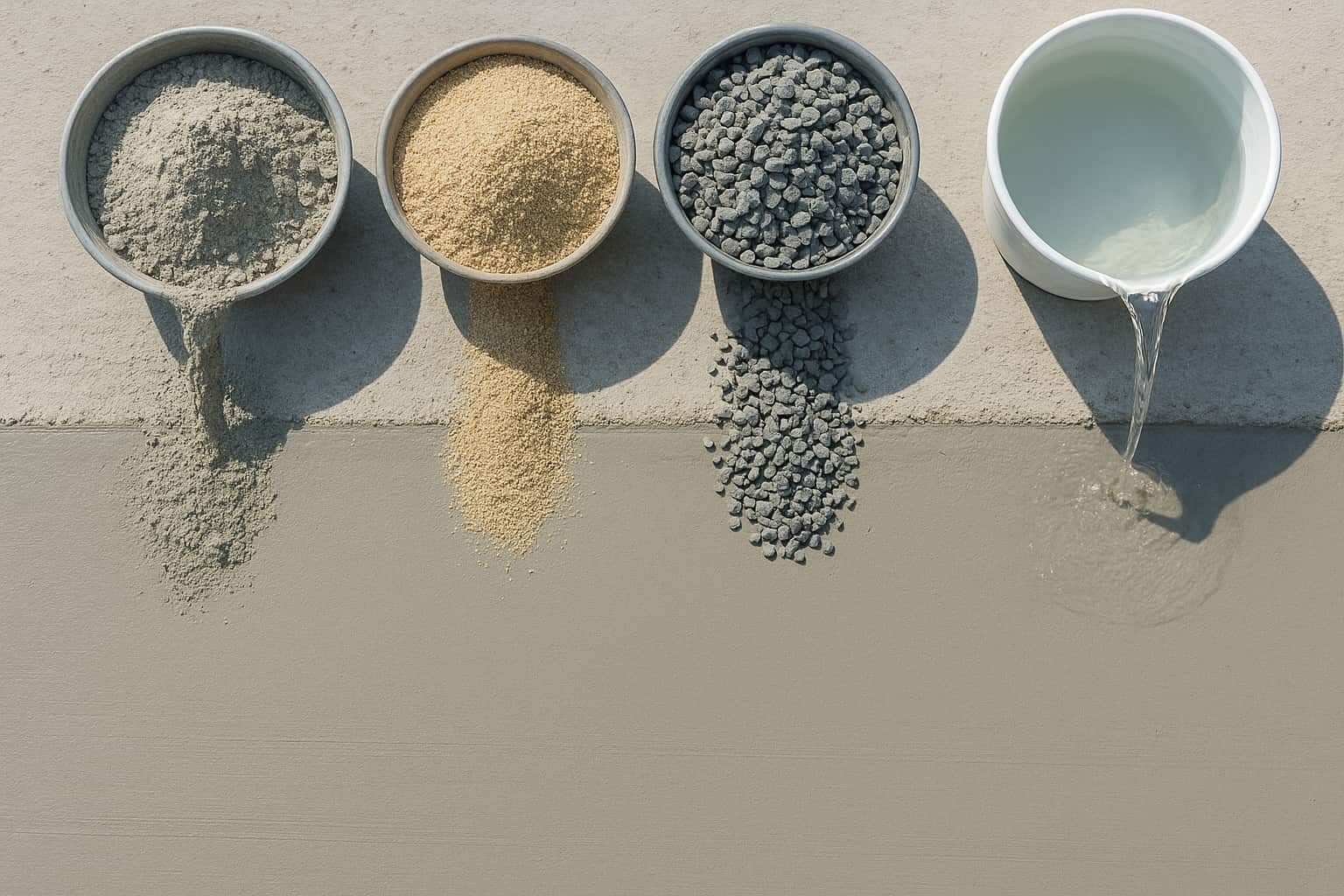
  • What Are Alternatives to Concrete for Driveways and Walkways?

    What Are Alternatives to Concrete for Driveways and Walkways?

    Key Takeaways

    • Pavers offer superior durability and easier repairs than concrete, lasting 25-50 years with minimal maintenance
    • Gravel and decomposed granite provide the most budget-friendly options at $1-3 per square foot
    • Permeable surfaces help manage stormwater runoff and can reduce or eliminate expensive drainage systems
    • Asphalt costs less upfront but requires resealing every 2-5 years, making long-term costs comparable to other materials
    • Climate considerations matter – materials that flex with freeze-thaw cycles perform better in Arkansas weather

    Homeowners in Fayetteville have multiple proven alternatives to traditional concrete for driveways and walkways. Popular options include pavers (concrete, brick, or stone), gravel systems, asphalt, permeable surfaces, and natural materials like cobblestone. Each material offers different benefits for cost, durability, maintenance, and appearance, with choices ranging from $1 per square foot for basic gravel to $50 per square foot for premium cobblestone installations.

    Understanding Your Paving Material Options

    Choosing the right surface for your driveway or walkway involves more than just picking something that looks nice. You need to think about how it will hold up to Arkansas weather, what your budget allows, and how much time you want to spend on upkeep. The good news is that you have plenty of choices beyond standard concrete slabs.

    Traditional poured concrete has been the go-to option for decades because it’s fairly affordable and lasts a long time. However, it has some drawbacks that make other materials worth considering. Concrete can crack when the ground shifts or during freeze-thaw cycles. Once it cracks, repairs are expensive and often visible. Modern alternatives address these problems while offering better drainage, easier repairs, and more design flexibility.

    Paver Options: Concrete, Brick, and Stone

    Pavers are individual units that interlock or sit side-by-side to create your driveway or walkway surface. Unlike a solid concrete slab, pavers can flex slightly when the ground moves, which helps prevent cracking. This makes them especially useful in Arkansas where soil can shift with weather changes.

    Concrete Pavers

    Concrete pavers are the most economical paver choice and offer impressive strength. Modern concrete pavers are manufactured to reach compressive strengths often exceeding 8,000 psi – that’s about three times stronger than a typical poured concrete slab.[1] This extra strength means they can handle heavy vehicles without breaking.

    You’ll find concrete pavers in dozens of colors, shapes, and patterns. Some look like natural stone or brick but cost less. Installation typically runs $10 to $30 per square foot depending on the style you choose and how complex the pattern is.[2] For a standard two-car driveway of about 640 square feet, expect to pay between $6,400 and $19,200.

    The main advantage of concrete pavers is that when one gets damaged, you can replace just that piece without tearing up the whole driveway. Weeds can grow in the joints between pavers, but using polymeric sand during installation helps prevent this problem.

    Brick Pavers

    Brick pavers give your property a classic, timeless look that never goes out of style. Made from clay and fired in kilns, brick pavers have natural color that goes all the way through the material. This means the color won’t fade from sun exposure like it might with some concrete products.[3]

    Brick is highly resistant to stains and can last for decades with minimal maintenance. The natural texture provides good traction, which is helpful during wet conditions. Brick pavers typically cost $10 to $45 per square foot installed.[4] While more expensive than concrete pavers, many homeowners feel the distinctive appearance justifies the extra cost.

    Like concrete pavers, individual bricks can be replaced if they get damaged. The joints between bricks will need re-sanding occasionally to keep everything stable and prevent weed growth.

    Natural Stone Pavers

    Natural stone pavers include materials like flagstone, slate, bluestone, and granite. These materials offer unique colors and textures you can’t get with manufactured products. Each piece is different, creating a one-of-a-kind look for your property.

    Stone pavers are extremely durable and can last 50 years or more with proper installation. They handle freeze-thaw cycles well because natural stone is dense and absorbs very little water. This makes stone a smart choice for Arkansas’s climate.[5] The main drawback is cost – natural stone typically runs $15 to $60 per square foot installed, making it one of the pricier options.

    Cost-Effective Gravel and Decomposed Granite Solutions

    If you’re working with a tight budget, gravel options offer the lowest cost per square foot for driveways and walkways. These natural materials create a rustic, informal look that works well with many home styles, especially in rural or casual settings.

    Traditional Loose Gravel

    Basic gravel driveways cost just $1 to $3 per square foot for materials and installation.[6] That makes a 640 square foot driveway possible for as little as $640 to $1,920. Gravel provides excellent drainage since water flows right through it into the ground below. This natural drainage can eliminate the need for expensive drainage systems.

    The downside of loose gravel is that it can scatter or wash away over time, especially on slopes. You’ll need to add fresh gravel periodically and rake it back into place. Gravel also isn’t ideal for snow removal – plows can easily scrape it away along with the snow.

    Decomposed Granite

    Decomposed granite (DG) is weathered granite that has broken down into fine particles. When compacted, it forms a fairly stable surface that works well for walkways and light-use driveways. DG has a natural, earth-tone appearance that blends nicely with landscaping.

    Expect to pay about the same as regular gravel – $1 to $3 per square foot. DG compacts more firmly than loose gravel, so it stays in place better. However, it will need occasional replenishment as it gradually erodes. In very wet conditions, DG can become muddy before it dries and firms up again.

    Stabilized Gravel Systems

    Modern plastic grid systems solve many of gravel’s traditional problems. These grids lock gravel in place, creating a stable surface that won’t scatter or wash away. Products like TRUEGRID use interlocking plastic panels that you fill with gravel to create a permeable, durable surface.

    Stabilized gravel systems cost $3 to $10 per square foot installed,[7] which is more than loose gravel but still less than most other paving options. The grids are made from recycled plastic and can last 60 years with almost no maintenance. They handle heavy vehicle traffic well and provide drainage rates exceeding 1,000 inches per hour.

    Material TypeCost Per Sq FtLifespanBest ForMaintenance Level
    Loose Gravel$1-$310-15 yearsRural properties, low trafficModerate – regular raking
    Decomposed Granite$1-$35-10 yearsWalkways, patiosModerate – periodic topping
    Concrete Pavers$10-$3025-50 yearsDriveways, high traffic areasLow – occasional cleaning
    Brick Pavers$10-$4525-50 yearsDriveways, formal settingsLow – re-sand joints occasionally
    Asphalt$5-$1315-30 yearsDriveways, budget-consciousModerate – reseal every 2-5 years
    Permeable Pavers$10-$4020-40 yearsEco-conscious, drainage issuesLow – occasional cleaning

    Asphalt: The Traditional Concrete Alternative

    Asphalt has been used for driveways for generations. It uses tar as a binder instead of cement, which gives it different properties than concrete. Many people choose asphalt because it costs less upfront than concrete and installs quickly.

    A typical asphalt driveway costs $5 to $13 per square foot installed,[8] putting it in the middle range for price. That works out to about $3,200 to $8,320 for a standard two-car driveway. Asphalt’s flexibility makes it better than concrete at handling freeze-thaw cycles because it can bend slightly without cracking.[9]

    The dark color of asphalt actually helps in winter – it absorbs sunlight and helps melt snow and ice faster than lighter-colored materials. This can mean less shoveling and safer conditions during winter weather.

    However, asphalt requires more maintenance than most alternatives. You’ll need to seal it every 2 to 5 years to protect against cracking and fading. Without regular sealing, asphalt breaks down faster, especially in hot weather when it can soften. Over its 15 to 30 year lifespan, maintenance costs can add up to $1,500 to $4,000.[10]

    Asphalt repairs are generally less expensive than fixing concrete, but asphalt needs repairs more often. If you’re willing to keep up with the sealing schedule, asphalt can be a good choice that balances initial cost with performance.

    Cobblestone and Natural Stone Options

    Cobblestone creates an old-world, elegant look that adds significant curb appeal. These rounded stones – traditionally made from granite – have been used for centuries in Europe and still look great today.

    True natural cobblestone costs $20 to $50 per square foot installed,[11] making it one of the most expensive options. The high cost comes from both the stone itself and the labor-intensive installation process. Each stone must be carefully placed and fitted.

    Modern manufactured “cobblestone” pavers can give you a similar look for less money – typically $15 to $30 per square foot. These come in more uniform shapes that make installation easier while still providing that classic cobbled appearance.

    Cobblestone offers exceptional durability and can last over 100 years with minimal maintenance. The uneven surface provides excellent traction, even when wet or icy. However, that same uneven surface can make snow removal challenging and may not be ideal if you have mobility concerns.

    Some modern cobblestone products come attached to mesh backing, which speeds up installation significantly. This “Belgian block” style features more rectangular shapes that are easier to work with than traditional rounded cobbles.

    Permeable and Eco-Friendly Paving Solutions

    Permeable paving systems represent one of the biggest advances in driveway and walkway materials. Instead of forcing water to run off into storm drains, these surfaces let water filter through into the ground below. This approach offers environmental benefits and can save you money by reducing or eliminating the need for separate drainage systems.

    Pervious Concrete

    Pervious concrete looks similar to regular concrete but has larger gaps in its structure that allow water to pass through. It’s made with less fine aggregate, creating a porous surface with excellent drainage. Pervious concrete costs $8 to $16 per square foot installed.[12]

    This material requires an experienced installer who understands how to mix and pour it correctly. The porous structure means it’s not quite as strong as regular concrete, but it’s plenty durable for most residential applications. Pervious concrete replenishes groundwater and helps prevent flooding and puddling during heavy rains.

    Permeable Pavers

    Permeable pavers are interlocking concrete or clay units installed with wider joint spaces. The joints are filled with gravel or coarse sand that lets water drain through. The whole system sits on top of a gravel base that stores water temporarily and lets it soak into the soil.

    These systems cost $10 to $40 per square foot depending on the type of paver you choose.[13] While the initial cost is higher than regular pavers, you save money by not needing separate drainage solutions. For properties with poor drainage or in areas with strict stormwater regulations, permeable pavers can save $2,000 to $6,500 in drainage infrastructure costs.[14]

    Permeable pavers work especially well in Fayetteville where we get significant rainfall. They help prevent water from pooling in your driveway and reduce the burden on local storm drains. Many cities now offer incentives for installing permeable surfaces because they help manage stormwater runoff.

    Resin-Bound Paving

    Resin-bound paving mixes decorative aggregate with a clear resin binder. The result is a smooth, attractive surface that allows water to drain through while providing a solid walking or driving surface. You can choose from various stone colors and sizes to create custom looks.

    This system typically costs more than basic permeable pavers, but it offers a unique appearance that stands out. The smooth surface is comfortable to walk on and easy to clean. Resin-bound paving is very durable and resistant to cracking, though it requires professional installation to ensure proper drainage.

    Making the Right Choice for Arkansas Weather

    Fayetteville’s climate includes hot summers, cold winters, and freeze-thaw cycles that can damage some paving materials. Understanding how different materials respond to our weather helps you make a smart choice that will last.

    Concrete can crack when water gets into small gaps, freezes, and expands. Air-entrained concrete – made with special additives that create tiny air bubbles – resists freeze-thaw damage much better than regular concrete.[15] These microscopic bubbles give ice somewhere to expand without cracking the concrete.

    Materials that can flex slightly tend to perform better in freeze-thaw conditions. Asphalt and pavers both have this advantage over rigid concrete slabs. Pavers can shift slightly with ground movement and then settle back into place without damage.

    Proper installation matters just as much as material choice. Any paving system needs a well-prepared base with good drainage. In Arkansas, this typically means excavating 6 to 12 inches deep and installing layers of compacted gravel. The gravel provides a stable foundation and helps water drain away so it doesn’t freeze under your driveway.

    Salt and de-icing chemicals can damage some materials over time. Sealed concrete and asphalt hold up better to salt exposure than unsealed surfaces. Natural stone is generally resistant to salt damage. If you plan to use de-icing products in winter, discuss this with your installer so they can recommend appropriate materials and sealers.

    FeatureConcreteAsphaltPaversPermeable Systems
    Freeze-Thaw ResistanceFair (with air entrainment)Good (flexes naturally)Excellent (individual units)Excellent (drains water)
    Repair VisibilityHigh (patches show)Moderate (can blend)Low (replace single units)Low (replace single units)
    Heat AbsorptionLow (stays cool)High (softens in heat)ModerateLow (water cools surface)
    Salt ResistanceFair (needs sealing)Fair (needs sealing)Good to ExcellentGood to Excellent
    Installation SpeedFast (1-3 days)Fast (1-2 days)Moderate (2-5 days)Moderate (2-5 days)

    Calculating Total Cost of Ownership

    Looking at just the installation price doesn’t tell the whole story. Some materials cost less upfront but require more maintenance over the years. Others cost more initially but save you money over time.

    Let’s compare the 30-year cost of a 640 square foot driveway using different materials. Basic concrete might cost $6,400 to install but need $2,000 in repairs over 30 years, for a total of $8,400. Asphalt could cost $5,120 upfront but need $3,000 in maintenance and resealing, totaling $8,120.

    Pavers might cost $12,800 initially but only need $800 in maintenance over the same period, totaling $13,600. While pavers cost more overall, the difference isn’t as large as it first appears, and you get better appearance and easier repairs.

    Don’t forget to factor in your time. Materials that need regular maintenance take hours of your time each year. Sealing an asphalt driveway might take 4-6 hours every few years. Pavers might need an hour or two of cleaning and re-sanding joints every couple of years. When you value your time appropriately, low-maintenance materials become even more attractive.

    Joe Raboine, Vice President of Design at Oldcastle APG, explains: “Permeable pavers come in several different styles to suit homeowner aesthetics. You can opt for a more traditional-style permeable paver or a grid paver that allows greenery to grow through. They help alleviate the effects of stormwater runoff or drought conditions, which benefits both homeowners and the environment.”[16]

    Installation Considerations and Site Preparation

    Proper site preparation is critical for any driveway or walkway project. Cutting corners on prep work leads to problems down the road, no matter which material you choose. Most failed driveways fail because of poor base preparation, not because of the surface material itself.

    Every project starts with removing the existing surface if there is one. Concrete or asphalt removal costs $2 to $6 per square foot.[17] After removal, the site needs proper grading to direct water away from your home and prevent pooling.

    The base layer typically consists of 6 to 12 inches of compacted crushed stone or gravel. This base serves two important purposes: it provides a stable foundation that won’t shift, and it allows water to drain away. Compaction is critical – loose gravel will settle over time and cause your surface to sag or crack.

    Different materials need different base depths. A standard driveway for regular vehicles needs at least 8 to 10 inches of base. If you have heavy trucks or RVs, you might need 12 inches or more. Walkways that only handle foot traffic can get by with 4 to 6 inches.

    Soil conditions matter too. Clay soil holds water and can expand and contract with moisture changes. Sandy soil drains well but may not provide as much support. Your installer should assess your soil and adjust the base design accordingly. In problem soil areas, adding geotextile fabric between the soil and base helps prevent mixing and maintains stability.

    Design Flexibility and Curb Appeal

    Your driveway or walkway is one of the first things people notice about your home. Beyond just function, these surfaces contribute significantly to your property’s curb appeal and value.

    Pavers offer the most design flexibility of any option. You can create patterns like herringbone, basket weave, or running bond. Mix different colors to create borders or accent areas. The individual nature of pavers lets you follow curves and create custom shapes that would be difficult or expensive with poured materials.

    Stamped concrete tries to mimic the look of pavers or stone at a lower cost. Patterns are pressed into wet concrete before it hardens. Stamped concrete costs $12 to $18 per square foot,[18] less than most pavers but more than plain concrete. However, stamped concrete has the same cracking issues as regular concrete, and repairs are very visible.

    Natural materials like stone and cobblestone bring unique character that can’t be replicated. No two stone driveways look exactly alike. This individuality can significantly boost curb appeal, especially for historic homes or properties where a natural aesthetic matters.

    Even gravel can look attractive when properly designed. Use edging materials like steel, stone, or brick to define borders and keep gravel in place. Consider mixing gravel sizes for visual interest – larger stones for the main area and smaller, finer gravel for walkways.

    Remember that your driveway material should complement your home’s architecture. A modern home might look best with smooth concrete or contemporary pavers. A traditional home might call for brick or classic cobblestone. Ranch-style homes often pair well with gravel or decomposed granite that echoes their casual, natural aesthetic.

    Environmental Impact and Sustainability

    More homeowners are thinking about the environmental impact of their material choices. Some options are clearly more eco-friendly than others.

    Permeable surfaces rank highest for environmental benefits. By letting water soak into the ground, they recharge groundwater supplies and reduce the burden on storm sewer systems. During heavy rains, conventional driveways shed water quickly, which can cause flooding downstream. Permeable surfaces hold water temporarily and release it slowly, reducing peak flows.

    Recycled materials offer another green option. Some pavers are made from recycled concrete or post-consumer plastics. These products divert waste from landfills while providing durable paving solutions. Plastic grid systems like TRUEGRID use 100% recycled plastic and can themselves be recycled at the end of their 60-year lifespan.[19]

    Concrete production generates significant carbon emissions due to cement manufacturing. Portland-limestone cement reduces emissions by about 10% compared to traditional portland cement.[20] Some suppliers now offer concrete made with supplementary cementitious materials like fly ash, which can reduce the carbon footprint further.

    Local sourcing matters too. Materials sourced close to your project site require less transportation, reducing fuel consumption and emissions. Arkansas has limestone, sandstone, and other stone deposits that can be used for paving projects. Choosing local stone supports regional businesses while reducing environmental impact.

    Light-colored surfaces reflect more heat than dark surfaces, reducing what’s called the “heat island effect.” This is especially important in urban areas where lots of dark pavement can raise local temperatures. Concrete and light-colored pavers stay cooler than asphalt, which can make your property more comfortable in summer and slightly reduce cooling costs if the paving is near your home.

    Maintenance Requirements by Material Type

    Understanding maintenance needs helps you choose a material that fits your lifestyle and schedule. Some people don’t mind spending time on upkeep. Others want to install once and forget about it.

    Concrete needs the least regular maintenance. Sweep it occasionally and hose it down when it gets dirty. Seal it every 5 to 10 years to protect against stains and moisture. Fix cracks promptly before they spread. That’s about it. However, when concrete does need major repairs, they’re expensive – often $300 to $3,000 depending on damage extent.[21]

    Asphalt demands more attention. Plan to seal your asphalt driveway every 2 to 5 years. Sealing costs $0.15 to $0.35 per square foot, or about $100 to $225 for a typical driveway.[22] Skip the sealing and your asphalt will break down faster, leading to cracks and potholes. Asphalt repairs are cheaper than concrete repairs, but you’ll need them more often.

    Pavers need occasional joint maintenance. Every few years, check if the sand between pavers has washed out and add more if needed. Power washing helps remove dirt buildup. If individual pavers crack or stain, replace just those pieces. Total maintenance time is minimal – maybe 2-3 hours per year.

    Gravel requires regular raking to keep it level and filling in low spots as needed. Weeds can grow through gravel unless you use landscape fabric underneath. Budget time each spring to freshen up gravel areas and add material where needed. Stabilized gravel systems need much less maintenance since the grid holds everything in place.

    Permeable surfaces need periodic cleaning to maintain drainage performance. Clear leaves and debris that could clog the surface. Power washing or vacuum sweeping once or twice a year keeps water flowing freely. The maintenance is minimal but important for these systems to work properly.

    Conclusion

    Choosing alternatives to concrete for your Fayetteville walkway or driveway opens up possibilities that can save you money, reduce maintenance, improve drainage, and enhance your home’s appearance. From budget-friendly gravel to premium natural stone, each option brings specific advantages that might be perfect for your situation. The key is matching material properties to your needs – consider your budget, how you’ll use the space, Arkansas weather patterns, and how much time you want to spend on maintenance. Whether you choose flexible asphalt that handles freeze-thaw cycles, individual pavers that make repairs invisible, or permeable systems that manage stormwater naturally, you’re making a choice that goes beyond just creating a place to park. Ready to explore which alternative works best for your property? Contact experienced local contractors who can assess your specific site conditions and recommend the solution that will serve you best for decades to come.

    Alternatives to Concrete for Driveways and Walkways FAQs

    What is the cheapest alternative to concrete for driveways?

    The cheapest alternative to concrete for a driveway is loose gravel, which costs just $1 to $3 per square foot installed. Decomposed granite offers a similar price point and provides a slightly more stable surface when compacted.

    How long do alternatives to concrete for walkways and driveways last?

    Alternatives to concrete for walkways and driveways have varying lifespans depending on the material. Pavers typically last 25 to 50 years, asphalt lasts 15 to 30 years, gravel systems last 10 to 15 years, and natural stone can last over 50 years with proper installation and maintenance.

    Are pavers better than concrete for driveways?

    Pavers offer several advantages over concrete including easier repairs (replace individual units instead of patching), better flexibility to handle ground movement, and more design options. However, pavers cost more upfront at $10-$30 per square foot compared to concrete’s $6-$15 per square foot.

    What are the most durable alternatives to concrete for walkways and driveways?

    The most durable alternatives to concrete for walkways and driveways are natural stone and high-quality pavers, both of which can last 50+ years. Natural cobblestone has proven durability with centuries-old examples still in use, while modern concrete pavers achieve compressive strengths over 8,000 psi.

    Do permeable driveway alternatives work in Arkansas weather?

    Yes, permeable driveway alternatives work well in Arkansas weather because they allow water to drain through rather than pooling on the surface. This drainage capability actually helps them handle freeze-thaw cycles better than solid surfaces since there’s less water present to freeze and cause damage.

    Alternatives to Concrete for Driveways and Walkways Citations

    1. Axel Landscape – Paver Driveways vs Asphalt vs Concrete
    2. Angi – Paver Driveway Cost
    3. Left Coast Pavers – Cost Comparison for Driveway Pavers 2025
    4. HomeGuide – Cost of Pavers vs Concrete
    5. Aindy Stone – Paving Tile Options for Cold Climates
    6. TRUEGRID – How Much Does It Cost to Gravel a Driveway
    7. TRUEGRID – How Much Do Permeable Pavers Cost
    8. HomeGuide – Asphalt Driveway Cost vs Concrete
    9. Angi – Concrete vs Asphalt in Cold Climates
    10. MQuip – Interlock vs Asphalt Driveway Cost Comparison
    11. Dube Property Maintenance – Paver Driveway Cost vs Concrete 2025
    12. HomeGuide – Permeable Pavers Cost
    13. Angi – How Much Do Permeable Pavers Cost
    14. Dube Property Maintenance – Cost of Permeable Paver Driveway
    15. National Center for Biotechnology Information – Freeze-Thaw Durability of Air-Entrained Concrete
    16. Bob Vila – Permeable Paver Installation Costs
    17. U.S. Pave – Is Asphalt Cheaper than Concrete
    18. Husky Pavers – Driveway Paving Comparison: Asphalt vs Pavers vs Concrete
    19. TRUEGRID – Commercial Paving as an Alternative to Asphalt and Concrete
    20. Portland Cement Association – Freeze-Thaw Resistance
    21. HomeGuide – Asphalt Driveway Cost vs Concrete Repair Costs
    22. MQuip – Asphalt Maintenance Costs