Key Takeaways:
- Cement is a fine powder that acts as the binding ingredient in concrete, not a standalone building material
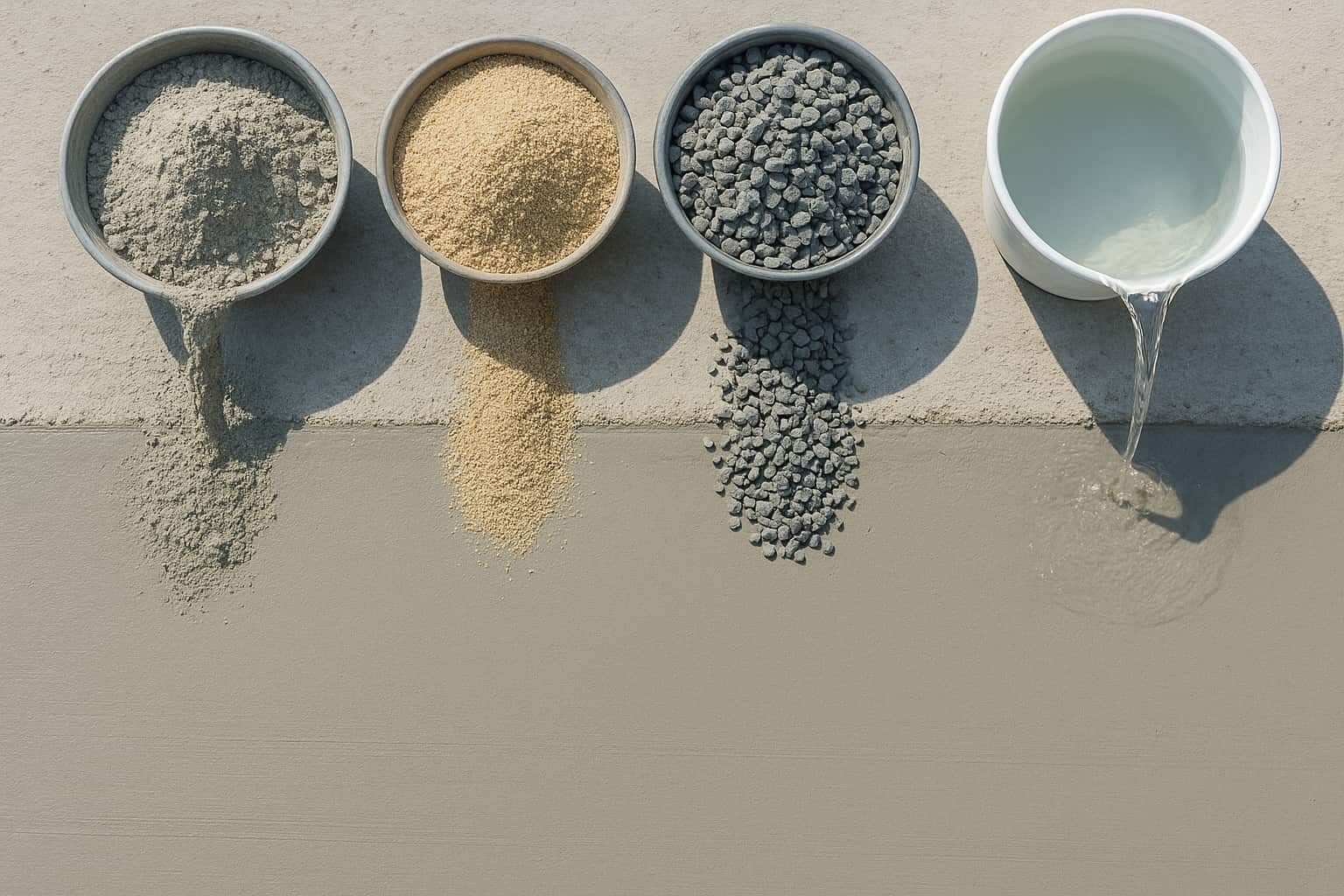
- Concrete is a composite material made from cement (10-15%), water, sand, and gravel that creates durable surfaces
- Understanding this difference helps you make informed decisions about driveway, patio, and walkway projects
- The trucks you see are concrete mixers, not cement mixers, because they carry the complete ready-to-pour material
- Cement costs approximately $84-140 per metric ton while ready-mix concrete averages $150-180 per cubic yard in 2024-2025[1][2]
The difference between concrete and cement is that cement is a binding powder ingredient that makes up only 10-15% of concrete, while concrete is the complete structural material combining cement with water, sand, and gravel.[3] Think of it like baking: cement is the flour, while concrete is the finished cake with all ingredients mixed together.
Understanding What Cement Actually Is
Cement is a fine gray powder made primarily from ground limestone, clay, sand, and other minerals heated to extreme temperatures.[4] The most common type used in Fayetteville construction projects is Portland cement, named not for a place but because it resembles the color of limestone from England’s Isle of Portland when hardened.[5]
How Cement Is Manufactured
Portland cement manufacturing involves heating limestone, shale, iron ore, and clay in a kiln to temperatures between 2,600 and 3,000 degrees Fahrenheit.[3] This intense heat creates rock-hard pellets called clinker, which are then ground with a small amount of gypsum into the fine powder we know as cement. The gypsum prevents the cement from setting too quickly when water is added.[6]
What Cement Is Used For
Cement is rarely used alone because it lacks the strength and durability needed for construction projects. When mixed only with water, it creates a paste that’s brittle and prone to cracking.[7] Instead, cement serves as the crucial binding agent in three main products:
Concrete: Cement mixed with water, sand, and gravel creates the structural material used for driveways, foundations, and sidewalks. Mortar: Cement combined with water and fine sand (no gravel) bonds bricks and blocks together in masonry work. Grout: A fluid mixture of cement, water, and sometimes fine aggregate fills joints in tilework and hollow masonry cells.[8][9]
What Makes Concrete Different From Cement
Concrete is a composite material engineered to create strong, durable surfaces that last decades. While cement is just one ingredient, concrete combines four essential components in precise proportions to achieve the right strength and workability for your project.
The Four Components of Concrete
Cement acts as the glue that binds everything together through a chemical reaction called hydration. In a typical concrete mix, Portland cement makes up only 10-15% of the total volume.[3] Water activates the cement’s binding properties and controls the concrete’s workability. The water-to-cement ratio directly affects the final strength—less water creates stronger concrete, though too little makes it impossible to place properly.[10]
Fine aggregates (sand) fill small spaces between larger particles and help create a smooth, workable mixture. Coarse aggregates—gravel or crushed stone—provide the bulk and structural strength of the finished concrete. Together, aggregates occupy 60-75% of concrete’s volume and 70-85% of its weight.[11] For Fayetteville homeowners dealing with expansive clay soils, this aggregate selection becomes particularly important for preventing settlement issues.
| Feature | Cement | Concrete |
|---|---|---|
| Physical Form | Fine gray powder | Solid, rock-like mass when cured |
| Composition | Ground limestone, clay, gypsum | Cement (10-15%), water, sand, gravel |
| Function | Binding agent/ingredient | Finished structural material |
| Strength | Weak and brittle alone | High compressive strength (3,000-8,000+ PSI) |
| Typical Uses | Ingredient in concrete, mortar, grout | Driveways, patios, foundations, sidewalks |
| Cost (2024-2025) | $84-140 per metric ton[1][2] | $150-180 per cubic yard[12] |
| Lifespan | Limited shelf life (months) | 50-100+ years when properly installed |
How Concrete Gains Its Strength
The transformation from wet mixture to solid surface happens through hydration—a chemical reaction between cement and water that continues for weeks after pouring. This process is why proper curing matters so much for Fayetteville projects, especially during our hot, humid summers.
The Hydration Process Explained
When water mixes with cement, it triggers chemical reactions that form calcium silicate hydrate crystals. These microscopic crystals grow and interlock, creating the strong bonds that hold aggregates together.[13] Most strength develops in the first 28 days, though concrete continues gaining strength for months afterward. Standard testing measures compressive strength at 28 days, with typical residential concrete reaching 3,000-4,000 PSI (pounds per square inch).[14]
Why Arkansas Climate Affects Concrete Curing
Northwest Arkansas’s weather creates unique challenges for concrete curing. Our hot summers can cause surface moisture to evaporate too quickly, preventing proper hydration and leading to weak, dusty surfaces. Professional contractors like AR Concrete Fayetteville use curing compounds and keep surfaces moist during those critical first seven days. During occasional winter freezes, protection becomes equally important—concrete must cure for at least three days before exposure to freezing temperatures to avoid permanent damage.
Common Misconceptions About Cement and Concrete
Myth: Those Big Trucks Are “Cement Mixers”
The rotating trucks you see on Fayetteville roads are actually concrete mixers, not cement mixers. They carry ready-mix concrete—the complete mixture of cement, water, sand, and gravel that’s ready to pour.[15] The rotation keeps the concrete from hardening during the drive from the batching plant to your home. Once mixed with water, the concrete has about 90 minutes before it starts to set, which is why timing matters so much for delivery and placement.
Myth: You Can Use Cement Alone for Small Repairs
While cement mixed only with water creates a paste, it’s unsuitable for most repairs. Pure cement paste is brittle, shrinks excessively during curing, and cracks easily.[16] For patching driveways or fixing cracks, you need either pre-mixed concrete (cement with aggregates already blended) or a proper mortar mix with sand added. For small repairs around your Fayetteville home, hardware stores sell pre-mixed bags that already contain the right proportions of cement and aggregates—just add water.
The Difference Between Concrete and Cement for Arkansas Projects
Understanding this distinction matters when planning your Fayetteville concrete project because it affects everything from material selection to cost expectations. You never order “cement” for a driveway, patio, or walkway—you order concrete with specific characteristics suited to Arkansas conditions.
Concrete Mix Design for Fayetteville Conditions
Professional concrete contractors in Northwest Arkansas adjust mix designs to handle our challenging clay soils and seasonal temperature swings. A typical residential driveway mix uses 4,000-4,500 PSI concrete with proper air entrainment to resist freeze-thaw damage.[17] The cement content stays around 520-600 pounds per cubic yard, with the water-to-cement ratio carefully controlled between 0.40-0.50 for optimal strength and durability.[18]
For projects on Fayetteville’s expansive clay soils, contractors may increase the concrete thickness by an inch or improve the gravel base to compensate for soil movement. The aggregates themselves are selected for local conditions—crushed limestone from Arkansas quarries provides excellent bonding with the cement paste and stands up to our weather extremes.
How Material Costs Break Down
When you receive a quote for a concrete driveway in Fayetteville, the cement itself represents only a fraction of the total cost. Ready-mix concrete typically costs $150-180 per cubic yard delivered in 2024-2025, which includes the cement (approximately $25-35 worth per cubic yard at bulk prices), aggregates, water, batching, and delivery.[1][12] Labor for site preparation, forming, pouring, and finishing adds another $5.50-9.00 per square foot to professional installations.[19]
For a standard 20×24-foot (480 square foot) driveway at 4 inches thick, you need about 6 cubic yards of concrete. Material costs run $900-1,080, while total project costs including labor range from $3,000-5,000 depending on site conditions and finishing options.
| Project Type | Best Material Choice | Why It Matters |
|---|---|---|
| Driveways & Patios | 4,000-4,500 PSI concrete | Handles vehicle weight and resists Arkansas weather |
| Sidewalks | 3,000-3,500 PSI concrete | Adequate strength for foot traffic at lower cost |
| Bricklaying | Type N or S mortar | Bonds masonry units with proper flexibility |
| Small Repairs | Pre-mixed concrete or mortar | Right proportions already measured for you |
| Tile Installation | Grout (sanded or unsanded) | Flows into joints and provides finished appearance |
Expert Perspective on Cement vs Concrete
According to Stewart Brothers Concrete, a company with over 35 years in the industry: “To understand the nature and role of cement, try to think of it as construction’s flour. You wouldn’t often use it on its own as it has very few uses – even when mixed with water – but add other ingredients with the right qualities and you can use it to make bread, cakes, pastry and biscuits.”[20] This analogy perfectly captures why contractors never work with cement alone—it’s an ingredient that achieves its purpose only when properly combined with aggregates and water.
Making the Right Choice for Your Fayetteville Project
When planning outdoor improvements for your Fayetteville home, you’ll be working with concrete for structural elements like driveways, patios, and walkways. The cement itself isn’t something you’ll purchase separately—it comes pre-measured in the concrete mix designed for your specific application.
Questions to Ask Your Contractor
Understanding the difference between concrete and cement helps you ask the right questions when getting quotes. Ask about the concrete mix design—specifically the PSI rating and whether it includes air entrainment for freeze-thaw protection. Inquire about aggregate sources and whether the mix is adjusted for Northwest Arkansas clay soils. Request information about the water-to-cement ratio and curing procedures to ensure quality results.
When to Use Professional Installation
While small repairs might work as DIY projects using pre-mixed bags, professional installation makes sense for driveways, patios, and other structural concrete work. Proper mix design, adequate base preparation, correct placement techniques, and controlled curing all affect whether your concrete lasts 10 years or 50 years. For Fayetteville homeowners dealing with challenging soil conditions and variable weather, that professional expertise becomes especially valuable.
Conclusion
Now you understand that cement is simply the binding ingredient—the “flour”—while concrete is the complete “cake” that creates strong, durable surfaces around your home. This knowledge helps you communicate clearly with contractors, understand project costs, and make informed decisions about your Fayetteville outdoor improvements. Whether you’re planning a new driveway, repairing a walkway, or installing a patio, you’ll be working with concrete that’s properly designed for Arkansas conditions. For professional concrete installation that accounts for Fayetteville’s clay soils and climate challenges, contact AR Concrete Fayetteville at (479) 408-4968 or visit our concrete resources blog to learn more about creating lasting outdoor spaces.
The Difference Between Concrete and Cement FAQs
Can you use cement without concrete?
You can mix cement with water alone, but it creates a weak, brittle paste unsuitable for structural use. Cement needs aggregates (sand and gravel) to create strong, durable concrete. For any construction project, you need the complete concrete mixture, not cement alone.
What’s the difference between concrete and cement in simple terms?
The difference between concrete and cement is that cement is a powder ingredient (like flour), while concrete is the finished building material (like bread) made by mixing cement with water, sand, and gravel. Cement is never used alone—it’s always an ingredient in concrete.
Why do people call it a cement driveway?
People commonly but incorrectly call it a “cement driveway” when they mean “concrete driveway.” This happens because cement is the most recognizable ingredient, but the driveway is actually made from concrete—the complete mixture including cement, water, sand, and gravel.
Is cement stronger than concrete?
No, cement is much weaker than concrete. Cement alone is brittle and cracks easily, while concrete can achieve compressive strengths of 3,000-8,000+ PSI depending on the mix design. The aggregates in concrete provide the strength that cement powder cannot deliver by itself.
How much does the difference between concrete and cement affect cost?
Cement costs $84-140 per metric ton, but you buy ready-mix concrete at $150-180 per cubic yard which includes cement, aggregates, water, and delivery. The cement represents only about 15-20% of your total concrete material cost, with aggregates and labor making up the majority.
The Difference Between Concrete and Cement Citations
- Accio – Concrete Price Trends 2022-2025: 17% Increase & Future Projections
- Statista – U.S. Cement Prices 2010-2024
- American Cement Association – Cement & Concrete FAQ
- Texas Lehigh – Cement and Concrete Differences
- Wikipedia – Portland Cement
- Pavement Interactive – Portland Cement Reference
- McConnell & Associates – Difference Between Concrete and Cement
- Leidal and Hart – Masonry vs Portland Cement: Key Differences Explained
- Duke Concrete Products – Learn About the Differences Between Mortar and Grout
- Pavement Interactive – ACI Mix Design
- Concrete Network – Aggregate in Concrete
- Concrete Network – Concrete Prices 2025
- ScienceDirect – Portland Cement Concrete Overview
- Giatec Scientific – From Standards to Solutions: A Step-by-Step Guide to Concrete Mix Design
- PACA Web – Understanding the Difference Between Cement and Concrete
- Eng-Tips – Mortar and Grout Discussion
- AR Concrete Fayetteville – How Thick Should a Concrete Driveway Be in Arkansas?
- FHWA – Highway Materials Engineering Course: Aggregates in PCC
- Thumbtack – 2025 Concrete Installation Cost
- Stewart Brothers Concrete – Concrete vs Cement: What is the Difference?
Leave a Reply